Showing posts with label Top 100 Films. Show all posts

Thursday, August 11, 2011

The Good, The Bad and the Ugly (1966)


Top 100 Films: #2
Overall Rating: 10/10

To try and summarize the importance of The Good, The Bad and the Ugly on the evolution of my perspective of film as more than purely an American based art form would be in vain even at my most articulate. Simply put, this film put the notion of greatness into my own zeitgeist and sent me down a path from which there was no turning back. It introduced me to foreign cinema, stylistic direction, the epic, classic movies, westerns, and was one close up draw jump from here to Kurosawa.

But no need to go there now, this post is about the mesmerizing style of Leone, catapulted by the charismatic crook Eli Wallach, ignited by the dynamic villainy of Lee Van Cleef, and launched into the stratosphere of legendary by the smooth, timeless Clint Eastwood. The Good, The Bad and the Ugly (GBU) is a film unphased by aging or the growing trends of high octane entertainment. It survives the decades because it shaped the films of each of them. As influential as a film would ever dare be, and the kind of movie you can watch over and over again and constantly get something more out of.

It is perhaps best said that GBU is a film of nonstop minor escalation and deescalation wrapped around a larger, ever escalating primary plot. With each passing turn, each down time, each move, the viewer is privy to new insights to the characters, new ways of viewing the western as Leone viewed it, and somber morality tales to interspersed throughout the lot. The backdrop of the Civil War reminds us that violence is more than the never ending bloodbath of nightmares, it is the revelation of a man's inner being. It strips away at the heart of them, and delivers unto us their true form.

Are they a sultan of greed? A swindler of life? Or perhaps a compassionate loner with eyes full of gold? Maybe they're just a lowly captain tired of the endless nothingness at costs we dare not dream to imagine. Such is the world of The Good, The Bad and the Ugly. And with that you mind find it hard to imagine, this is one hell of a fun ride.

GBU starts of slow. Three scenes, three introductions, three foundations for the entire film, with each character defined for us in their most basic sense. After all, once we know what we're dealing with, all that is left to us is the journey, right? That's where Leone gets his pay off. That's where he truly makes his mark. For Leone takes these characters to their brink of their archetypes, and in each shows us something more raw. Of course, there's no denying Tuco is Leone's caricature masterpiece. He's the full realization of the byproduct of such a world as the one Leone examines through this film's near three hour runtime.  The world of the west, put so eloquently by Tuco himself creates two kinds of people - priests or thieves, and those who opt for the inbetween pay the price.

So it is perhaps most noteworthy that while Tuco himself succumbs to the primal nature for greed, his compatriot in fate, The Man with No Name/Blondie, is a more subtle, and intriguingly complicated man. For without much thought you could easily label him as little more than another Tuco himself. He lies, steals, but above it all shows an awareness for the world in which he resides. As if he is playing his own game with those around him, the prize of which often comes out to be their life. In many respects he is a gatekeeper, a judge who acts in favor of the better man, but only when that man chooses to act so. That doesn't mean he won't drop you off at the next desert if he feels you've served your purpose. It just means that when push comes to shove, he'll always plan for the upper hand.

As a villain, Angel Eyes' iconic status rests entirely on the cold, sly snarl of Lee Van Cleef. Every bit the soldier he pretends to be, Angel Eyes is not a man of great wit or charisma, but instead relies on pure, unadulterated dedication to the task at hand. Once his direction has been set, one would need an army to deter him from his inevitable course. And for that reason, his sinister nature comes out in full. He'll torture a man as soon as friend him, and if you're not careful he'll leave you behind to save his own skin in a heartbeat.

So take those three, those lovable, cartoonish characters and wrap them into the world of Leone's one of a kind style. Just watch this movie for the way Leone uses the camera. Sure, we all know the closeups, but pay attention to what he gets out of them - especially the eyes. The amount of emotion he gets out of his main characters. The subtle facial twitches and quirks that give them a relatable life, where another director would stick for the warmth but distant medium shot. Look at the compositions of the shots, the blend of Ennio Morricone's magnanimous score, the prolific nature each camera movement takes. Each shot is setup to be a portrait of the film at large.

So developed that once you see a photo of it, the entire film begins to flash through your mind once again. You remember that music, the lines, the looks on each character's face as they match wits and guns against one another. The steadfast calm at which Blondie drew his gun. The shifty look of annoyance as Tuco tried to make heads or tails of a given situation. The way Angel Eyes laugh brought flames into those sharp, dagger eyes. It's all there, all memorable, and only gets better with time. The Good, The Bad and the Ugly may not be a movie you have to watch dozens of times to understand, but it is one that pays off no matter how many times you do.


Film Credits:
Directed By: Sergio Leone
Screenplay By: Sergio Leone, Furio Scarpelli, Agenore Incrocci, & Luciano Vincenzoni
Story By: Sergio Leone and Luciano Vincenzoni
English Version By: Mickey Knox

Thursday, June 24, 2010

The Great Dictator (1940)

THE GREAT DICTATOR
WRITTEN AND DIRECTED BY: CHARLES CHAPLIN
TOP 100 FILMS: #4
OVERALL SCORE: 10/10


Jewish Barber must wrestle with the rise of dictator Hynkel (Charles Chaplin in both roles) whom he not only looks exactly like, but who is also persecuting him, and those around him. Meanwhile Hynkel attempts to befriend fellow dictator in an effort to expand his empire, and prepare for global war.

Commander Shutz: "Strange, I thought you were an Aryan."
Barber: "No, I'm a vegetarian."


Quick, make fun of one of the greatest mass murderers in the history of man. Not too hard right? Now try and do it while, not only is that person alive (and perfectly capable of taking offense/action), but in the most accessible of all mediums, film. Not quite as easy is it? Well, there in lies the absolute brilliance that is Chaplin's feature talkie debut, The Great Dictator.

These days Chaplin may not be seen as hip, or cool, as modern comedies attempt to be. Instead, Chaplin had a charm unlike any other. His subtle mockings at pre-wartime Germany, the rise of Hitler, and the impacts on society, laced in political satire, moves at the speed of light beyond cinematic norms. The ability to find silliness in such tragedy. The ability to find humor out of such human despair. It's a power, wit, and charisma you just don't find anymore.

Chaplin could do it all, and The Great Dictator is the stage. He's not just a goofy tramp, but an accomplished, and talented actor, who can blend verbal jabs flawlessly with quiet zaniness. Let's be honest, who else could tackle Hitler's desire for world domination by combining dance and a floating globe? It's that visual eye for character, and humor, that allows The Great Dictator to breath such life.

Sentiments of humanity, grazed throughout a land of humor in dark context. Laughter blended with sadness. Hope blended with despair. A comedy that reaches beyond the confines of its own genre to be something more.... but only when necessary. You see, Chaplin knows comedy, perhaps better than anyone in the history of cinema. He knows when you just have to be funny. Be goofy. Take a chance. Have two dictators fighting over chair height to prove themselves.

Then of course you have, the speech. If you've yet to see the film, and therefore have missed the film's final speech you've missed one for the books. Not only socially important, but hope filled. Riddled with triumph. A calling for those to dream again. Powerful, beautiful, all in one. Impossible to be beaten. The sort of speech writers can only dream of penning. Perfectly exuding everything Chaplin sought out to say with this film, and so much more. It's simply icing on one of the world's greatest cakes.

I recall once saying to a friend: "Chaplin isn't for everyone... I've just never met someone worth knowing who didn't enjoy Chaplin." Sure, that's a bit of a hyperbole, but there's also some honesty. Chaplin had a way of seeing the humor in things most others couldn't. He could bring it to life, creating this amazing world. While still reminding us the world created is not so different from our own. It is apart of each of us, our lives, and affects us greatly. And, for my money, The Great Dictator is the ultimate highlight of that motif.


Wednesday, June 9, 2010

Grave of the Fireflies (1988)

GRAVE OF THE FIREFLIES
WRITTEN AND DIRECTED BY: ISAO TAKAHATA
NOVEL BY: AKIYUKI NOSAKA
TOP 100 FILMS: #21
OVERALL SCORE: 10/10


After the death of their mother during an air raid, and the continuing departure of their soldier father, overly proud Seita must face the harsh conditions of war-time Japan, trying to protect his younger sister.

"Why must fireflies die so young?"

There are a handful of films in this world I would mention among those I would never seek out the opportunity to watch twice. Not because they lack in quality, but rather because they are an emotional struggle unlike any other. Grave of the Fireflies is not a movie about the adventures of two children struggling to survive. Rather, in the first few minutes it tells you, it's about the slow, painful, lonely, events that would define their legacy.

Events so ridden with stupidity on the characters' behalf. So riddled with stupidity on the government's behalf. So riddled with stupidity on war's behalf. It becomes impossible to keep your eyes off the screen. For it is slow. It is agonizingly painful. And every step of the way it will grab at the very heart of your emotional strings. Taking them, holding them dear, and not letting go until well after the credits have gone.

As perfect a measurement of quality as any I can imagine. Grave of the Fireflies is an animated film that reaches beyond its narrative method, and into the realm of human exploration. Why can it do this? Because it's real. Stories like this, experienced even by the novelist themselves, have filled the pages of Japanese History. The sort of stories nobody wants to hear, but everyone should. A cost of war unseen in big battles, and groundbreaking effects. The cost of war for those who have nothing to do with it.

In that respect I hold Grave of the Fireflies in the highest of regard. The sort of movie I recommend everyone see once. If for no other reason than the sheer magnitude of its power. The sort of movie I recommend everyone avoid. If for no other reason than the depth of emotion it requires. Perhaps the most pure, and powerful, example of what anime possesses the capability to be.

An anime so exceptional it could very well be labeled the greatest of its genre. If not one of the greatest films ever made. A beautiful, emotional, heartfelt look at the cost of war on those at home.

Wednesday, June 2, 2010

Princess Mononoke (1997)

PRINCESS MONONOKE
WRITTEN AND DIRECTED BY: HAYAO MIYAZAKI
TOP 100 FILMS: #53
OVERALL SCORE: 10/10


After a demon boar infects his arm, Prince Ashitaka, the last remaining royal heir of a tribe wiped out by the emperor, sets off on a journey to find his destiny. Along the way he finds himself caught in the middle of a war between the animal god Moro, her human child, and an ever expanding Iron Town which seeks control of the forest.

"What exactly are you here for?"
"To see with eyes unclouded by hate."


Early in the film, just after having been told his condition is irreversible where he now lives, the town elder tells Ashitaka that now all he can do is rise to meet his fate. To accept the path his life has taken, and go off to seek his destiny. Perhaps that is what is most earth shaking about Miyazaki's 1997 masterpiece (says me). The movie, no matter how you slice it, is the ultimate combination of everything Miyazaki had worked to create up until that point.

A movie about man's desire to control nature, it's desire to repel us, and the work of one to show them how they can find a middle ground. The notion of living in harmony with the earth so prevalent throughout his work, finds itself at the forefront of this visual art. And art is what it is. Using tons of textures, and amazing images Miyazaki created a world as rich as any he's created before, and since (though Spirited Away still takes my #1 spot).

To get this Miyazaki pushes his narrative into realms far darker than he had ever traversed before. Princess Mononoke deals with the most rash, and dark, of animal instincts: hate. And when you combine hate with greed, you can destroy everything pure. It's something each character in the film must rise to face. Everyone loses when you can't let go.

In showing us this, Miyazaki takes the time and effort to develop all of his characters. We see multiple sides to them. Their dark ambitions, and their saving graces. None of the leads are left too simple, straight, and each falters along the way. Breathing life into each scene, they become as deep as the forest itself. Rich with layers, and mysteries to solve. Each new scene with something to offer the viewer to chow down.

Ashitaka provides heart, and morality. San (the human child) provides perspective. Eboshi (female leader of Iron Town) offers us the future, with sympathy. Monk god-hunter Jigo the cost of greed. While the Gods Moro and Okkoto giving us experience and depravity. So much richness, with beautiful lines to deliver. And when you have such amazing voice work in both Japanese (Yoji Matsuda, Yuriko Ishida, Yuko Tanaka, etc.) and English (Gillian Anderson, Billy Bob Thorton, Mini Driver, Billy Crudup, Claire Dames, etc.), it's just a sight to be had.

Not to mention the action. Easily becoming Miyazaki's most violent film (for a PG-13 animated film there sure are a lot of decapitations). But in that violence Miyazaki builds character. A rarity in cinema these days, where violence is used for quick shots of entertain. Here it combines both to create something more. And for that the viewer gains a wondrous story to absorb.

The kind of story that's morals stick with you. The kind of story you can revisit anytime. Because it is so deep. Because there is so much too it. A new treat for each visit. A rare film that exceeds any genre by being a bit of all genres. One I highly recommend you check out any chance you get.

Princess Mononoke is the rare kind of animated film that reaches beyond all genres, creating a life unto itself. A story packed with heart, depth, and life you can't help but be absorbed by it. While the performances and writing are there each step of the way to match Miyazaki's ambition.


Saturday, April 17, 2010

2001: A Space Odyssey (1968)

2001: A SPACE ODYSSEY
DIRECTED BY: STANLEY KUBRICK
WRITTEN BY: STANLEY KUBRICK & ARTHUR C. CLARKE
TOP 100 FILMS: #19
REVIEWED FOR: 1001 MOVIE CLUB
OVERALL SCORE: 10/10


From the dawn of man to the discovery Monoliths, a group of astronauts seek out to uncover the mystery behind these objects, and their relevance to humanity.

"I'm afraid. I'm afraid, Dave. Dave, my mind is going. I can feel it. I can feel it. My mind is going. There is no question about it. I can feel it. I can feel it. I can feel it. I'm a... fraid."

Not every movie goes down right the first time. I remember my first viewing of 2001: A Space Odyssey. Sitting down one afternoon, ready to watch the much acclaimed Kubrick masterpiece. After an hour of random Moon talk, giant dominoes, and bone wielding monkeys, I turned off the TV. Immeasurably bored, and annoyed beyond description, I told myself that I would simply just never watch that movie again... at least that's what I told myself.

Some years later a friend of mine convinced me to revisit the film (after what I would label as months of heckling). Begrudgingly I agreed, and once again sat down on another afternoon to watch this masterpiece of cinema.

I'm not sure what changed in the 3 odd years since I last watched 2001. Perhaps I became more open to art films, but from the opening score to the final, legendary, shot, 2001 had me hook, line, and sinker. Captivating, engrossing, and visually impressive, Kubrick breaths new, slow, and methodical, life into the science fiction genre with every scene. While at the same time Kubrick's film engages questions of humanity, morality, and the consequences of ever growing intellectual technology.

Sure the subtext can get a bit muddled, but like any art house interpretational film, 2001 has all the questions, none of the answers, and is willing to lay it all out for you. For those who can handle that, it's truly a sight to see. For those who can't, well I recommend checking out the sequel 2010, less interpretational, more straight forward.

Still, to this day, I am surprised how much my opinion of the film changed in only a handful of years. What was once boring is now a fixture of my core watching group. A movie I revisit whenever I have the chance, if for no other opportunity than to try and understand, all the while appreciating, it a little bit more.

While it's not for everyone, especially not your more mainstream film goer, 2001 A: Space Odyssey is a captivating science fiction film, riddled with amazing visuals and intelligent writing. The kind of film that forever redefines the possibilities of a genre. Reaching beyond accepted norms, and bringing something entirely original to the table.

Monday, April 12, 2010

Glory (1989)

GLORY
DIRECTED BY: EDWARD ZWICK
WRITTEN BY: KEVIN JARRE
BASED ON THE LETTERS BY: ROBERT GOULD SHAW
WATCHED FOR: LIFE OF A CINEPHILE WAR MOVIE BLOG-A-THON
TOP 100 FILMS: #7
OVERALL SCORE: 10/10

New appointed Colonel Robert Gould Shaw (Matthew Broderick) takes charge of the first ever all-black volunteer company.

"We fight for men and women whose poetry is not yet written but which will presently be as enviable and as renowned as any."

Before Seven Samurai made its way into my heart, Glory was my uncontested, and inarguable, number 1 film. A movie so rich in personal association, I dared not remove it from that spot for fear of the emotional consequences. In fact to move it as I traversed, and fell in love with, more movies was of great personal sadness to me. It's the first movie I can remember truly crying over. The first film to hit the top of any list I ever made. The first movie I ever reviewed nearly 7 years ago!

A rich history with a film rich in history itself. I kind of like that. To me Glory is as much the best war movie made, as it is perhaps one of the best movies made in all of its subjects. There's a reason it echoes throughout schoolrooms over 20 years later. It has all the grandeur of emotion, character, and dedication, needed to make it so memorable.

Beautifully directed with steadfast dedication to the material, Zwick's natural talent for grasping the importance of scenes is on full display here. From the foggy, eloquent, opening to the smoke filled, and powerful, finale, Glory is truly a sight to see.

And it gets that way because it honestly cares about its material. It presents racism, acceptance, and everything in between. It'll bring you to love some, force you to hate others, and in the end ask that you, at the very least, understand them. Even the best of the men are flawed in their efforts. And that's what makes them approachable to the viewer. With each actor giving their all to breath life into them.

Matthew Broderick's Shaw is as capable as any performer. Unsure, but steadfast, inexperienced, but determined. It's a perfect fit, and critics who cite Broderick's youth need to recheck their history (Shaw was in his early 20's at the time). Broderick benefits by being wonderfully counterbalanced by the likes of Cary Elwes, Andrew Braugher, Morgan Freeman, and Jihmi Kennedy (such a great performance, the fact that he got no work afterward is a crime!).

Then, of course, there's Denzel Washington in his Oscar winning best supporting actor role. This was the first film I ever saw of Washington, and, wow, what an impression. Strong, but emotionally available. Haunted by a past, but certain to create a new future. His character's transformation is at the heart of the film. The ups and downs, shared in unison with Shaw create a relationship unlike any other. And the final shot of Glory captures that very essence so powerful, it has never once left my mind.

I do have to say it doesn't hurt when you have a score from James Horner that may very well be one of the most powerful, beautiful, and emotionally charged scores I've ever heard. Whenever I hear it, I replay the entire film in my mind. In a matter of a single musical cord I'm thrust back into this sweeping world. I can think of only a few musical scores with such a lasting impact.

You put it all together, and you get one of the most memorable movie going experiences you'll dare ever have. A pinnacle of the war film genre. Beautiful, epic, emotional, and wrenched in raw heroism. I've loved Glory since I first saw it. And I dare believe I'll always love it. Because, no matter how many times I see it, I always feel that same emotional connection. I feel the same way about it now as I did when I first saw it nearly 10 years ago. Now, that's classic.


When it comes to war films, everyone has their favorite. As for me. Glory is my pride and joy. It's the epitome of everything I seek out in the genre. A staple of heroism, and race. To express how much I love it in mere words, would be doing it a disservice.

Monday, March 15, 2010

High and Low (1963)

HIGH AND LOW
DIRECTED BY: AKIRA KUROSAWA
WRITTEN BY: AKIRA KUROSAWA, HIDEO OGUNI, RYUZO KIKUSHIMA, & EIJIRO HISAITA
NOVEL BY: EVAN HUNTER
TOP 100 FILMS: #23
OVERALL SCORE: 10/10


When the son of his chauffeur is kidnapped, mistakenly instead of his own son, Kingo Gondo (Toshiro Mifune) must wrestle with his inner morals as the money requested in exchange will cost him everything he has worked his life to attain.

"Your house looked like heaven, high up there. "

Kurosawa's two-part ransom masterpiece. Can't sum up High and Low any better than that. There's a strong sign when you've made something so masterful it can't really be explained in words. People take the time to derive all possible translations of your title, and their subsequent meanings. That's what happens with High and Low (sometimes translated as Heaven and Hell). It's a moral study, riddled to the bones with tension. One part ransom drama, one part cops and robber chase to the finish. It's one of Kurosawa's most powerful cinematic efforts.

The first half, dominated by Toshiro Mifune's moral dilemma. Can one weigh their entire life's work against the life of one child? He knows what he has to do, but it's so hard to do it, how can anyone make that call? Then you compound that with the second half. As detective Tokura ( Tatsuya Nakadai) takes over on the case and must hunt down the man responsible. It's good ol' fashion cops and robber thrills. Dark, and entrancing, but swift, always trying to keep the audience guessing.

But to be honest we're not guessing: who did it. On some level we already know (brief glimpses). In fact what we want to know is: why. That's where Kurosawa turns his social conscious into powerful perfection. Amazing subtext with emotionally gripping dialogue, and powerful cinematography. I'm not sure you can ask for much more than that. The layers add on and when the final confrontation comes, it's our minds that pay the cost of such knowledge. The notions of poverty and wealth, self-made men, and generational wealth, how do we dissect the moral strength of them? It's a powerful look, wrapped into the greatest ransom film ever made (yes I just said that). That's why it's a 10. Because, simply put, nobody has ever done it better.

Powerful, thriller, and riddled with social commentary, Kurosawa truly outdid himself with this 1963 ransom tale masterpiece.

-----------------------------------------
Alternate Perspectives:

"This is quite possibly the best film about a kidnapping I’ve ever seen. I love it for so many reasons. Not only is the acting brilliant and the story well handled but it never treats you like a child." - GmanReviews

"The difference is Kurosawa's social relevancy, which elevates this thriller into a pointed examination of contemporary Japanese culture. As Stanley Kubrick would say - rich or poor, good or bad, high or low, 'they are all equal now.'" - The Ludovico Technique

Monday, March 1, 2010

Yojimbo (1961)

YOJIMBO
DIRECTED BY: AKIRA KUROSAWA
WRITTEN BY: AKIRA KUROSAWA & RYUZO KIKUSHIMA
TOP 100 FILMS: #10
OVERALL SCORE: 10/10


Wondering ronin (Toshiro Mifune) stumbles into a rundown town torn between two gambling overlords, each trying to stake their claim to the territory. How can he pass up the opportunity to have this much fun?

"In a mad world, only the mad are sane." - Akira Kurosawa

When you walk into a town, seemingly full of nothing but lost dreams, and the first thing you see is a dog walking down the streets carrying a hand in its mouth, how do you react? A town so down trodden by violence and corruption all those who contain any level of purity hide, or have long sense left. Most of us would hightail it out of here. But not this wondering ronin. No, to him this is a challenge. But what exactly does he want? Money? Fame? To rid the town of evil? Or just something to do? Yojimbo is a movie about men at the very brink of sanity. So self absorbed they've forgotten any level of morality. And how to handle them.

Though of course, to leave it at that would be an insult to the film entirely.

Kurosawa's orgasmic blend of dark comedy, stark violence, and pure style gives Yojimbo a breath of life not often found in contemporary film. Backed by an amazing musical score, Yojimbo is both a homage to westerns before it, and a foresight to westerns after it. It's unnamed ronin moves swiftly from scene to scene, breathing new life in to the surroundings, all the while seeking to understand them. Yojimbo is not an analysis, so much as it is a narrative. It's dark, wickedly off the wall, and prospers from the pure enjoyment of its own absurdity. It criticizes those who act strong, but are weak, and those who are weak, when they most need to be strong.

And at the heart of the film lies two great performances. On one hand you have our ronin, a man who only identifies himself by a generalization of his age (Sanjuro - 30, something) and whatever he happens to be looking outside at that particular moment (in this case a mulberry field). He's not the likable guy, and his morals are highly questionable. Though, what would such a character be without a counterpart. Enter Gonji (Eijiro Tono), the town's local tavern keeper. Out of business because of all the fighting, Gonji is the last remaining moral center of what was once a prosperous town. He dislikes violence, and finds the town's new levels of corruption horribly unbearable. Together, these two form a strong moral conflicting center, often at odds over how to save the town.

It's these sort of moments that makes Kurosawa's fable come to life. It's slow, developmental, and riddled with style. But there's such a strong underlying layer of substance. It counterbalances cool, gun vs. the sword, with heart, self-preservation vs. societal preservation. Sure there's some things it could do better, but no matter how many times I watch it, I fall in love with it all over again. It's the perfect combination of characters, silliness, and action. A powerfully involving, and unmistakeably smooth. The very kind of film I wish I could make.

While it's not the greatest film ever made, Yojimbo is one of Kurosawa's most purely enjoyable films to date. An amazing blend of style, substance, and music, it creates a world onto itself, and we're all the more entertained for it.

--------------------------------------------
Alternate Perspectives:

"While I appreciate the film for being the catalyst of something I do enjoy, I unfortunately I can't say I enjoyed this film." - Common Sense Movie Reviews

"Everything about it was so... cool. The crisp black and white contrasts, the traditional-meets-hep jazz music, the mash-up outfits and punk-chōnin hairstyles: everything combines to create a wonderful, seemingly anachronistic mood." - Film Forager

"This film is timeless and a classic that everyone should see at least once." - GManReviews

Thursday, January 7, 2010

The Hunt For Red October (1990)

THE HUNT FOR RED OCTOBER
DIRECTED BY: JOHN McTIERNAN
WRITTEN BY: LARRY FERGUSON & DONALD STEWART
OVERALL SCORE: 10/10
TOP 100 FILMS: #54


Up and coming CIA Analyst Jack Ryan (Alec Baldwin) is in a race against time when Russian submarine captain Marko Ramius (Sean Connery) takes a state of the art nuclear submarine, and directs it right at the USA. While Ryan believes this may be an act of defection, is the US willing to take that risk?

When I unveiled this list well over a year ago, no movie (with the exception of Wrath of Khan) earned as many head-scratches over its position as this one, and after many viewings, I still stand by this one. You see, in all my years of watching movies I've yet to find many that are as constant upon repeat viewings as McTiernan's Hunt for Red October. Every time I watch this my blood gets pumping, my head gets examining, and I get in the mood for a submarine thrill ride. Much of that I notch up to a killer musical accompaniment, backed by just flat out fun scripting from beginning to end.

Hunt for Red October works because it perfectly balances intelligence, entertainment, and charismatic leads to present one of the most entertaining films I've ever witnessed. Not only that but it has a cast to die for: Connery, Baldwin, James Earl Jones, Sam Neill, Scott Glenn, Tim Curry, Stellan Skarsgard, Jeffrey Jones, Fred Dalton Thompson, and Courtney B. Vance. All of which perfectly capture that combination of fun and popcorn entertainment so many of us seek out in movies. Granted even I'll admit Hunt for Red October is not perfect, but isn't the measure of a quality film one that holds strong throughout viewings?

The greatest asset Hunt for Red October has is that it doesn't have to try and be anything more than entertainment, because at the core of its story it already is more. It's anti-war, pro-action, and all around fun. It manages to to contain lots without forcing any of it. And at the same time it gives birth to one of the most entertaining characters in novel, Jack Ryan (whom I'm a big fan of). He's not the most thrilling character, but he's smart, a jack of all trades, and Alec Baldwin captures him to a tee. There's so much enjoyment I get out of this upon each viewing I'd be remiss if it wasn't on my list, and if there's one thing I believe about film review: be who you are. And I'm proud to say Hunt for Red October is one of my all time favorite movies.

Captivating from start to finish, John Mctiernan's action-adventure classic that is The Hunt for Red October is one of those movies that never ages, even upon multiple repeat viewings.

Friday, January 1, 2010

It's a Wonderful Life (1946)

IT'S A WONDERFUL LIFE
DIRECTED BY: FRANK CAPRA
WRITTEN BY: FRANCES GOODRICH, ALBERT HACKETT, & FRANK CAPRA
REVIEWED FOR: 1001 MOVIE CLUB
TOP 100 FILMS: #9
OVERALL SCORE: 10/10


The life of George Bailey (Jimmy Stewart) is a tale of missed opportunities, sacrifice, and missed dreams, all of which culminate on Christmas Eve, as the company he's spent his entire life trying to save faces its likely doom.

I can think of no film I would enjoy reviewing as my first review of 2010 as much as one of my all time favorites in It's a Wonderful Life. A powerful tale of a man who gives all of himself for the betterment of others, and the trials this has caused throughout his life. Loosing his hearing partially as a child rescuing his brother, his hopes of traveling the world lost the needs of the family, a life spent in absent of his dreams. If there's one thing It's a Wonderful Life teaches us, is that it's never easy being the guy everyone needs you to be. George Bailey is just that man. He's the life and soul of a town, fighting back cheap expansion from rich business owners, and giving a new shot at life to everyone who needs it.

To many George Bailey will seem cheesy, his actions cliche, and predictable, but to the film he's anything but. He's the man willing to take the blows. You can see it in his face, each sacrifice hits him a little lower, a little harder. He's the beacon by which all people should strive to be, and yet it's a beacon few can bear to stand. Bailey, for all his strengths, suffers from the inability to see his own worth in the world. To see how much more painful life would be for those around him without him. If anything Bailey is soul of the town he's raised in. If he leaves the town dies, if he dies, the town dies, he's a representation of every man, woman, and child. He's not given the right to self-indulge, for the town can't self-indulge.

Even when he succumbs to his personal feelings, marrying the longtime sweetheart Mary (Donna Reed), they both become patrons of the town. The best of us are not the rich, the war heroes, nor the celebrities. Not the athletes, nor the politicians. It's the quiet sacrificers for the betterment of others. These individuals who give up the things they want the most in life, because they recognize the need for putting others before themselves. You see George Bailey is not a man, not in the least. George Bailey is a superhero.

You may laugh, but it's true. Sure he doesn't fly, have cool gadgets, or shoot webs. Bailey's superpower is far more subtle, more unique: he has the amazing power to give. Bailey gives up everything, all he ever dreamed of (notions of which are echoed throughout superhero mythology), just to help a local man get a new house. And of course like all superheroes it takes a great loss for him to realize just how important that is. The world doesn't need superman, spiderman, or any other _____man to be a better place, it doesn't need a symbol throughout the world. You can keep your superheroes, leave them in their colorful font, what this world really needs is just a little bit more people like George Bailey. Now that would be a wonderful thing after all.

You may call his life cheesy, corny, or any other synonym you will, but in the end It's a Wonderful Life is about the world's first true superhero, the only kind it ever needs, the real, human, kind.

Tuesday, December 1, 2009

Requiem For a Dream (2000)

REQUIEM FOR A DREAM
DIRECTED BY: DARREN ARONOFSKY
WRITTEN BY: HUBERT SELBY JR. & DARREN ARONOFSKY
REVIEWED FOR: 1001 MOVIES TO SEE
TOP 100 FILMS: #33
OVERALL SCORE: 10/10


Four interlinked friends/loved ones deal with the struggles of drug addiction in a variety of forms, all seeking to escape their meager existence.

Some movies you watch once and forget. Some movies you just never forget. For me, Requiem for a Dream is the latter. Dark, slow, methodical, painful, emotional, visually eye dropping, Requiem is not for your entertainment seekers. It takes its time with characters you won't much like. It forces you to see the harsh side of drug addiction, and as such no viewer every truly "enjoys" it. Instead its in Aronofsky's ability to make you not enjoy while not making you hate it that the true genius of this film lies.

All of the four leads: Ellen Burstyn, Jennifer Connolly, Jared Leto, & Marlon Wayans represent a variety of characters, each with their own underlying problems that have lead to their current state. Aronofsky takes his time with exploring these character defects, and what paths it leads them down in life, and ultimately the tragic consequences of their inability to change. Yet each dark, depressing, and soul wrenching move is a calculative effort from Aronofsky and Selby in order to deliver their message to the viewer, and they do so in full.

As some have pointed out, Requiem for a Dream is probably more of a horror than a dark drama. Though instead of a monster or a serial killer, our offender is heroin, a beast our main characters' cannot escape. Their desire to find easy ways out of their circumstances is met with harsh backlash, and a sense of pain. In order to counter such painful visuals, Aronofsky put together a director's haven of cinematography and a soundtrack to die for. These slight changes make Requiem for a Dream captivating enough to sit through, but alas never really something you'd want to pop in on a Saturday night. On some level this movie will never appeal to everyone, and will be outright hated by many, but it's importance in modern cinema, and society, in showing a realistic display of drug use, is something I cannot overlook.

Dark, visually captivating, but hardly enjoyable, Requiem for a Dream is a masterful look at the harsh reality of various forms of drug addiction.

Saturday, November 14, 2009

Limelight (1952)

LIMELIGHT
WRITTEN AND DIRECTED BY: CHARLES CHAPLIN
OVERALL SCORE: 10/10
TOP 100 FILMS: #58


Calvero (Charlie Chaplin), a once legendary stage clown, now little more than a drunk, saves the life of Terry (Claire Bloom), a ballet dancer who is attempting to commit suicide. As the two battle harsh life circumstances together they manage to find the courage to live in the middle ground.

While many note this film for its legendary sequence in which Buster Keaton and Charlie Chaplin take the stage for one grand performance, I have to say that's well down on my list of why I love this movie. Beautiful, heartbreaking, and insightful, Limelight is Chaplin's realistic look at the struggles of entertainers. His taking the stage with Keaton represents such a powerful moment in this character to merely idolize for its historical comedic value is to undermined its shear power in the film. This tale of the two characters, one young and one old, one struggling to start the other struggling against an inevitable end, brings about such a beautiful set of characters and writing that I feel emotionally bonded each time I watch this movie.

While many will often note Chaplin's comedic talents, his acting in this film is utterly superb, full of heart, and depth that extends well beyond the screen. Newcomer Claire Bloom, despite her inexperience flaws, is elegant as the emotional spark Calvero needs to find meaning in life. These characters' ups and downs throughout the course of the film give so much heart to Limelight it's impossible to avoid a sense of attachment to them. The trials they must face seem real, unforced, never sacrificing in favor of a more Hollywood story, Chaplin created a character masterpiece. Filled with wonder and heartbreak, love and loss, these characters reach out to the audience in ways few films can accomplish.

Perhaps the most pressing aspect of Limelight is Chaplin's willingness to go deep into the story and really push the barrier on tough issues. Dealing with poverty, suicide, alcoholism, and psychological disorders of the such, Chaplin never shies away from the serious issues. Tackling each head on Chaplin carefully maneuvers through many life events, all the while maintaining a sense of fluid storytelling. It's Chaplin's skill behind the camera that really makes the entirety of Limelight work. His talent with writing and directing bring new life to this character drama, and while the laughs are there in typical Chaplin style this movie is by no means your typical Chaplin film. All of which culminate in a finale so perfect I can't help but be moved to tears each time I watch it.

Beautiful, poetic, and perfect, Chaplin's 1952 masterpiece Limelight is one of those film that sticks with you, regardless of how many times you view it.

Thursday, November 12, 2009

Gandhi (1982)

GANDHI
DIRECTED BY: RICHARD ATTENBOROUGH
WRITTEN BY: JOHN BRILEY
OVERALL SCORE: 10/10
TOP 100 FILMS: #59


Mohandas Gandhi (Ben Kingsley) leads a nonviolent resistance movement against British colonial rule of India at the turn of the 20th century.

As true to form biopics go you'd be hard pressed to find one as captivating, detailed, historically accurate, and important as Gandhi. The dream project of Attenborough, Gandhi is a full scale film invasion, covering decades in the life of one of the most important historical figures. Attenborough's admiration for the man comes through in every fluid moment, character arc, and scene. Painstakingly detailed, Attenborough and Briley bring to life Gandhi's political and personal struggles, giving the viewer an all encompassing experience that elevates way beyond your typical biopic.

What ties it all together though is Sir Ben Kingsley. Detailed, methodical, and absorbing, Ben Kingsley becomes Gandhi. So much so that the film manages an almost documentary feel, as if you're not watching a man play Gandhi, but watching the man himself. The supporting cast, including the likes of Candice Bergen and Martin Sheen, are asked the impossible task of standing scene for scene with Kinsley, and manage to do so while playing their characters to perfection. Never feeling forced or overbearing, the characters feel authentic, and are allowed to really flow with the film instead of trying to define it.

All aspects of the film ultimately come together in a manner most filmmakers would only dream of. Of course with a run time over 3 hours you can imagine that having everything would have to perfect or this would be one boring film. Instead it's a captivating character film with moral implications far exceeding that of most films in the same category. Yet it's really in the effort that I find most of the film's real quality comes out. With a budget of only $22million, Attenborough and Briley managed to build a true to form epic film about a man whose life went well beyond what many of us could even dream of achieving.

As biopics go Gandhi may well be the measure by which most are judged. All encompassing, beautifully written and directed, with performances for a lifetime.

Tuesday, November 10, 2009

The Graduate (1967)

THE GRADUATE
DIRECTED BY: MIKE NICHOLS
WRITTEN BY: CALDER WILLINGHAM & BUCK HENRY
OVERALL SCORE: 10/10
TOP 100 FILMS: #60


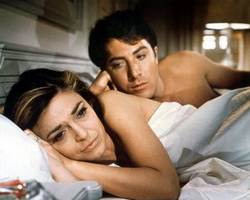
Fresh off his college graduation Ben Braddock (Dustin Hoffman) is unsure of his life's next step. After taking a ride home from his neighbor, Mrs. Robinson (Anne Bancroft) he is caught in an intense sexual affair. Things turn bad in a hurry though when Ben finds himself falling for Mrs. Robinson's beautiful daughter, Elaine (Katharine Ross).

Alright I'll admit if you took just about any film and put a Simon and Garfunkel soundtrack to it, odds are it'll be on my good side, call it a guilty obsession. You take their music though and combine it with a intelligent film on the complexities of love and social belonging and you may have just won me over. There's no denying a sort of melodramatic mood set about throughout The Graduate. It's not a high paced thriller, not a romantic film by any means, and the central characters are rather bleak and counter-culture. At the same time there's a certain appeal to their attitudes toward life. They represent fighting against expected social norms, the white picket fence ideology that plagued the 50's, even if it's existence is arguable at best. Yet at the same time there's Elaine, a sort of representation of the social norm. Ben's struggle has always seemed to me a struggle between a counter and pro cultural existence, something I believe many of us struggle with throughout life.

Mike Nichols couldn't have done any better in the casting department. Hoffman and Bancroft pull off a wonderful sort of odd blend chemistry, wonderfully giving off the older woman, younger man vibe (despite only being 6 years apart in real life). Then of course you have the wonderful Katharine Ross whose very presence lights up the screen, really providing a strong emotional counter to the tough Mrs. Robinson. Because of their ability to play well off of one another Ben's journey, if you will, becomes all the more believable, while maintaining an odd sense of fantasy. They're not afraid to show a sort of goofy side to every day events, while really bringing about that subtle series of emotion that is at the heart of The Graduate.

Capturing these moments though lies all in the hand of Mike Nichols. Nichols' talent behind the camera is really all about finding that perfect combination of style and substance. It's those moments that really add up for The Graduate grasping at the viewer. Willingham, Henry, and Nichols understand the need for a film of this nature to be entertaining, and yet intelligent enough to keep viewers guessing, questioning, and wondering really hits at the crux of smart cinema. Sure there's a few bumps, and the ending is entirely open to interpretation (even the director has one of his own), but The Graduate is just a legend of cinema, well worthy of all the accolades it has received.

The Graduate is one of those unique turning points in cinema, impossible to ignore, and just as hard to shake off, a must see for all cinema lovers.

Wednesday, November 4, 2009

Road to Perdition (2002)

ROAD TO PERDITION
DIRECTED BY: SAM MENDES
WRITTEN BY: DAVID SELF
OVERALL RATING: 10/10
TOP 100 FILMS: #61


After his son witnesses a crime,Michael Sullivan's (Tom Hanks) wife and younger son are killed by his accomplice, Connor Rooney (Daniel Craig), son of crime boss John Rooney (Paul Newman). Michael's only option now is to go on the run with his son in tow, but things will not be easy for the two as the silent assassin, Harlen (Jude Law) is hot on their trail.

When I first saw Road to Perdition back upon its release I had to sit back and process everything I just saw. I was mesmerized, astounded, and yet in all the melancholy and subtle distress of the film I found an odd sense of beauty, a period piece overlooked by those fearful of harming the myth of Tom Hanks, in Mendes' somber 2002 road film I found a masterpiece. Amazingly well acted, Road to Perdition is as much an on the run film as it is a movie about the struggles of family, a disconnected father asked to do horrible things for a family that will never understand him. This relationship developed between Michael and his son is raw, authentic, and heartfelt. Through their subtle moments of expression we find complex characters struggling with morality and their desire to connect with one another.

It doesn't hurt Mendes that he has assembled a cast to die for. Even the bit players, Ciaran Hinds, Dylan Baker, and Stanley Tucci are scene stealers. Paul Newman is engrossing, dark, and yet contains an odd look at the father figure side of these characters. He's distant and yet wants to connect with them, forced to make tough decisions about their lives, and his own. He's what Michael may have become had the events not transpired in the way they did. Yet in that regard Hanks handles this transformation of character perfectly. Asked to play the father and the assassin, the quiet killer and the parental lover, Hanks elevates each scene he's in with a sense of beauty. Then on the other side of things Craig is perfect as the hotheaded son whose actions lead all these characters into a downward spiral, while Law is on target as the mysterious assassin hired to do the job. Even newcomer Tyler Hoechlin, who is asked the impossible task of paring up with the likes of Hanks and Craig, holds his own in every moment.

With such brilliant acting Mendes is allowed to team up with cinematographer Conrad L. Hall to create a dark, and yet episodic 1930s tale. Mendes' talent for characters and action in non-action scenes creates an element of tension that really grabs ahold of the viewer, carrying the film through many moments of silent understanding between our characters. This is where David Self excels as a writer. Self never tries to force dialogue, create something that's not there, and in return we're allowed to watch the non-verbal dialogue of our characters, their subtle moments of depression, anger, and caring. Their way of looking at things and dealing with situations. But when you combine all three you get one of the most amazing scenes in film. The final gunfight between Rooney and Michael is perhaps one of the all time great cinematic moments. Silent, and yet loud, dark and yet finalizing, there's so much in that 30seconds to a minute I've watched the film several times over just for that moment. This truly is one of my all time favorite works of modern cinema.

A dark and beautiful affair, A Road to Perdition is one of the masterpieces of modern cinema, and should be appreciated far more than it has been.

Tuesday, November 3, 2009

Crouching Tiger, Hidden Dragon (2000)

CROUCHING TIGER, HIDDEN DRAGON
DIRECTED BY: ANG LEE
WRITTEN BY: HUI-LING WANG, JAMES SCHAMUS, & KUO JUNG TSAI
OVERALL SCORE: 10/10
TOP 100 FILMS: #62


When the sword of a legendary warrior (Chow-Yun Fat) is stolen, the fates of him, his life's one love, a thief, and a young up and coming swords woman from a noble family are suddenly intertwined.

When I was 13 and this film was released I have to admit I made plenty of jokes about the title. Giggled at the thought of the movie and "flying" swordsmen. It wouldn't be until many years later that I would realize the truly beautiful film that I was missing. Crouching Tiger is by all accounts an art piece on battle, love, and the struggles of warriors to find their place in the world, even when they don't appear as such on the outside. With such amazing fight scenes, Crouching Tiger elevates beyond the realm of just a fight movie and into the realm of art piece cinema, utilizing subtext and visuals in favor of high octane violence.

It doesn't hurt that the success of Crouching Tiger has spawned almost a new genre in and of itself. Surrounded by captivating visuals and trials of love, these films really center on the moments outside of the action. The quiet conversations, the reflections of these characters dreams, and how their attempts at different aspects of life end without the greatest of results. In that sense having such a talented cast of Michelle Yeoh, Chow Yun Fat, and Ziyi Zhang really allows Lee to work his magic behind the camera without interfering worrying about how the cast will handle different situations.

As a director there's no denying Ang Lee will likely go down as one of the most influential of our generation (despite what you think of some of his films). Much like the movement of its characters Lee allows Crouching Tiger to flow along from scene to scene effortlessly. There's no stopping for random moments of discussion/thought, no overbearing sense of wait for this amazing ending we have coming! It's all just so great you never wait for something to happen, because something is always happening. Beyond the conversations lies a world as engrossing as they came, elevating our sense of enjoyment and beauty to the next level. There's no denying when it comes to film experiences, Crouching Tiger is one worth embracing.

A beautiful and truly amazing work of cinema, Crouching Tiger is really one of those films you just have to watch as a film fan on any level.

Monday, November 2, 2009

Star Wars: The Empire Strikes Back (1980)

STAR WARS: THE EMPIRE STRIKES BACK
DIRECTED BY: IRVIN KERSHNER
WRITTEN BY: LEIGH BRACKETT & LAWRENCE KASDAN
OVERALL SCORE: 10/10
TOP 100 FILMS: #63


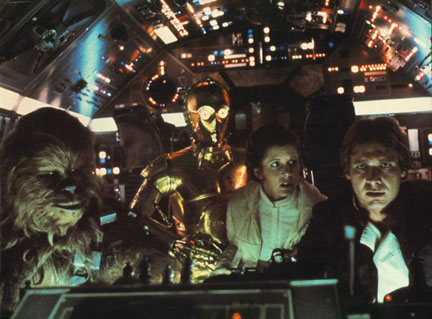
After the events of the first film, Luke Skywalker (Mark Hamill), Han Solo (Harrison Ford), and Princess Leia (Carrie Fisher) must split up so that Luke can continue his Jedi training, this time from the last remaining Jedi Master, Yoda (Frank Oz).

As a kid The Empire Strikes Back wasn't a personal favorite of mine in the Star Wars realm, that illustrious title stuck with Return of the Jedi. Alas as time passed my love geared toward the beauty and writing of Empire and less to the quirkiness and over the top finale of Jedi. Empire Strikes Back is a testament to everything that the Star Wars series held. Dark, and yet light hearted, action packed, yet with heavy handed morality, there's nothing clear cut, all shades of gray, and as such it's possibly the most captivating of all the Star Wars films. As director Kershner really tackles all the issues presented by Lucas and co., not shying away from the darker side of the force (I just had to say that), and really pushing the film forward.

There's a great sense of character in this second installment as well. The actors feel more comfortable with the dialogue and the different complexities of their characters. They don't shy away from certain words, and are willing to really put some thought into how their characters would act in certain situations. The new characters introduced in Yoda and Lando (Billy Dee Williams, who I still wish would have sneaked in a Malt Liquor plug) are fun, exciting, and great additions to the cast. They manage to be smart, wise, and yet contain a certain charm about them that defines much of the Star Wars cast.

Of course all their acting aside, we all know The Empire Strikes Back contains one of the top 5 twists to end all twists. As a kid who didn't whip out the wow mouth facial expression when that baby daddy drama was dropped on the audience (that's probably the worst line I've written ever... fail). Empire Strikes Back is entirely build up to that one moment. A forward thrust into the action packed finale, and as such Empire Strikes Back as an interesting critical film. It doesn't stand out on its own because it is a medium film, but somehow it manages to elevate above the rest. Perhaps because it doesn't try too hard to be cute or easy. It's comfortable being a bit dark, a little harsh, and yet it's insanely fun, and really gets you geared up for one of the all time greats. Perhaps because the other two are so light hearted we hardly realize it, but Empire Strikes Back will always be the glue that held the original series together.

While one of the darker installments in the Star Wars saga, The Empire Strikes Back is a critical and cinematic achievement, great from beginning to end.

Saturday, October 10, 2009

Star Wars: A New Hope (1977)

STAR WARS: A NEW HOPE
WRITTEN AND DIRECTED BY: GEORGE LUCAS
OVERALL SCORE: 10/10
TOP 100 FILMS: #64


After the death of his aunt and uncle, Luke Skywalker (Mark Hamill) teams up with Obi-Wan Kenobi (Alec Guinness), Han Solo (Harrison Ford), and his buddy Chewbacca, in order to save Princess Leia (Carrie Fisher) from the evil Empire.

Oh you know you love this movie. You know you need this movie. You know the history of cinema as we know it would be kaput without this movie. One of the most technologically advanced and extra-universally creative films of all time, Star Wars is a movie that really needs no explanation for why it is on my top 100 films. There's really nothing to hate about this movie. It's wonderfully cheesy in its own way, and yet manages to build around itself a captivating universe, that immerses its viewers, and sucks them in to this grand space and time.

So many films try to create such a Universe, but only a handful can properly pull it off. In that respect Star Wars stands among a very few, elite, crowd of science fiction film. All of this is supported by some of the most intriguing characters ever to have been put on the screen. With heavy action, a philosophical underlying nature, and riddled with subtext on the corruption of power, Star Wars is one of those family films that just keeps on giving, despite repeated viewings. This is all a product of a vision from George Lucas, who had it in him to put together an amazing film, despite all the odds being stacked up against him.

Mediocre marketing, struggling visual effects, budgetary issues, casting selection, none of this film should have worked. Instead, through pure determination, the crew behind it built an American masterpiece, box office megabuster, and one of the most amazing visual films ever made. You could go a million lifetimes and never make a movie as influential as Star Wars has been in modern cinema, nor as successful. A true classic to its very core, you just can't deny its sheer power.

With a great list of characters, creative plot arcs, and pure perfection in the entertainment department, there's no denying Star Wars is a force to be reckoned with.

Wednesday, October 7, 2009

Children of Men (2006)


CHILDREN OF MEN
DIRECTED BY: ALFONSO CUARON
WRITTEN BY: ALFONSO CUARON, TIMOTHY J. SEXTON, DAVID ARATA, MARK FERGUS, & HAWK OSTBY
OVERALL SCORE: 10/10
TOP 100 FILMS: #65


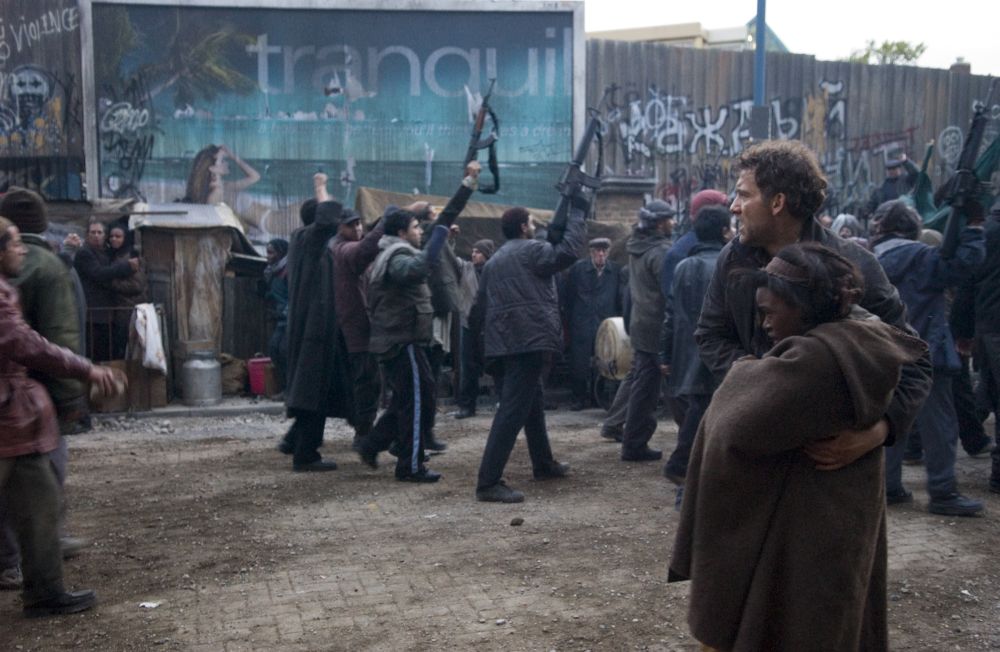
In a futuristic world in which women stopped getting pregnant, a regular every day working man, Theo (Clive Owen), is recruited by his ex to help transport a girl with a shocking gift... she's the first women in 19 years to be pregnant. When things go horribly wrong, Theo becomes the only man she can trust, just as everyone is coming down on them, seeking that baby.

Some movies you watch and you're entertained, some movies you watch and you're intellectually challenge, and then there's the third kind, the best kind, the ones that manage both. Children of Men was just one of those kinds of films. With every move my hand was stuck glued to the bars on my seat, I was stuck in my chair, captivated by every scene, every new development, every shot. The story was remarkable, the characters epitomes of the reluctant hero, the camera use, perfection. Combining a wide variety of styles, Cuaron created one of the most remarkable films I've ever seen... one of those the second it was over I ran for the replay button and watched all over again.

Michael Caine, Clive Owen, Julianne Moore, the under appreciated Chiwetel Ejiofor, and relative new comer Clare-Hope Ashitey bring to life a remarkable piece of cinema, centered on its ability to absorb you into the characters. Each with their own backstory, none perfect, but in that you find a way to cheer/hate them, sympathize with even the worst of them, you see the true cost of such a rare event. There's no real stereotypical villain, as the main bad guy Luke (Ejiofor) manages to even unveil deeper issues underlying his drive. Meanwhile our main character is a make shift guy, without shoes, and despite being surrounded by them, never using a gun, his instincts display his passive nature, opposing his serious situation. Yet for all the great characters, none of this would have worked nearly as well without Cuaron behind the camera.

The use of camera work is really what draws you in though. I seldom notice the use of camera work, but with each viewing I realize just how great the use of it is. Each scene is perfectly crafted, combining a variety of shot styles that really put you into the film, almost as if you're an extra member of this rag tag group going on a quest yourself. Even then, the film is very aware of what it intends to be. It's not a cheerful, loud music blasting, over the top action film. Instead, each action scene relies on the natural sounds of that situation, from car door alarms to gunfire, it allows the film to carry a very real sense. Almost as if you're watching something that could happen, despite being a futuristic fantasy film. The movie lets the audience in, challenges their very intellectual morals and entertainment aspects, and resonates in every way.

One of the most memorable films I've seen of the last few years, Children of Men is not only a technical marvel, it's a story telling masterpiece, well worth repeat viewings.

Cool Hand Luke (1967)


COOL HAND LUKE
DIRECTED BY: STUART ROSENBERG
WRITTEN BY: DONN PEARCE & FRANK PIERSON
OVERALL SCORE: 10/10
TOP 100 FILMS: #66


Recently sent to a prison camp, Luke (Paul Newman) struggles with authority, and finds himself an unlikely folk hero of the fellow prisoners for his escape attempts, and cool attitude.

Lots of films I've seen that people consider classic I admire but don't necessarily enjoy, Cool Hand Luke would definitely be everything that those films aren't. With a deep central character in Luke, whose decisions we don't always understand, we're put on a bit of a journey through his life. We spend time watching his antics, his poker skills, his egg eating capabilities, and the creative ways in which he comes up with to escape. At the same time our opening scene gives us some great, and yet incredibly odd, insight into the man. Here we see Luke, casually walking down a street destroying parking meters. Why does he do this, why is a man wasting time, and risking prison to do something that random... that's where our journey starts.

Aided by his opponent turned friend, the not so bright Dagline (George Kennedy), we are given an opportunity to see Luke's eyes through not only his, but his observers as well. Paul Newman has always had a sort of cool nature about him in his films. He's seldom the overreacting character, often level headed, and as such he's perfect for the role. Kennedy is wonderful as the off beat side kick who becomes our narrator, and provides us with some great insight into a character as complex as Luke. At the same time, we have the warden and captain who seek to break Luke of his wild ways.

As villains they're not necessarily deep, but they represent an idea greater than themselves. They represent the breaking of someone who just wants pure freedom. This is a very dangerous road to go as more often than not the villains just come off as cheesy, and uncreative. Yet, with careful writing Pearce and Pierson manage to avoid this pitfall by not making them the real villains. Instead, captivity becomes the villain. Holding someone back from what they seek to be in favor of removing their individuality. In that respect Cool Hand Luke shine, bringing out a character as memorable as the idol he becomes.

Smooth, well told, and captivating, Cool Hand Luke is a masterpiece in character study, with one of the most subtle, and yet memorable, you'll ever find.
Related Posts with Thumbnails