Showing posts with label War. Show all posts

Thursday, January 19, 2012

War Horse (2011)


A quick perusal of my top 100 films can tell you any number of things about me. For starters, that I have an unabashed love for all things Kurosawa. Then again, spending five minutes talking with me about movies could easily tell you that one. However, if you were to dig a little deeper. To seek out the connections and overlaps between many of the relating films, one constant should become entirely evident. I love me some good ol' fashion epics.

Throw a group of characters together, stretch their journey through life and war over two and half plus hours and low and behold, I'll be waiting at the end hands ready in applause position. So imagine my excitement when I found out that Spielberg was set to deliver such an experience. Let alone one covering one of the most oft ignored and yet still powerful wars in history, World War I.

From the sweeping landscapes of old English farm land to the mud enriched, rat infested, world of trench warfare, War Horse takes us on the kind of journey one might imagine would be found in the likes of a Disney film grown up. Joey, our titular horse, whose journey through a war with which he had nothing to do is sentimental to the highest degree, and yet at the same time strikes subtle and yet resonating chords on the true nature of war.

War Horse boasts what I might argue is some of Spielberg's finest directing moments in over half a decade. Not least of which is found in Spielberg's craft at creating a violent war film without much of the violence. In a way that would make Pulp Fiction era Tarantino proud, Spielberg creates graphic violence through carefully place camera movements. The substitution of imagery for actual bloodshed is a particularly nice decision - as evident in the riderless horses in one early battle sequence. This decision presents something I've been asking Hollywood to deliver for years - intensity without blatancy.

Of course for a generation like myself which has been born and raised on that graphical conclusion to events, these might leave some wanting. But I would like to hope that deep down one can admire the craft in coordinating and filming such scenes.

Still, where War Horse succeeds in visual poetry, it falters in a revolving cast of characters. Like many epics, War Horse deals with a wide array of characters coming and going, and as such the time for whole and complete character building is often left to the cutting room floor. Take for example Captain Nicholls and Major Stewart, played by the equally brilliant Tom Hiddleston and Benedict Cumberbatch respectively, who give off so much charisma in their short screen time that they still leave you longing for their return. Not to mention the sadly underused Eddie Marsan in the generally thankless role of Sgt. Fry towards the film's climax.

So in substitute for the revolving characters we are effectively given human bookends to Joey's journey. In this we find ourselves with Albert (Jeremy Irvine). The young, poor farm hand son of a perpetually drunken father (Peter Mullan) and fiery mother (Emily Watson). Albert provides much of the necessary scenes which help Joey build the skill set he needs to survive so many of the sequences he deals with in war. At the same time, Albert is also given a journey of his own to survive. Including a thrilling battle sequence - by far the film's most violent - as he seeks out his long embattled friend, Joey.

The rest of the cast is a wide assortment of "hey, it's um that guy" talent who deliver time and time again. But no matter what is thrown at us, there is never a doubt that this film is entirely Joey's film. For he is the heart of the matter. He is the life blood through which each character is given a reason for being. The film thrives and falls on the strength of his shoulders. Luckily for us all, he is made of stuff stronger than steel.

OVERALL SCORE: 8.00 / 10

Film Credits:
Directed By Steven Spielberg
Screenplay By Lee Hall and Richard Curtis
Novel By Michael Morpurgo

Thursday, May 5, 2011

Where Eagles Dare: The Epitome of Escapism


Escapism is addicting. Like a drug, you can find yourself itching for another hit. Begging for reality to fade off and the ecstasy of mindless entertainment enthrall you. It's a drug, and while it can be abused by even the best of us. In portion, it is a great reminder of the power of relaxation. And after a weekend first time viewing of Where Eagles Dare, I can think of few films that better embody that ideal.

With everything from a dual machine gun wielding Clint Eastwood to Richard Burton going to head to head with Nazis in an ice axe fight on top of a ski lift, hundreds of feet above the ground, this movie has it all. And whenever given the opportunity, it blows it up as well. There's grenade battles, tough pistol and machine gun carrying Frauleins, spies, a castle, and more bullets flying around than a Michael Bay action adventure. And you'd think with 2hrs and 30 minutes of run time, the movie would run out of things to do. Heck, I've only just discussed the last half hour!

Where Eagles Dare is by all accounts a two part film. The first half deals with spies, setup, and lays the groundwork for the no holds barred shootout that takes over for the final half. Even in context, that first half is a gripping game of misdirection. Where Eagles Dare, headlined by the infallible Richard Burton, hints and teases the viewer with promises of twists and turns to come. Knowing full well that once they come to pass, the only thing left for the viewer is the payoff. And payoff the film most certainly does.

Granted, Where Eagles Dare is not without its fair share of camp. You can tell Burton and Eastwood put in no effort for their faux-German accents that are supposed to help them infiltrate the castle. However, given the manner in which the film plays out, it seems almost fitting. As if that bit of absurdity was in and of itself a setup for the mass amount of action absurdity mania that was to come.

In their own way every character is a stereotype, and every character is hilariously so. Where Eagles Dare takes no shame in that, and by embracing it, it frees up the viewer to enjoy it just the same. Where many films, given the nature of spy tales, would seek to cram a message into the viewer, Where Eagles Dare settles for old school entertainment first value. A value, that was just what I needed at just the right time.

I was in dire need of an escapism fix, and there's no denying that this supplied my satisfaction in full.

Wednesday, April 27, 2011

There and Back Again: The Thin Red Line

Terrence Malick didn't so much as burst onto the scene as he slowly trickled through the gaps, like a snap in the desert, creating a path all on his own. And it must be said that it is a path I have often found difficult to navigate, understand, and at times bother to care about. Among a collection of modern directors who have found some cinematic power in twisting the rules of cinema into their own elusive state. Along with the likes of Werner Herzog and Alejandro Gonzalez Inarritu, Malick has formed a manner of film in which silence is boisterous, cold-hearted is warm-blooded, and a seemingly stillness can sprint faster than Usain Bolt chasing a golden podium.

It is a style I find disconcerting, if not entirely frustrating altogether. In essence it is a form of narrative that plays against everything I expect in a movie, and unfortunately also the things I desire. I am a man of character. Well, I'm a character. But either way the aspect of a film I find myself most directly drawn to are the characters. Their motives are important to me. The way they carry themselves, the tales they tell, and the manner in which their lives unfold. So, while I appreciate the solemn nature of films like Badlands and Days of Heaven, I don't  find them particularly engaging.

Which brings me to the third installment in Malick's short, but well maintained and beloved, directorial resume - The Thin Red Line. Based on the novel by James Jones about the battle of Guadalcanal during WW2, The Thin Red Line follows a platoon of soldiers journey through bloodshed, reflection, inner demons, and the raw intensity of nature, Malick focuses his efforts on the men themselves. We seldom see the action, but we are always experiencing it. Often tight shots on groups of soldiers marching through the woods help create a claustrophobic sense of war. An ever increasing fear of the world around, the beautiful and covert surroundings, and the all encompassing desire to escape - mentally and physically.

My first experience with The Thin Red Line led me in quite a different direction from those of Malick's other films. Having taken part many years before them, I found the movie's initially first part, the taking of the hill, gripping at every turn. I could not get enough of it. But in time it passed, and there was still half the film to unfold! It was at that time that my interest waned, and eventually collapsed under its own pressure. I didn't so much hate the film as I longed to love it. An odd feeling that finds your review of it equally challenging. How do you rate a movie you feel indifference is too unbecoming and yet anything overtly positive would be misleading? Negativity isn't the way to go, but if I recall I threw out a 7 for good measure and was done with it.

And there it lay for many years. It was until some time later that the theory of second viewings being the tell all for many films crossed my mind, and inevitably became something of a fixation with me. I revisited hundreds of movies that traversed the gamut of love and hate, and found to my surprise a few real gems among the evanescent. Perhaps the most momentous being Malick's The Thin Red Line. Keep in mind this was still some time before I cared to see A New World, Badlands, or Days of Heaven. Yet, I could not deny the existence of a new feeling that didn't exist the first time around.

Perhaps since then my run through the world of Kurosawa, William Wyler, and David Lean had dampened my aversion to long, winding films with multiple interwoven parts. But that was not the only reason. The Thin Red Line marked a rather epiphanic turn for my understanding of the way movie reviewing worked: The knowledge that no matter what we declare, our opinions are roaming ideals, floating throughout our minds, and capable of being pushed in any direction - it is just a matter of finding a force strong enough to do the job.

The Thin Red Line still ranks among my favorite war movies to this day, some four years later. It's a constant outside shot for my top 100, and one of those movies I am constantly looking back on and wondering "what if." It serves, alongside the rather ubiquitous 2001: A Space Odyssey, as reminders that even the most unfulfilling of films are not always bad - just not right at the particular time in life they came along. So while we may be quick to lash out in hyperbolic claims of mediocrity or dissidence, acknowledgment that this is not final is perhaps one of the most crucial components of any review.

It does not mean you must watch every movie you ever see twice. Instead, that you should never close yourself to the idea that one can come along and surprise you, even when your sure your mind is made up. In the words of Chuck Noland you should do so "because tomorrow the sun will rise. Who knows what the tide could bring?"

Saturday, July 3, 2010

Gallipoli (1981)

GALLIPOLI
DIRECTED BY: PETER WEIR
WRITTEN BY: DAVID WILLIAMSON
NOVEL BY: ERNEST RAYMOND
REVIEWED FOR: 1001 MOVIE CLUB
OVERALL SCORE: 8.50/10


Drifter (Mel Gibson) and sprinter (Mark Lee) become rivals, friends, and soldiers in the events leading up to World War I, and the Gallipoli massacre.

My selection for the 1001 movie club is a film I have admired, and enjoyed, for quite some time, Gallipoli. Not your typical war film, Gallipoli is more about the people, and their lives leading up to the event, rather than the event itself. The main advantage of this: attachment.

As the movie progresses, and we see the ups and downs our main characters, we grow an emotional attachment to them. We see their strengths and weaknesses, and care for what happens to them. All the while, looming in the back of our mind, is the historical significance of what they are about to encounter. Giving the film's infamous final shot a nearly infinite range of power.

Add to that Weir's talent for capturing scenery, and the beauty of the places these soldiers encounter, and you've got yourself a fine piece of cinema. Each shot feels breathtaking, and perfectly composed. Adding more and more to the viewing experience with each go around.

Leading us in to what I feel is the film's one real fault: techno. During the film there are two climatic running sequences, both of which are played to an odd techno beat. During the first, a more lighthearted moment, it seems perfectly find, but later, during the most important run in the film, it takes a lot of wind out of the moment. And if it were not for the great sequence that follows it, Weird may have lost the audience entirely.

Still, for all its faults Weir and company are able to bring the film back into form. Never swaying from the original purpose, and always presenting the viewer with something new. It's a fine war film, more about the people than the war.

Not without its flaws, Gallipoli is a captivating tale of humanity in the time of war. The tale of the men who went to fight, not so much how they fought. And the ultimate legacy, and tragedy, they came to pass.


Thursday, July 1, 2010

Green Zone (2010)

GREEN ZONE
DIRECTED BY: PAUL GREENGRASS
WRITTEN BY: BRIAN HELGELAND
BOOK BY: RAJIV CHANDRASEKARAN
OVERALL SCORE: 5.75/10


Frustrated by constantly coming up empty at possible WMD sites, warrant officer Roy Miller (Matt Damon) begins investigating the source behind their intel. Though just as he begins, Miller quickly finds out there's far more going on than meets the eye.

Let's be honest, I think the American public have made it rather clear that no matter how much you amp up the action, and names, most are not interested in dealing with Iraq, or Afghanistan, anymore than necessary. It's not aided much when the film you're trying to sell them covers ground so tread on it literally sinks several feet below the surrounding territory.

So if you're going to go that route you know you're going to have to try and give them something they haven't seen before. Green Zone, for all intensive purposes, doesn't.

What it does do is tie a plot together with the thinnest of strings and hopes to hell you don't pull anymore. Constantly trying to keep you on your feet with the Greengrass super shakey cam, while presenting you with decent action scenes, some discussion on the morality of war, and a few "evil" characters to dislike.

Imagine The Hurt Locker, minus the character, plus a lot more running. Sure there's an intensity to the situation, and sure there's a sentiment of heart to the story, but it's all for not if you can't bring it together. Greengrass, Helgeland, and company don't. Trying so hard to make the film bigger than it is, while avoiding any real attack, they manage to get a passable effort by, without anything for the viewer to bite into.

It's hollow in its best moments, and it never escapes that restraint. Pushing itself to give more action, more politics, the film just waddles until the end. An end that most of us could call for more than a half hour in. I admire for what it tries to do, wants to present, and mean to the viewer. But like a bad salesman it presents you with all the sidestory, and not the product. Hoping that by glossing it over with sentiments of morality, and an "all American" lead, you'll accept the end, regardless of how it gets you there.

Despite the best of intentions, Green Zone quickly loses sight of its own goal, and spends the rest of the film trying to get back there. Stuck in the muddy waters of cliche characters, uninspired plot points, and generic sequences meant to dazzle. While at the same time trying to push a message, it simply doesn't have the depth to back up.

Wednesday, June 9, 2010

Grave of the Fireflies (1988)

GRAVE OF THE FIREFLIES
WRITTEN AND DIRECTED BY: ISAO TAKAHATA
NOVEL BY: AKIYUKI NOSAKA
TOP 100 FILMS: #21
OVERALL SCORE: 10/10


After the death of their mother during an air raid, and the continuing departure of their soldier father, overly proud Seita must face the harsh conditions of war-time Japan, trying to protect his younger sister.

"Why must fireflies die so young?"

There are a handful of films in this world I would mention among those I would never seek out the opportunity to watch twice. Not because they lack in quality, but rather because they are an emotional struggle unlike any other. Grave of the Fireflies is not a movie about the adventures of two children struggling to survive. Rather, in the first few minutes it tells you, it's about the slow, painful, lonely, events that would define their legacy.

Events so ridden with stupidity on the characters' behalf. So riddled with stupidity on the government's behalf. So riddled with stupidity on war's behalf. It becomes impossible to keep your eyes off the screen. For it is slow. It is agonizingly painful. And every step of the way it will grab at the very heart of your emotional strings. Taking them, holding them dear, and not letting go until well after the credits have gone.

As perfect a measurement of quality as any I can imagine. Grave of the Fireflies is an animated film that reaches beyond its narrative method, and into the realm of human exploration. Why can it do this? Because it's real. Stories like this, experienced even by the novelist themselves, have filled the pages of Japanese History. The sort of stories nobody wants to hear, but everyone should. A cost of war unseen in big battles, and groundbreaking effects. The cost of war for those who have nothing to do with it.

In that respect I hold Grave of the Fireflies in the highest of regard. The sort of movie I recommend everyone see once. If for no other reason than the sheer magnitude of its power. The sort of movie I recommend everyone avoid. If for no other reason than the depth of emotion it requires. Perhaps the most pure, and powerful, example of what anime possesses the capability to be.

An anime so exceptional it could very well be labeled the greatest of its genre. If not one of the greatest films ever made. A beautiful, emotional, heartfelt look at the cost of war on those at home.

Monday, April 12, 2010

Glory (1989)

GLORY
DIRECTED BY: EDWARD ZWICK
WRITTEN BY: KEVIN JARRE
BASED ON THE LETTERS BY: ROBERT GOULD SHAW
WATCHED FOR: LIFE OF A CINEPHILE WAR MOVIE BLOG-A-THON
TOP 100 FILMS: #7
OVERALL SCORE: 10/10

New appointed Colonel Robert Gould Shaw (Matthew Broderick) takes charge of the first ever all-black volunteer company.

"We fight for men and women whose poetry is not yet written but which will presently be as enviable and as renowned as any."

Before Seven Samurai made its way into my heart, Glory was my uncontested, and inarguable, number 1 film. A movie so rich in personal association, I dared not remove it from that spot for fear of the emotional consequences. In fact to move it as I traversed, and fell in love with, more movies was of great personal sadness to me. It's the first movie I can remember truly crying over. The first film to hit the top of any list I ever made. The first movie I ever reviewed nearly 7 years ago!

A rich history with a film rich in history itself. I kind of like that. To me Glory is as much the best war movie made, as it is perhaps one of the best movies made in all of its subjects. There's a reason it echoes throughout schoolrooms over 20 years later. It has all the grandeur of emotion, character, and dedication, needed to make it so memorable.

Beautifully directed with steadfast dedication to the material, Zwick's natural talent for grasping the importance of scenes is on full display here. From the foggy, eloquent, opening to the smoke filled, and powerful, finale, Glory is truly a sight to see.

And it gets that way because it honestly cares about its material. It presents racism, acceptance, and everything in between. It'll bring you to love some, force you to hate others, and in the end ask that you, at the very least, understand them. Even the best of the men are flawed in their efforts. And that's what makes them approachable to the viewer. With each actor giving their all to breath life into them.

Matthew Broderick's Shaw is as capable as any performer. Unsure, but steadfast, inexperienced, but determined. It's a perfect fit, and critics who cite Broderick's youth need to recheck their history (Shaw was in his early 20's at the time). Broderick benefits by being wonderfully counterbalanced by the likes of Cary Elwes, Andrew Braugher, Morgan Freeman, and Jihmi Kennedy (such a great performance, the fact that he got no work afterward is a crime!).

Then, of course, there's Denzel Washington in his Oscar winning best supporting actor role. This was the first film I ever saw of Washington, and, wow, what an impression. Strong, but emotionally available. Haunted by a past, but certain to create a new future. His character's transformation is at the heart of the film. The ups and downs, shared in unison with Shaw create a relationship unlike any other. And the final shot of Glory captures that very essence so powerful, it has never once left my mind.

I do have to say it doesn't hurt when you have a score from James Horner that may very well be one of the most powerful, beautiful, and emotionally charged scores I've ever heard. Whenever I hear it, I replay the entire film in my mind. In a matter of a single musical cord I'm thrust back into this sweeping world. I can think of only a few musical scores with such a lasting impact.

You put it all together, and you get one of the most memorable movie going experiences you'll dare ever have. A pinnacle of the war film genre. Beautiful, epic, emotional, and wrenched in raw heroism. I've loved Glory since I first saw it. And I dare believe I'll always love it. Because, no matter how many times I see it, I always feel that same emotional connection. I feel the same way about it now as I did when I first saw it nearly 10 years ago. Now, that's classic.


When it comes to war films, everyone has their favorite. As for me. Glory is my pride and joy. It's the epitome of everything I seek out in the genre. A staple of heroism, and race. To express how much I love it in mere words, would be doing it a disservice.

Thursday, March 4, 2010

Kagemusha (1980)

KAGEMUSHA
DIRECTED BY: AKIRA KUROSAWA
WRITTEN BY: AKIRA KUROSAWA & MASATO IDE
OVERALL SCORE: 7.75/10


After the death of their lord, a group of upper officials recruit a petty thief (Tatsuya Nakadai) to impersonate their lord, while they attempt to rid their country of civil war.

"The shadow of a man can never stand up and walk on its own."

Based on historical accounts, Kurosawa's Kagemusha is one of the more interesting entries into his list of works. Often written off as little more than a "dress rehearsal" for Ran (Kurosawa's own words even), I've found throughout the years I have a rather large soft spot for Kagemusha. It's story is strong, but not great. It's directing is superb, but for time purposes much was left on the cutting room floor. It's also riddled with subtle jabs at the pointlessness of war. Yet these calls never feel perfectly developed... ultimately leaving Kagemusha as a premium example of when a film has everything that's just good, but never great.

Tatsuya Nakadai's performance may in fact be the perfect standpoint for this film. It's a good performance, and he handles the material well, but it's never a great one. He never takes that extra step to suck the audience in to this dynamic character. He's ultimately playing someone who looks like himself with a couple of added character quirks. The reason his performance is so important is that with the exception of a handful of scenes the entire film is situated on him. Even during the huge battles that take place, Kurosawa opts to ignore the fighting and instead concentrate heavily on Kagemusha's reaction to them. How he grows through the war, and ultimately gains respect for the man he criticizes, and interprets. The real glue for the film though lay in the supporting cast. Each with a strong enough presence and deliver to help carry the film through its conversation pieces. This is by no means the longest Kurosawa film ever, but being so conversation and stage dependent, you will be well aware it is not speedily paced.

Though if you're worried about pace, don't be. The tale of Kagemusha, if even for its historical significance alone, is a rather intriguing one. A man perfectly impersonating a lord for well over a year, especially during a time of war. It's a captivating story, and add to that Kurosawa's love of a man coming to realize something grander than himself, and you got something worth talking about. Still, there's always a feeling that it could have been more. Amazing shots and moments, stuck in the background of first time efforts, leaves it always feeling a bit underwhelming. It works because you grow to care, but it never achieves that level of pure amazement it so rightly should have.

While it's riddled with depth, and intriguing characters, Kurosawa's Kagemusha is a perfect example of a movie that always feels good, but never achieves greatness.

--------------------------------------------------------------
Alternate Perspectives:

"Though I may be far off the mark, it felt to me as though Kurosawa himself were the thief, living in the shadow of the man he used to be." - Japan Cinema

"When, however, the elements click, Kagemusha can be as impressive as anything else in the master's canon." - Not Just Movies

Monday, January 4, 2010

Brothers (2009)

BROTHERS
DIRECTED BY: JIM SHERIDAN
WRITTEN BY: DAVID BENIOFF
ORIGINAL SCRIPT BY: SUSANNE BIER & ANDERS THOMAS JENSEN (BRODRE)
OVERALL SCORE: 7.00/10


When Sam (Tobey Maguire), a Captain in the marines, has his helicopter shot down in Afghanistan he is presumed dead. As his family absorbs the shock back him, his wildchild brother, Tommy (Jake Gyllenhaal) steps up to be a father figure for Sam's kids, and help support Sam's aching wife, Grace (Natalie Portman). Tommy and Grace grow close, almost too close, but the return of Sam may shake things up more than they ever imagined.

While watching Brothers I was left with two overbearing thoughts: 1) My god could the commercials have shown more of the ending? and 2) It's nice to see Tobey Maguire return to pre-Spiderman acting form. Let's be honest Tobey Maguire is no acting mastermind, much of which I nominate to his rather high pitched voice, but here he's asked to deliver a dark, borderline schizophrenic, performance, which he manages to handle with solid ease. The rest of the cast handles their performances with great respect to the original Danish film, and seem to care about the message being sent. Unfortunately though, there always seems to be something missing.

Let's be honest following the critical disaster that was Sheridan's Get Rich or Die Tryin', the man needed a solid critical comeback. Perhaps that's why one of the best character people in the business went for a "safe" remake. Sure the film deals with harsh materials, but he would really have to screw it up in order for it to be lambasted critically (despite it receiving mixed reviews). What allows Brothers to work is Sheridan's sense of character, the development of them, and how they deal with certain situations. The growth of Tommy, and subsequent descent of Sam, is believable because it develops over time, through painful situations. There's no random cut to a new personality trait that randomly occurred, it all goes with the flow.

Unfortunately though the writing of David Benioff (whose been a mixed bag of greatness and disaster) always seems a step ahead of the emotion. In the beginning this is perfectly fine, as we assume it'll all tie itself together in the end, but it never really does. This ultimately leads to a dark, and entrancing finale, that should have been more impactful than it really was. Much of this is caused by repetitive dialogue, and what seemed to me to be an abrupt cut in order to hasten the pace for the big moment. It still works, but I felt a bit underwhelmed, despite some great emotion performances given by Portman, Maguire, and Gyllenhaal. The ending also leaves quite a bit unanswered, but does give the viewer some minor closure, which gives it a passing grade. As a blogging buddy of mine, MadHatter, pointed out, you can start off slow and hit the ending, and be loved, but no matter how you start you can't fumble the ending. Brothers may be an example of this far more than it cares to be.

Though don't let that discourage you. The ending isn't all bad, and there's a lot of little things to appreciate from this latest Sheridan outing. Just don't expect to be waving any flags of perfection. Oh, and if you can, avoid the trailers for this movie as much as possible (they pretty much show nothing but the finale 45minutes of the film).

While it's by no means perfect, Brothers boasts some great performances from its leads, and manages to skate by on the strength of the original story.

Monday, December 7, 2009

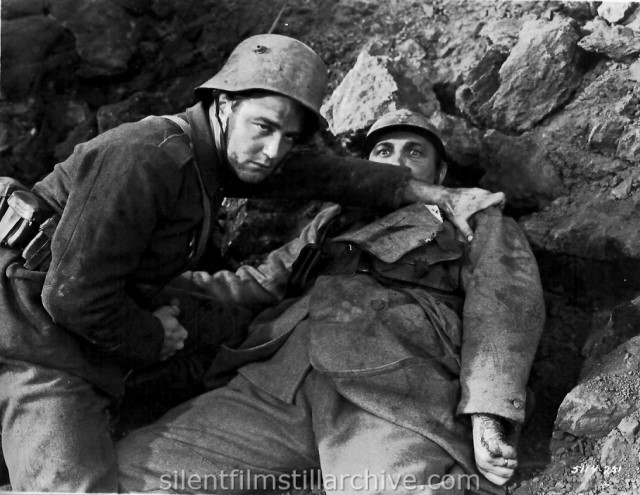
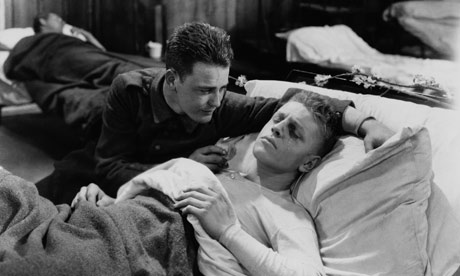
All Quiet on the Western Front (1930)

ALL QUIET ON THE WESTERN FRONT
DIRECTED BY: LEWIS MILESTONE
WRITTEN BY: MAXWELL ANDERSON, GEORGE ABBOT, DEL ANDREWS, C. GARDNER SULLIVAN
BASED ON THE NOVEL BY: ENRICH MARIA REMARQUE
OVERALL SCORE: 8.00/10


Paul (Lew Ayres) and his classmates join the German war effort during the beginning of World War I. Filled with thoughts of heroism and valor, the men soon find war is not all that they had built it up to be as death, isolation, and hunger take its toll.

If you were to ask me how many books I've read in my life I could quite honestly probably count it on both hands. If you asked me how many I truly enjoyed I could do that on one. All Quiet on the Western Front is one of those novels I absolutely love to death. So as you can imagine going into this film I did my absolute best to remove all novel comparison from my head, in the effort of giving it as good a shot as possible. What I found was a griping and powerful, yet glaringly flawed, war epic, filled with depth in moment, recognition of meaning, but lacking the time to truly delve in.

Lew Ayres was a mixed bag for me, I often found him looking the part, but his performance often felt all too staged, and really lacked the subtlety in emotion I expect from such a character. Meanwhile the classmates go up and down in terms of acting as well. Ben Alexander as Franz was a particular standout for me, with the task of playing such an emotionally torn character, while Louis Wolheim as Katczinsky is everything I could have ever wanted out of that character, and more on several occassions. Though the glue that holds this film together, through all the writers, and attempts is Milestone's strict direction.

Never allowing the story to hop around, maintaining strength in narrative transitions, and pushing onward into the harsh character moments, regardless of whether or not his actors can keep up, Milestone brings to life Remarque's amazing novel in full form. Milestone breaths a sort of life into the scenes, maintaining a sense of realism, while never sacrificing harsh story elements in favor of a more cheerful film. It's that sort of dedication to the meaning of the story that makes novel transitions to film possible, and in that respect I greatly admire Milestone's efforts.

A powerful film adaptation of Remarque's novel restricted only by the flailing quality in acting, but saved constantly by Milestone's direction.

Saturday, November 21, 2009

Paths of Glory (1957)

PATHS OF GLORY
DIRECTED BY: STANLEY KUBRICK
WRITTEN BY: STANLEY KUBRICK, CALDER WILLINGHAM, & JIM THOMPSON
OVERALL SCORE: 8.75/10


After failing to take over the "Anthill" during World War 1, Colonel Dax (Kirk Douglas) must defend several of his men from charges of cowardice at the hands of their selfish General Mireau (George Macready).

Kubrick has always been hit or miss for me. Sometimes brilliant camera and narrative artist, other times I get the feeling he tries to force what isn't there. With Paths of Glory Kubrick pulls off a work of directing genius, keeping this powerful novel adaptation simple, pure, and to the point. Never forcing intense scenes with sweeping camera shots, Kubrick keeps the film character bound, only showing what is absolutely necessary to get the message across: even heroes aren't always heroes in war.

Douglas and Mcready light up the screen, butting heads with great charisma and use of dialogue. While supporting cast members Ralph Meeker, Adolphe Menjou, Wayne Morris, and Richard Anderson each perform their jobs admirably. Never asked to dominate the screen, each actor is asked instead to embrace their character, wait for their character's defining moment, and then execute it. Some subtle, some with heavy handed emotion, each of the actors do exactly that, giving the viewer an intense viewing experience.

It's that experience that brings the film to life. At times comically depressing, harsh in its view at military precedent and politics, Kubrick and company spare nobody. It's that sense of single moral statement that allows Paths of Glory to be such a small, simple film, and yet maintain a powerful punch once the credits role. The use of black and white give a sense of realism and history to the film, elevating the events to that of a documentary status. It's in that sense of narrative strength that Paths of Glory's tale fully succeeds, and the audience is all the better for it.

Solid from start to finish, Kubrick's narrative skills behind the camera are on perfect display in this thrilling and emotional World War 1 tale.

Wednesday, September 30, 2009

The Great Escape (1963)


THE GREAT ESCAPE
DIRECTED BY: JOHN STURGES
WRITTEN BY: JAMES CLAVELL & W.R. BURNETT
OVERALL SCORE: 10/10
TOP 100 FILMS: #70


Allied PoWs (Richard Attenborough, James Garner, Steve McQueen, Charles Bronson, James Coburn, Donald Pleasence) hatch a complex escape in the hope of freeing several hundred men from a German camp during the height of World War 2.

As I have mentioned before I love epics, and The Great Escape is one of the gems of the genre. A war epic, not about the war itself, but about the wide array of characters that encompass it, and their duty as soldiers. The colorful characters really highlight The Great Escape, which manages to be heavy on fun, light hearted, and at the same time sneak in some subtle horror of war stories in between. What's most amazing about The Great Escape is that while it's end is not all glory and cheer, it manages to offer hope in such painful situations.

From the music, to the setup, to the execution, The Great Escape is filled with memorable scenes, wonderful lines, and events that inspire you to cheer for these lovable oddballs as they try to escape from their dire circumstances. Even with limited background, we're able to get subtle insights into the strengths and weaknesses of each character, especially the troubles they have due to long time imprisonment.

The story is so much fun, so heavily layered, you can't help but get caught up in it, and at the same time become absorbed in their story. Inspired by real events, it's not hard to see why the film adapts the storytelling method it does, concentrating heavily on all the intricacies involved, and the aspects of each character that brings them to life. Ultimately though The Great Escape manages to be a light-hearted and yet insightful film with a memorable scene at every turn, and characters throughout, it's one of those movies everyone should watch at some point.


One of the greatest war epics/escape films ever made, The Great Escape broke the mold upon its 1963 release.

Tuesday, September 29, 2009

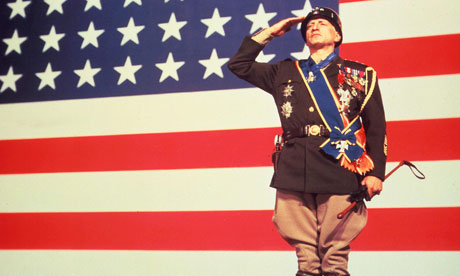
Patton (1970)


PATTON
DIRECTED BY: FRANKLIN J. SCHAFFNER
WRITTEN BY: FRANCIS FORD COPPOLA & EDMUND H. NORTH
OVERALL SCORE: 10/10
TOP 100 FILMS: #71


Egotistical military genius, General George S. Patton (George C. Scott) leads his tank unit through Africa, into Italy, and through Europe during World War 2. Along the way he must face difficult enemies, daunting tasks, and the trouble he creates due to his ego and intense reactions.

From the opening "Ten-Hut!" to the closing, melancholic look at glory, Patton is a force to be reckoned with. Great lines, memorable characters, solid action, amazing storytelling, and great directing, intertwined with social commentary, character study, and war depiction, we get the chance to follow Patton's long World War 2 journey. His character flaws attract us, his infallible strength inspires us, and his intelligence moves us.

I've loved the movie Patton ever since I first saw it, some 6 years ago. With one of the great performances of all time from Scott, supported by a knockout performance by Karl Malden as Patton's opposing match. The story is wonderfully put together by Coppola, North, and Schaffner, who manage to create strong sense of realism, in this larger than life character. At the same time Schaffner manages to combine both pro and anti war moments, for a man whose career was quite literally a military one.

At the same time, Patton is oddly subtle, and in the end we find his emotions run far deeper than he would allow anyone, even the audience, to truly know. As such we're allowed to find him both flawed, and yet oddly the perfect man for what he did, and in this way an admirable one. We find the good in him, accept the punishment for his bad, and judge his every move, both good and bad, in the hope that there is some redemption. We're allowed to observe him, something so many films miss when it comes to larger than life character studies... we can never be them, only try to understand the severe complexity of them. For all these reasons, Patton is without a doubt one of my all time favorite films.


One of my all time favorite War and character films, Patton is one for the ages, a true knockout of a film.

Tuesday, September 22, 2009

MASH (1970)


MASH
DIRECTED BY: ROBERT ALTMAN
WRITTEN BY: RING LARDNER JR.
OVERALL SCORE: 10/10
TOP 100 FILMS: #76


Talented doctors Hawkeye (Donald Sutherland), Trapper John (Elliot Gould), and Duke (Tom Skerritt) wreak havoc on the 4077th Mobile Army Surgical Hospital during the Korean war.

If I were to name my top 10 most re-watchable films of all time, I'd be hard pressed not to throw MASH right up there at #1. Having watched every single episode of the TV show, I was more than delighted to watch this dark war comedy from 1970. With great characters, fun situations, absurd moments, and the coming out film of Robert Altman MASH is a staple in cinema history, way too overlooked in terms of impact.

While not as anti-war as some would claim, and the TV show was, MASH as a movie is pro characters. Showing a unique side to the common soldier opposing the genre cliches, and showing a lighter side to the characters, while maintaining the dark struggles of war. Instead we are given a fun, off the wall, two hour long comedy of grand proportions. You'll fall in love with the hijinks of Hawkeye and Trapper John, you'll laugh at the super religious Major Burns (Robert Duvall), and the military strict Major O'Houlihan (Sally Kellerman).

Launching a million careers, Altman's knack for characters brings to life some of the most memorable in film history. Add to that Altmans love for real conversations, making every scene fun as each actor tries to steal the scene from one another. Lardner's screenplay brings to life the novel by Richard Hooker, adding in Vietnam allegories, and creative use of dark issues. Put all of these together, and you get one of my all time favorite films, one that deserves to be watched several times over.


An all around fun dark comedy on the troubles, and characters, involved in War.

Monday, September 21, 2009

Braveheart (1995)


BRAVEHEART
DIRECTED BY: MEL GIBSON
WRITTEN BY: RANDALL WALLACE
OVERALL SCORE: 10/10
TOP 100 FILMS: #78


After the death of his wife, William Wallace (Mel Gibson) becomes the leader of a Scottish uprising, as they attempt to regain their country's freedom from British king Edward the "Long-Shank" (Patrick McGoohan).

If you glance over my list you'll notice I have a few categories of film that I really love: among the most consistent are epic+war films. I love going on a journey with characters, seeing their ups and downs, the trials and tribulations, and how they ultimately meet an end to their overarching problems. Mel Gibson's much beloved 1995 epic war film about Scottish hero William Wallace, and the 13th century Scottish Revolution, is about as great an epic film as you're ever likely to see.

We follow our main character from childhood to end, from his first love, to his emotionally, and grand struggles that would become the driving force in his life. The battles are epic, the story monumental, the directing spot on, the characters fun and exciting, the depth exactly where you'd want it to be. Perhaps the best aspect of Braveheart overall is that each character comes with such depth that you are driven to feel exactly what Wallace and Gibson want you to feel about them. You feel compassion, love, and support for William Wallace, distaste for the King, and a struggling sense of untrust with Robert the Bruce (Angus Macfadyen).

In fact the only thing not perfect about this film is the editing, which makes a couple of rather obvious blunders, probably why it didn't win the Oscar there. Overall though the editing mistakes are microseconds of this massive film, and will do nothing to harm your overall viewing. In fact Braveheart accomplishes three things most often associated with classic films: 1) Strong stand out characters 2) Insane quotability (almost every classic film has at least one line) and 3) The ability to reach out to the audience. Combine all of these and you get a film transcendent in the world of cinema, an always perfect treat, even on your 20th viewing.


Braveheart is one of the greatest epics ever made, with just pure quality in writing and directing from top to bottom.

Sunday, September 20, 2009

Henry V (1989)


HENRY V
WRITTEN AND DIRECTED BY: KENNETH BRANAGH
OVERALL SCORE: 10/10
TOP 100 FILMS: #79


After being insulted by the king of France, young King Henry V (Kenneth Branagh) leads his English army into the depths of France, and into one of the bloodiest wars in history.

Deciding between Olivier and Branagh's versions of Henry V and Hamlet depend entirely on what you look for in your movies. If you like your play adaptations to be literal in their shot technique, Olivier is your man, a method I think works great for his Hamlet, but if you're looking for very cinematic style, Branagh brings Henry V to screen in amazing form. As Branagh and Olivier both know, there's no adapting Shakespeare's words for the screen, you just don't do it, and as such both seek to capitalize on his use of them.

Yet Branagh goes the extra mile, he brings to life Shakespeare's highly underrated play, encompassing a world within the film, self aware, and yet a gritty look at war. Using Derek Jacobi as the narrator, Henry V comes to life in the hands of Branagh, with amazing performances from Branagh himself, and supporting stars Ian Holm, Robbie Coltrane, Emma Thompson, and a very young Christian Bale. Each delivering their performance in fine form, grasping the dark, and gritty nature Branagh seeks to show amidst the 80s anti-war film movement (alongside films like Platoon).

In doing so Branagh creates what may just be one of the single greatest shots ever designed for a play to film adaptation. The post battle march of the wounded song scene is simply perfection personified. It may be worth watching this entire film alone for that one scene alone, as you grasp all the meaning of the entire film, and the pain felt by each of these characters, in a simple no-cut 3minute shot. Some directors will go their entire career and not design a shot 1/10th a great as that single one.

Yet one shot alone does not make a film, and Branagh knows this. Leading up to it, he keeps the film moving, even during conversations, people are always running around rooms, moving in halls, charging on horses. As such Branagh keeps the pace fast, gripping, ever building in anticipation. While at the same time utilizing some of the Henry play back stories from Shakespeare to give a grander perspective of those outside the mind of the King. So as, we are rewarded with a Shakespeare adaptation that is both concise, entertaining, gripping, and when it comes to films on Henry V, unmatched in execution.

While it depends on your flair of film, in terms of play adapting, Branagh's 1989 masterpiece brings to life one of the most cinematically inclined plays of all time.

Wednesday, September 16, 2009

Der Untergang/Downfall (2004)


DER UNTERGANG/DOWNFALL
DIRECTED BY: OLIVER HIRSCHBIEGEL
WRITTEN BY: BERND EICHINGER
OVERALL SCORE: 8.25/10


As Berlin is surrounded on all sides by Allied soldiers, Adolf Hitler (Bruno Ganz) tries to come up with any last ditch effort to save his German ideal. Meanwhile those around him struggle with their loyalty to Hitler, the soldiers still fighting, the civilians, and their desire to flee before being killed by the Russian onslaught.

Dark, depressing, humanizing, and powerful, Hirschbiegel's (what a mouthful) 2004 epic drama of the last days of Hitler is as captivating, historically accurate, and impacting as war films come. The cast, highlighted by Ganz, is simply amazing, backed by HBs gritty and careful tone, centered on telling the true story, bringing to life the real struggles of some of the most hated people in history. There's no denying this movie is dark, from the central characters being Nazis to the underlying fact that many opt to do devastating things in the face of the Russian threat.

As a narrative the movie is told from 3 perspectives: The first being that of Hitler himself, the second being his secretary Traudl Junge (Alexandra Maria Lara -who wrote a book on the events depicted in the film), and Dr. Schenck (Christian Berkel) who opts to stay behind in order to care for the remaining troops. The torn nature of these characters presents us with a sense curiosity, some possessing ignorance to what is going on around them, and some only caring of what happens to themselves.

The humanizing of these characters has been pretty much the only real public criticism of the film. I disagree though that this is a bad thing. It's a dark, pressuring, reminder that those who enacted such violent, insane, and painful crimes were human, flawed, and were allowed to make those decisions because people wanted to remain ignorant. To try and leave them as nothing but historical figures, would be to leave them in the past, ignorance to the possibility that if not taught correctly such events could occur again.

This is why I respect this film so incredibly much, it tells the story as it happened (within reason), not ignoring character traits/facts in favor of entertainment or broad appeal. The only downside to that fact is the movie drags its feet from time to time, but our overbearing curiosity as to what happens to these characters, how did each of them meet their ultimate fates, strives the viewer to continue watching. In the end, there's no real happy scene, the characters that survive you could only say are the lesser of the evils displayed, not really sympathetic characters. With that though comes the moral question, how do we judge the ignorant?

As films of its nature go though, you simply won't find a better display of historical storytelling during a time of extreme pain in the world. Ultimately though, Der Untergang will tug at all of your emotional and moral cords, pulling them to the extreme, as it challenges you to witness the final days of the most villainous man in history.


An all around masterpiece, Der Untergang/Downfall may not sit well with your stomach, but intellectually you couldn't ask for a more real, and powerful, film.

Saturday, September 12, 2009

Inglourious Basterds (2009)


INGLOURIOUS BASTERDS
WRITTEN & DIRECTED BY: QUENTIN TARANTINO
OVERALL SCORE: 7.00/10

The lives of 8 jewish soldiers, a french jewish lady in hiding, and an SS Colonel, nicknamed Jew Hunter, all intertwine at the premier of Nazi propaganda film, Nation's Pride, in which Adolf Hitler will be present.

There's no easy way for me to summarize the experience of watching Inglourious Basterds, it's as mixed of an affair as you can possible imagine. So I suppose the easiest way for me to do it is to explain via something that occurred after the film was over:

As I walked out of the movie there were a couple other groups walking out, and while listening in (don't judge me I like to hear other opinions) I noticed something odd occurring. In each group (total of about 3) the general consensus was seemingly confused enjoyment, but what struck me was not that as I was in the same category, but rather that each group only had one person doing all the talking. What was that person talking about? Well that one person was, in point of fact, explaining to the other members what a Quentin Tarantino film really is all about.

I really can't explain it any better. In terms of writing the movie is on par with Pulp Fiction, in terms of execution it falls in somewhere just below Jackie Brown, and make no mistake of it, the movie sings from beginning to end of Tarantino. Something I think even Tarantino wouldn't want, as the movie is quite obviously (from the title of the opening chapter, ala Kill Bill style) a homage to the films of Sergio Leone. The opening sequence brought back memories of the opening scene from The Good, The Bad, and the Ugly, while the rest of the film is a mix of exploitation films, and Tarantino style.

At times not all of this works as well as Tarantino wrote it too. Some side tours in story feel forced, while the style waves from amazing, to dragging, and back again. The acting ranges from perfection (Christoph Waltz, Melanie Laurent) to pretty good (Brad Pitt, Eli Roth), and lastly to questionably present (Mike Myers), and just about everything in between. None of it takes away from the experience of watching the film though, and Tarantino knows how to get the most out of his acting talent, even if they are used for only a brief time.

What I really found sad though was the comparatively small amount of time we actually spend with the Basterds. They encompass really only 2 1/2 of the 5 chapters, and their first chapter of introduction is so awe inspiring you almost scream for more. Fortunately though the side story is just as satisfying, occurring simultaneously with the Basterds, is the tale of Shosanna Dreyfus (Laurent), a jewish cinema owner, and the sole survivor of her family (who are brutally massacred in the opening chapter), hiding under an assumed name. The Dreyfus dynamic opens up the door to the multi-layered plot, and allows the viewer to really get into the mind of the character, the only character, other than Lando (Waltz) we're really allowed to spend a lot of time with solely.


Another thing I noticed is that with the exception of the maybe 5-6 scenes, much of the film takes place at table side conversations. These conversations drive the character development, the plot, and are often filled with witty Tarantino usual dialogue. I found this fascinating as form of core narrative device, as I've never seen it used so heavily before in such a massive project. I'm not sure it makes the film infinitely better, but it adds a unique dynamic to the film, something I'd like to revisit upon the DVD release, just to see if my visual assessment is right.

As an overall recommendation though, I find it hard to put down exactly how I feel about Basterds. As a work of cinema it's truly an awe to watch, with great writing, and amusingly dark characters to drive the film. Yet as a work of entertainment and story telling it seems to struggle a bit with finding it's footing, wondering back and forth without a single narrative focus established (even the spuratic Kill Bill films established a style of some sort and stuck with it, for the most part).

Really, I think this is one of those movies you can't really say "you're going to love/hate it," you just have to watch it, let it digest for a little while, and see how you feel about it overall. In the end for me, I enjoyed you more than I disliked, I was fascinated more than I was bored, and would watch the movie again if given the chance, so it gets a weakishly strong positive review.


So I recommend you give the film a shot in your own time, just be sure when you do decide to watch it, you're willing to think about a film, not just expect mindless entertainment.

Monday, August 10, 2009

Sergeant York (1941) 7.5/10


SERGEANT YORK
DIRECTED BY: HOWARD HAWKS
WRITTEN BY: ABEM FINKEL, HARRY CHANDLEE, HOWARD KOCH, & JOHN HUSTON


Sergeant York relives the story of Alvin C. York (Gary Cooper), a drunk with serious anger issues, who turns his life to Christianity following a life changing event (in the movie being struck by lightening, in real life having his best friend die in a bar brawl), and in return becoming a conscientious objector to the war in which becomes a hero for. Much in the same respect of later films like Gallipoli, Sergeant York is told in two parts. The first hour or so follows the life transforming events that shape him. His early life of booze, women, and fighting, the meeting of his true love, and future wife, Gracie Williams (Joan Leslie), his attempt at getting a home, and the ultimate life turning event that leads him to religion.

Overall the tale of Sergeant York, which benefited from many events that took place in 1941 and a growing pro-war sentiment, is one of a man who anyone, whether they be religious or not, can look up to. He doesn't fight in the war in order to kill, or to protect this greater notion of freedom, but rather, as he states himself, to hasten the war in order to save as many lives as possible. The tale of Alvin York is at the same time the tale of a man who better understood why he was fighting in a war than those around, and as such he has a greater cause and purpose than those.

At the same time Hawks and Cooper team up well to capture the simple, straight forward, York, who sees what he does as a way of saving as many people as possible. The writers back this up with a full blown epic of a character story, not missing any important details in the life of York, and instead allow his character to grow throughout the story. This, in turn, allows the audience to see what made York the historic figure he is today, and at the same time not be a tale of war, violence, nor an overbearing sense of duty/honor. To the benefit of all those who watch it.

On the downside Sergeant York runs a bit long for its story, enjoying more mystical aspects at times than the way things really played out. Yet the real life involvement of Alvin York helps keep the story level headed, and to the very point he tried to make throughout his life, both pre and post war.

Overall Sergeant York tells a great tale of a man who it is impossible to separate from his ideas, and whether or not you agree with him, it is easy to be captivated by his tale.

Thursday, August 6, 2009

The Hurt Locker (2009) 8.5/10


THE HURT LOCKER
DIRECTED BY: Kathryn Bigelow
WRITTEN BY: Mark Boal


The Hurt Locker follows the tale of 3 members of an army bomb defusal squad.

Starring up and down talents Jeremy Renner (28 Weeks Later) and Anthony Mackie (Eagle Eye), The Hurt Locker is a captivating tale of men who put themselves right into the thick of danger day in and day out. Subtle in its character studies, the movie centers on the experienced, but wildly rebelous, Staff Sergeant William James (Renner) who has just been moved up after the death of JT Sanborn (Mackie) and Owen Eldridge's (Brian Geraghty) commanding bomb expert. By the book Sanborn and Eldridge struggle with their new commanding officer, and don't like his eradic style of doing things.

From the opening shot till the end Bigelow has created an intriguing mixture of stylizied shots, and quiet character studies, filled with a mixture of action and drama. Shot mostly during the day, with the exception of a couple of scenes, the lighting provides a generally interesting backdrop to the settings these characters are put in. And yet it is the natural tensity of the moments that bring about the film's central drama. The movie analyzes how all 3 of the main characters deal with each situation, and since all 3 are so very different the results vary from situation to situation. Bigelow handles these shifts rather carefully, and in return we are rewarded with a set of events that lead to a better understanding of each of our core characters.

Mark Boal, whose only previous work is In the Valley of Elah, is in many senses lucky to have had Bigelow take on the project. Bigelow's natural nack for tension brings out the best in moments that feel a bit underwritten. Boal's talent for characters well compliments Bigelow's action background, and the two are able to meet in the middle in order to produce a powerful piece of film. As well in order to keep the film centered on its purpose the two manage to keep everything about the film rather simple. There's no over the top action scene, no insane twist at the end, no corrupt government plot, the film is just about what the summary tells you it is about.

On the downside the movie is probably about 10-15minutes too long, which I find ironic sence I wish I could see 10-15minutes of what happened to all the main characters when they returned home after their tour of duty. Ultimatley though the film stays centralized on Sgt. James, and his final decision gives us one final tid bit of insight to his true overarching character.

A powerful film, with a good array of drama and action that's well worth your time to check out.

Overall Rating: 8 and a 1/2 out of 10.
Related Posts with Thumbnails