Showing posts with label Animated. Show all posts

Thursday, September 8, 2011

A Town Called Panic (2009)


Overall Score: 8.50/10

I have to be honest, A Town Called Panic frustrates me deeply. It is almost entirely Univarn critic proof. My usual go to items on character development, lack of narrative flow, or blatant misnomers pale in comparison to the film's sheer "WTF" factor. A factor so pushed to the extreme of its capabilities, one might imagine this film ought to be watched through multiple levels of consciousness if only in the name of determining which level most amplifies this film's more unique qualities. Because let's be honest, there's absolutely no way you could complain about the movie's weak characters and still keep a straight face when suddenly the image of cow kamikazes works itself into the forefront of your brain.

So I find it hard to know what to say about the film. I think it's pretty much a movie that can only be reviewed on the enjoyment factor. That's how it sells, and presents itself. There's no "now my main character will twist his head in a slightly downward and away direction in the hope of gaining audience sympathy even though he has less dimensions than the marketing's cardboard cutout of him" scenes which press the dramatic issue that's just not there. Nope, A Town Called Panic starts off with a small slice of zany, and just continues piling until the credits roll.

Which leaves the question - how much of the film did I actually enjoy? A pretty good percentage. I won't say I found everything to be quite as glorious, and certain sequences left me wondering more about what will happen next and less about what's going on in the moment. But that is the film's greatest strength. Even during its moments which are low on entertainment, there's a constant feeling that what will happen next can only be even better. This is important for a reason all too often forgotten by Hollywood blockbusters - it keeps you smiling, guessing, and wanting more throughout the film. There's no better feeling than walking away from a movie knowing that at no point did you think "this is a waste of time."

Now I'm not going to deny that A Town Called Panic appeals to a very specific base of filmgoers. Those who expect nothing less than a montage of 'realistic' over the top action sequences loosely tied together by what someone calls a plot, are probably not going to be quick to hop on the Panic bandwagon. Same might be said for those who see the world in only "chick flicks" and "everything else." So if you're going to seek out and indulge in this experience, consider yourself warned. But I should say, I'd recommend indulging in this anyway.

Wednesday, March 30, 2011

Rango (2011)


Overall Score: 7.75/10

To be absolutely honest, it's not very often that I find myself turned off by a commercial for a movie and then perform a complete 180 when I finally seek it out for an official viewing. If anything, it is far more often that I am drawn in by a commercial and then sulk into a darkened corner and rant when the final product is unveiled. So, it is always a pleasant surprise to find a movie which without caution sails past my lowered expectations, and finds a place high upon my shelf of entertainment.

Last year, that movie was How to Train Your Dragon. This year, the movie is Rango. And believe me, the commercials couldn't be worse with respect to what this film is trying to do. Combining elements of Star Wars and the Sergio Leone Spaghetti Westerns, whose connection might be less vague than you realize, with surrealism in the vein of Hitchcock/Dali's Spellbound, Rango is a mentally entrancing experience. An experience wrapped in the fragile shell of generic loner becomes hero, family stamped and approved storyline simplicity.

With more curious head turns than a Dancing With the Stars audience at a Higgs Boson seminar, Rango is a charming, lonely soul whose infectious stories and flamboyant mannerisms can take charge of any scene. Where many films deal only with surface level, external aspects of being lonely, Rango's is tackled internally, through the use of dream expositions. We see the power of a vivid imagination and dedication to a character, mixed in with the longing for friends who both appreciate, but also idolize you. You're not just good to them, you're the best to them. And in the case of Rango, that draw means more to him than even the most basic fundamentals of his personality.

Depp delivers a whimsical performance as the sporadic protagonist lizard, Rango. Rich in layers, and heavy on quirky, the character is T-ed up perfectly for Depp's cinematic persona. Ned Beatty continues racking up the villainous vocal roles transition from a cuddly teddy bear to the turtle mayor of Dirt. A straight forward, self-interested baddy whose evil ways rely more on Beatty's strong voice command than demonstrable action. And simply put, the movie couldn't handle much more characterization than that.

The rest of the cast is a hodge podge of worthwhile characters, each with their pre-associated character quirk to maintain their usefulness throughout the run time. There's not much digging to be had here, and the film's better for it. Rango is by all accounts a character piece, living the shadow of the family genre. It's only there because the main story wants to be, but it could easily transfer to another medium without fault.

That's not to say Rango is without faults. Despite the high voltage action, the film Rango can be as unfocused as its titular star. It can turn a hilarious moment that will split the guts of audiences right into the kind of comedy you'd expect to find on some Saturday morning cartoon rehashing the same joke over and over. Taking the ride of Rango is like hoping on a beast of a roller coaster. When it's high, it's as high as any would dare go, but when it's low... well, let's just say the fall is steep, quick, and may involve nausea. But it is to the endless credit of the talent involved that those low moments are brief and far between, using every bit of inertia to keep the movie going up.

Gore Verbinski may have lost me on the last two pirate films, but he sold me hook line and sinker here. Rango is a pure enjoyment of a watch. Granted, its referential obsessions may be lost on those without the cinema knowledge to back it up. Seriously people, if you're over forty and didn't get that was Clint Eastwood, you need a good talking too!

Film Credits:
Directed By - Gore Verbinski
Written By - John Logan


Addendum - Am I the only one who went 'oh come off it' when Music By Hans Zimmer rolled out into the credits? At least half the music in the movie was The Good, the Bad and the Ugly and the Harmonica theme from Once Upon a Time in the West.

Wednesday, February 16, 2011

The Illusionist (2010)


OVERALL SCORE: 7.50/10

While watching The Illusionist I found myself engrossed  in comparison to another film which I've often found myself reflecting upon. Much like this one, it is a tale of an elderly man caught in a world leaving him behind and a young woman unsure of what the future might entail. That film is Charlie Chaplin's oft overlooked Limelight. It can be an eye opening, world shattering, event to find yourself at the end of your road intersecting with someone just now beginning theirs. The cascade of defining events so contrasting now overlapping can bring out the best, or worst, in people. In the case of The Illusionist, there's a bit of both.

As a visual artist, Sylvain Chomet is one of a select few to have found the equilibrium between realism and inflation in animated cinema. Each new scene, shot, composition, drawing, whatever your preferred defining variable to the world Chomet creates is breathtaking. With every passing frame, I felt my eyes widen and my heart leap. An intense appreciate for the artistry in such films only one other filmmaker has managed to excite out of me in recent years, that of course being Hayao Miyazaki. In keeping with his Triplets of Belleville, The Illusionist is defined almost entirely by visual components presented to the viewer as opposed to the traditional use of dialogue as a means of explaining circumstances.

This is, as many have noted, to the advantage and disadvantage of the film. On the one hand, the beautiful images are so amazing you could easily love the film entirely on that aspect alone. Then again, to do so would be to ignore a few glaring befuddling plot points that weight the film down like an all night buffalo wing binge. First and foremost: motive. While the audience can apply onto the characters a motive of their choosing, the lack of dialogue between them leads to a lack of understanding about them. They act in a manner that is generally consistent, but void of context. Our Illusionist shows a deep care for the young country girl, Alice, he picks up as a loyal fan, but why is entirely left by the wayside. Is it some sentiment of love? Perhaps a parental instinct taken in due to a life on the road with no means to have, or support a family? Or one of any other number of reasons? Who knows.

Then you have Alice, who opens with brief escapades of sympathy and childlike innocence, but seems to lose track of them as the film progresses. Her relationship with the Illusionist appears to be one built entirely on self-gain. She gets to see his magic and in turn he pays for her to have a room to sleep, food to eat, and works nightly shifts to afford her the latest fashionable clothes she often begs for. For this reason alone I would argue that our Illusionist sees a father-daughter quality in his relationship with Alice. An odd mix-max combination of social requirement to look after her, and personal desire. Why he decides to apply a relationship so deep, so quickly is well beyond me.

Which leads to the ultimate struggle The Illustionist has as a film. It's slow, imagery based narrative relies on these characters to see us through the more personal action. What they do and why they do it is crucial to understanding the motives and flow of events. The solemn, melancholic vibe to the film struggles under the weight of underdevelopment. Our emotional investments in these characters are purely self applied with no middle ground with which we can find a resonating balance. In the end, I still couldn't help but reflect even more greatly on Limelight. On the vast, contrasting final shots that come to define both. And, unfortunately, how The Illusionist tales a long told, often repeated tale, and just doesn't quite have enough to elevate it above being merely another fine film amidst a sea of greatness.

Film Credits:
Written and Directed by: Sylvain Chomet
Original Screenplay by: Jacques Tati


Thursday, December 9, 2010

Tangled (2010)


OVERALL RATING: 6.50/10

When deriving the formula for a Disney 'Princess' film, it's often easy to forget the real factors that make them work time and time again. The way in which music, creation, and drama can be woven into our basic desires - our dreams. Disney knows better than most that the product of a great (family friendly) fantasy tale involves people rising beyond the monotony of their life. Those at the bottom realizing their dream and helping those on the top to understand theirs. In that respect Disney's 2010 offering, Tangled, knows what it's doing.

Tangled is not a unique experience. It's characters carry with them many allusions to Disney's classic - Aladdin, for example. A thief who dreams big. A princess who seeks to know and love. Cute animal sidekicks that are as defiant, as they are helpful. However, to end any analysis of Tangled there would be to sell the film short. At every turn, Tangled finds a way create something new with old Disney lore and formulate a fresh perspective on life.

It's unfortunate that Tangled doesn't start off strong. The opening is a solid setup narration, but it leads into a handful of musical numbers that are, let's be honest, dreadful. These opening musical numbers are bland, crammed together, and repetitive. Right from the start I was ready to repel the rest of Tangled, and write it off as another film I don't understand the praise for. Rapunzel's (Mandy Moore) depth felt fragile, and frustratingly trite. Her 'adventures' involve a lot of hair flying around, which makes for great CGI but not hilarious moments. Well, not as hilarious as the directors want them to be. With the introduction of Flynn Rider (Zachery Levi), everything changes.

The Rock called, he wants his eyebrow back... oh and a career if you've got it.
Flynn is your made to order thief on the run, with a somber enough back story to tie it all together. He stumbles across the tower which enslaves Rapunzel while on the run following his latest 'job,' and the rest, as they say, is history. Flynn and Rapunzel's scenes together are perfect. They compliment each other in the most dynamic of ways, delivering quality laughs and plot progression. In these moments you can really see writer Fogelman (Cars, Bolt) open up his bag of tricks and let Levi take care of the rest. Levi's portrayal of Flynn as cool, vain, and cunning keeps you guessing on his real motives, while opening your heart to his amusing ways. Fogelman perfectly swaps the straight man and comic moments between Flynn and Rapunzel, allowing both to shine. When Maximus, the royal guard horse and Flynn's mortal enemy, comes into the picture the rest of the film becomes pure Disney magic.

Directors Nathan Greno and Byron Howard weave in and out of Disney norms flawlessly. They balance the pleasure with the pain, the love with the loss, and when it comes time to make us fear for the character's lives, they deliver. Intelligently using 3D sparingly, Tangled is a movie that can be revisited without worry on home systems. The 3D here accentuates, not defines, the film. It highlights the visual strengths, such as Rapunzel's hair and the lamp scene by the lake, without resorting to cheap gags (yes I'm looking at you awful Yogi Bear commercial).

The only real downside to Tangled is the lack of character exposition. Donna Murphy is fine as the evil Mother Gothel, but beyond some vanity and cinematic evilness her motivations are left entirely blank. The romantic aspect of Flynn and Rapunzel's relationship seems to grow in leaps and bounds, without solid transition moments to justify some of their sudden changes. During the middle, Tangled sprints on, requesting the audience to keep up as best they can.

By the end, Tangled does enough to leave the audience with a smile on their face, but lacks the depth to impose on them a long lasting connection. They'll remember the highs as it tries desperately to sweep past the lows, but that's a given. The best thing an aspiring audience member can do is to approach Tangled with an awareness of what it isn't (deep) and a desire for what it is (lighthearted fun). At best, it's a high quality imitation that escapes the cliche label through sheer charisma and determination. The characters may lack the fine tuning to make them Disney greats, but they do plenty for one solid outing.

Film Credits:
Directed By: Nathan Greno, Byron Howard
Written By: Dan Fogelman
Based on the Fairy Tale By: Jacob & William Grimm

Wednesday, September 15, 2010

The Secret of Kells (2009)

THE SECRET OF KELLS
DIRECTED BY: TOMM MOORE & NORA TWOMEY
WRITTEN BY: FABRICE ZIOLKOWSKI
OVERALL SCORE: 6.75/10


As his uncle (Brendan Gleeson) builds a giant wall to protect his city's inhabitants, Brendan (Evan McGuire) sneaks out into the forbidden forest in order to help in the completion of the famed Book of Kells. Though on his adventures he befriends Aisling (Christen Mooney), one of the last remaining fairies.

"I've lived through many ages. I've seen suffering in the darkness. Yet I have seen beauty thrive in the most fragile of places. I have seen the book. The book that turns darkness into light." - Aisling


Visually stunning, maturely crafted, and wonderfully mystical, The Secret of Kells is an animated film I hate... because it's so damned close to being absolutely perfect. That's the best way I can sum up my reaction to Kells.

A collection of great moments, rushed together too quickly, leaving the backbone too frail (especially as the film sprints at epic pace to its ending). While the voice acting suffers from being dreadfully flat, a constant reminder it's only an animated film. Those two things are painful to admit, because I felt so much while watching the film that it was right there. Right on the cuff of greatness, and it just couldn't connect.

I say that noting the immense beauty of the film. The characters, especially Aisling, are captivating. Full of layers, complexity, and intrigue. The movie manages to be light hearted, and dark at the same time. The battle between Brandon and Crom Craunch towards the finale is perhaps one of the top animated scenes I've ever witnessed.

Perhaps that's what I would note most strongly about The Secret of Kells. It's great strengths lie in its unspoken sequences. I don't blame the general cast, most of which have never acted before, but I just felt so deprived given the depth taken in creating such a rich visual experience. Though that's not to say I don't wholeheartedly recommend the film to everyone who enjoys animated adventures.

There's a certain charm, and beauty, that allows the film to escape its lesser qualities. Constantly waring with itself to display its strengths. In the end, despite it all, it does manage to do that. Though perhaps not to the results we all so desperately desire, and the animation truly deserve.

Flat voice acting, and failure to support its plot with more arches, The Secret of Kells is an amazing visual feat, that barely escapes the down weight of its weaker elements.

Sunday, July 11, 2010

Toy Story 3 (2010)

TOY STORY 3
DIRECTED BY: LEE UNKRICH
WRITTEN BY: MICHAEL ARNDT
ORIGINAL STORY BY: LEE UNKRICH, JOHN LASSETER, & ANDREW STANTON
OVERALL SCORE: 8.00/10


As Andy heads off to college, begins to bid farewell to his much beloved toys, Woody (Tom Hanks) and Buzz (Tim Allen) find themselves accidentally sent to the local Daycare. Believing they have found themselves a new home, they quickly find things are not what they seem.

"Sunnyside is a place of ruin and despair, ruled by an evil bear who smells of strawberries!"

When I first heard Pixar was heading back to Toy Story, now taking their only sequel and turning it into a trilogy, I feared they had run out of ideas. Were perhaps looking for a quick filler film to tie them over till the next year. I think it's safe to say, Toy Story 3 has well over proven that theory wrong.

While it can be simply marginalized to a tale about a boy learning to let go of his childhood toys, Toy Story 3 is more about the great changes in life. The farewells that must be said. The accepting that things will not always be the same. And the appreciating that no matter what changes, you never really lose the ones you care about.

Wrap that up in a hilarious hour and 40 minutes, and you've roughly got Toy Story 3. As fun a movie as I've seen this year, with all the heart to support what it seeks to portray. Intelligently created, blending genre cliches, with its own, finding a way to make each scene matter. If by no other method than appealing to the children in all of us... something Pixar does better than any other American animated company.

To cap off its appeal, Toy Story 3 brings to life a plethora of new characters for our entertainment. Ken (Michael Keaton) and Barbie (Jodi Benson) provide a colorful goofiness that just can't be shaken. And one can never be at loss when you add Ned Beatty to your cast list (not to mention the brief Totoro appearance). Support that with the return of Don Rickles, who always puts a smile on my face, and much of the old crew (of course minus Jim Varney replaced by longtime friend Blake Clark), and sweeping memories of my own childhood watching Toy Story comes back.

While it's story is a few years behind me, the message it carries still resonates in my mind. The leaving of childhood, entering adulthood, and what that really entails. Still, as the film quite well lays out, change is not bad. It's merely an opportunity to find something new, and just as meaningful as before.

Toy Story 3 doesn't seek to re-invent the series wheel. No, instead it relies on old tricks, wonderful characters, and great creativity to spin a whole new tale for its viewer. A tale filled with heart, longing, and acceptance, all of which reach deep into the psyche. Begging you to revisit your childhood one last time, no matter how "grown up" you are.


Wednesday, June 9, 2010

Grave of the Fireflies (1988)

GRAVE OF THE FIREFLIES
WRITTEN AND DIRECTED BY: ISAO TAKAHATA
NOVEL BY: AKIYUKI NOSAKA
TOP 100 FILMS: #21
OVERALL SCORE: 10/10


After the death of their mother during an air raid, and the continuing departure of their soldier father, overly proud Seita must face the harsh conditions of war-time Japan, trying to protect his younger sister.

"Why must fireflies die so young?"

There are a handful of films in this world I would mention among those I would never seek out the opportunity to watch twice. Not because they lack in quality, but rather because they are an emotional struggle unlike any other. Grave of the Fireflies is not a movie about the adventures of two children struggling to survive. Rather, in the first few minutes it tells you, it's about the slow, painful, lonely, events that would define their legacy.

Events so ridden with stupidity on the characters' behalf. So riddled with stupidity on the government's behalf. So riddled with stupidity on war's behalf. It becomes impossible to keep your eyes off the screen. For it is slow. It is agonizingly painful. And every step of the way it will grab at the very heart of your emotional strings. Taking them, holding them dear, and not letting go until well after the credits have gone.

As perfect a measurement of quality as any I can imagine. Grave of the Fireflies is an animated film that reaches beyond its narrative method, and into the realm of human exploration. Why can it do this? Because it's real. Stories like this, experienced even by the novelist themselves, have filled the pages of Japanese History. The sort of stories nobody wants to hear, but everyone should. A cost of war unseen in big battles, and groundbreaking effects. The cost of war for those who have nothing to do with it.

In that respect I hold Grave of the Fireflies in the highest of regard. The sort of movie I recommend everyone see once. If for no other reason than the sheer magnitude of its power. The sort of movie I recommend everyone avoid. If for no other reason than the depth of emotion it requires. Perhaps the most pure, and powerful, example of what anime possesses the capability to be.

An anime so exceptional it could very well be labeled the greatest of its genre. If not one of the greatest films ever made. A beautiful, emotional, heartfelt look at the cost of war on those at home.

Sunday, April 4, 2010

How to Train Your Dragon (2010)

HOW TO TRAIN YOUR DRAGON
WRITTEN AND DIRECTED BY: DEAN DeBLOIS & CHRIS SANDERS
BASED ON THE NOVEL BY: CRESSHIDA COWELL
OVERALL SCORE: 7.75/10


During a Dragon raid on the small village of Burke, Hiccup (Jay Baruchel), the town reject, is able to shoot down a Night Fury, the assassin like, never seen before, dragon. But as he proceeds to kill the creature, he finds himself unable to, and begins to help its return to health. Along the way he learns the true value of Dragons, and that their violent nature may not be all it's made out to be.

The formula for making a memorable and fun family film is no secret. It's not even that hard of a formula, it just requires two things: The right talent and enough heart. Though getting those two together in a paycheck based, factory line, system isn't all that easy. How to Train Your Dragon is one of those rare cases where the studio has found that right balance, and is able to execute it, with beautifully entertaining results.

Combining subtle adult aimed humor, with wise cracks for the older children, and visual comedy for the younger generation, Dragon is a fun ride. Riddled with action, it thrusts the viewer right into the thick of its journey. Unwavering, and well developed, we get to know our different characters, no matter how generic they may be. And the vocal cast has all the confidence to really bring it home.

Craig Ferguson as Gobbler is a highly memorable, and entertaining, character. The goofy veteran, with questionable training methods, and enough heart too support Hiccup's journey. While Butler's natural charisma stands strong as the father unsure of what to do with his very different offspring. And the rest of the cast of Baruchel, Ferrera (as the romantic interest, and fighting rival, Astrid), Jonah Hill, Christopher Mintz-Plasse, T.J. Miller, and Kirsten Wiig all deliver on their staple characters. Giving them a sense of life, and solid character quirks, to make them refreshingly original.

That's not to say How to Train Your Dragon is without its fair share of flaws. Despite its best efforts, it is still incredibly generic. As well, the dialogue feels a bit rough, and uninspired, at times, leaving an underwhelming, or "yah, right" feeling. Though these sequences don't hold the film back too much. They support the scenes, without being overbearing. It's the visuals and the story that is at the heart of the film's selling point.

Both of which are well founded, and perfectly breathtaking. Certain sequences will leave you in awe, while tugging at your emotional strings. And the use of 3D is perfectly on display here, a prime example of when it's used for benefit, and not just profit. It's that sort of dedication, and visual prowess, that helps Dragon become the well loved film it has become. It sucks you in immediately, and never lets go. The kind of film that everyone loves, because it's just so much fun.

While its plot offers nothing new, How to Train Your Dragon creates a breathtaking new world for the viewer to be immersed in. Full of fun, excitement, heart, and comedy, it's a great family film entry, for all too enjoy.

Wednesday, February 3, 2010

Code Geass (2006 - 2008)

CODE GEASS: THE COMPLETE SHOW
DIRECTED BY: GORO TANIGUCHI
WRITTEN BY: ICHIRO OKOUCHI
NUMBER OF EPISODES: 50
OVERALL SCORE: 8.50/10


Seventeen year old Lelouch Lamperouge has lived in hiding for the last 7 years with his crippled younger sister after the assassination of their mother and exilement from their father, the King of Britannia, the world's reigning empire. One day a chance encounter with an immortal, known only as C.C., grants him the power to control the mind of others, a power known only as Geass. Already a genius chess master, Lelouch creates the persona Zero, and uses this power to enact his plan for revenge... and in turn free the world from dictatorship.

Epic is the best way I can describe this anime series. Starting from a small squad of Japenese resistance fighters to a massive army, this latest Mecha anime series contains everything. Emotionally powerful, intelligent, and at the same time heartfelt, Code Geass is as much an action/adventure as a combination of tragedy, cautionary, and uplifting tale. It's creativity is quite astounding, and each episode brings something new to the table, each providing keen insight, and building the various characters that serve as the foundation of the tale.

To say this series has a few characters would be to call the Atlantic ocean, damp. Each character wonderfully adds a new dynamic to the show, each elevating our understanding of the main three characters: Lelouch, C.C., and Suzaku (Lelouch's childhood friend turned enemy). To watch this series is to be absorbed in its world, to be captivated by its tale. With each cliffhanger I quickly ran to the next episode as fast as humanly possible. Feeling as if I was caught up in a world not all that dissimilar from Lost. A world where anything is possible, mystery reigns supreme, and each passing moment is as important as the next.

Of course it doesn't hurt when your series is backed by amazing action sequences. Lelouch's tactics will get anyone's blood pumping, and the use of Mecha are animated to perfection (not as common as you might think these days). At the same time Code Geass deals with the notion of love in war. Kallen, Lelouch's right hand, and Shirley, Lelouch's high school friend, in many respects embodies the various struggles. While we see Lelouch's inability to cope with the massive violence he has to cause for this dream of his to be fulfilled, they provide emotional counters to him as C.C., an immortal, struggles to connect with the importance of human life. The dynamic built between them creates a unmatched collection of laughs, and tears, paved throughout the story.

Yet the series does suffer three obvious setbacks. The first setback is that it's quite obviously geared towards males. What do I mean by that? Well each female character possesses a great deal of strength, and a killer set of curves, a fact the show constantly reminds the viewer of. I know certain people, and sects of society, enjoy that sort of thing... but animated characters do little for me. The second is product placement, notably Pizza Hut which is featured throughout (as C.C. is an immortal with a pizza addiction - yeah, I know). And the third is what I would call the insane laugh. You know the wide eye, evil, way over the top, laugh. At times in the series it works in context, but I'm not a big fan of it, and I think there are better ways to show emotional breaks.

Still there's much to love and admire about Code Geass. The show is riddled with emotion, and that's because it takes the time to care about its characters. Throughout the show it recognizes the need to be smart, amusing, and action packed. It balances these through character building events, and side episodes meant to bring the viewer down after heavy emotional episodes. Notably an episode in which Lelouch chasing a cat through school that has stolen his Zero mask, which would give away his identity.

This combination and balance counter the stories more out there elements. Told in an alternate reality, Code Geass takes full advantage of its world, and takes that the nth degree. At times the show can get ahead of itself, and it may be too far out there for those who don't buy into anime. Though if you're willing to buy into the premise. If you're willing to be absorbed by it, Code Geass is a truly rewarding adventure. All encompassing, and epic, it possesses a strong moral look at the role of leadership in the world. And when dealing with the salvation of the world, does the path you choose to take matter? Should you be violent, or should you be pure? Two paths. That's at the heart of this series. A question it presses upon the viewer. Because make no mistake about it Lelouch is as much an anti-hero as he is a hero. It's up for the viewer to decide.

While it has its fair share of flaws, Code Geass is a powerful, and emotional, ride from start to finish. It'll get your blood pumping, tears going, and mind rolling, and that's why it accomplishes what it seeks to be so well.

Thursday, January 28, 2010

Last Exile (2003)

LAST EXILE
DIRECTED BY: VARIOUS DIRECTORS
CREATED BY: GONZO
NUMBER OF EPISODES: 26
OVERALL SCORE: 7.75/10

In a foreign world in which the two lead empires duel constantly, and all wars are overseen by the mysterious "Guild," 15 year old orphans Claus and Lavi get by day to day taking over their fathers' jobs as vanship (small airplanes) messengers. Dreaming of one day flying in Grand Stream, a huge vacuum-like cloud separating the world's two remaining countries... the very place their parents were killed years earlier while trying to deliver a peace treaty. Things get complicated quickly when the two receive a 7star (out of 10 in difficulty) package to deliver to the "unsinkable" warship, Sylvania which has made the destruction of the Guild its primary goal.

Few shows get off to as rocky of a start as the show Last Exile. Immediately thrust into the middle of this massive world, with practically no backstory, I thought for sure I had sat down for a bummer of a ride. Yet with the spawning of the third episode, and the kicking off of the show's central storyline I was immediately hooked and drawn into the world. The next 22 episodes are as much action as they are comical character developments. We see these characters grow, nourish, their personality quirks, and how they come to be the people they aspire to. Of course we also see the heartache that comes with it. Their deep regrets, personal sacrifices, and with each new turn comes more to love about the series.

At the same time, there's enough character present, that the directing crew really have an open range to attack the subject matter as they will. While the central relationship of Lavi and Claus is as the heart of the series, we get to see many different characters, each with their own unique personality. Perhaps best of all is that Last Exile never settles for anything less than a solid balance of entertainment and emotion. The battles these people go threw with the Guild cause death, pain, and yet there's something to be said for the sheer perseverance they display. Exile will move you to a variety of emotions, because it takes the time to build them up. It creates the very world it hopes to, and then thrusts you directly into the middle of it.

All of this works because Last Exile wants it to. It's got the story, it knows where it wants to go, and it's going to take you there. It's a character series caught in the form of an action-adventure with airplanes. Yet with these sort of series always comes the knowledge that not all will change for the better. The episodes 3 to 19 are quite masterful, and will inspire the viewer to want to hop right back into the world as quickly as humanly possible, if only for a few moments more. It's that sort of strength that allows it to carry to the ending... an ending it ultimately limps through.

The final handful of episodes for Last Exile are by no means bad, just non-descriptive. The show spends so much time developing its world, and the various mythos that go along with it, it's unable to finish its story, and answer all the questions it develops. This leaves you with an ending that'll most definitely whip a monster smile onto your face, but leave many aching questions in the back of your mind. None of these questions dreadfully ruin the series, but it calls into question several motives of the series main villains, while at the same time not really wrapping everything up.

Still you can't keep your eyes off of it. Episode 23, for example, is an absolutely beautiful episode. The finale for it is so incredibly moving, a battle set to the tone of a beautiful piano score, it quite literally moved me deeply. Then of course you have the series actual ending, one in which I can honestly say is a good hearted ending throughout. You see, Last Exile has no intention of being a painful, heart wrenching tale. It has its moments of emotional pain, but for the most part it seeks to build you a new world. One that you can visit every now and again, and in that respect it's quite successful.

There are some things about Last Exile I did find particularly amusing. The show plays off the notion of sexuality quite a bit, with a few characters whose personality are quite hilariously thrown about. As well we gain a strong human side to the debate of war. It's not a tale of the troubles of war, but rather the union of those willing to fight together. It brings death, and pain, but it also brings prospects of new life, something all are willing to fight for. So while it may not be perfect, Last Exile is by all accounts a truly enjoyable affair.

While it leaves a few too many questions unanswered, Last Exile is a highly entertaining, action packed, anime backed by a strong cast of characters, that thrusts you into the thick of an entirely new world.

Wednesday, January 20, 2010

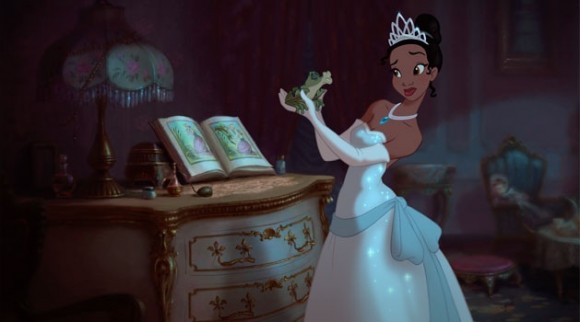
The Princess and the Frog (2009)

THE PRINCESS AND THE FROG
DIRECTED BY: RON CLEMENTS & JOHN MUSKER
WRITTEN BY: ROB EDWARDS, JOHN MUSKER, & RON CLEMENTS
ORIGINAL STORY BY: ED BAKER ("THE FROG PRINCESS)
OVERALL SCORE: 6.50/10


Hard working New Orleans waitress, Tiana (Anika Noni Rose) is accidentally transformed into a frog when she kisses the newly arrive Prince Naveen (Bruno Campos) who was transformed himself after trying to get a local witch doctor (Keith David) to provide him with unknown riches.

Oddly dark, comically amusing, dreadfully formulaic, but still reliable. That's the best summarization I can come up with for this 2009 Disney installment. Following that same formula that a women can't find love until either she, or the prospecting male, is transformed into another entity of some sort, Disney rehashes everything in its power to bring this tale to life. Of course when you're producing the first ever Disney princess film centering on the trials of a black woman in the US... you're going to play it as safe as humanly possible.

To do this Disney relies on some old school functions. The crazed witch doctor/sorcerer (ala Sleeping Beauty, Aladdin, & Snow White), the plucky side kicks (Mermaid style), and of course the random evil sidekick. In fact the only thing I can say that is truly new about the film is a presence of a strong central female character. In the past Disney "princesses" (with perhaps the exception of Pocahontas) were overly reliant on the male character in order to escape their predicament. Here, the female is at the crux of most of the action, and the two work amicably to find a way out of their problem... a very nice middle ground selection I must say.

Still, like my fascination for so many olden things, I found the combining of a modern flair with jazz, and that old school Disney style just the refresher I was looking for. The film works because it intends only to tell its tale without much in the way of social commentary. It doesn't weigh itself down with unnecessary side plots, and actually takes a few moments to develop its central romance (kind of). The songs, which are at the crux of any Disney animated film, are enjoyable, but all have this overbearing feeling of deja vu. The fact that this film failed to make as much money as Alvin and the Chipmunks 2 is sadly a painful statement on the current times we live in. Princess and the Frog may not be the most original film in the world, but it has all the class you'd ever want.

Despite its overbearing lack of originality, The Princess and the Frog is just entertaining enough to get your moving and grooving, well adapting the classic Disney formula to modern times.

Tuesday, January 19, 2010

Metropolis (2001)

METROPOLIS
DIRECTED BY: RINTARO
WRITTEN BY: KATSUHIRO OTOMO
MANGA BY: OSAMU TEZUKA
OVERALL SCORE: 6.00/10


While seeking out a doctor on the run from the law, Kenichi and his private detective uncle stumble across Tima, a part child- part robot hybrid who may very well be the key to an end of world device created by the ever popular Duke Red.

When you go into anime there's always one thing that seems to stand out: visuals. Here that is no different. The sheer amazement with which was put into the design of the city at the heart of Metropolis is worth the price of a rental alone. The detail, and creativity, are so amazing I was literally taken aback upon hitting the play button. Yet at stark contrast I have to stay the detail to the city was not applied so well to the characters, each with a more old school cartoon flair (perfectly circle heads, over pronounced noses, etc.). As a consequence this took me a while to buy into the characters, leaving me to spend much of the time concentrating on the sheer breadth to the world surrounding them.

As a narrative I find many similarities between this and the 80's classic, Akira. The plot unfolds as the characters progress (or regress), and it runs at a light-speed pace through the story-line. As well the movie relies on you applying your own mental strengths to fill in the blanks as it doesn't walk you through each concurrent storyline. This has the upside that it gets your mentally engage, but the downside that they include characters and storylines that really serve no purpose to the greater plot. Sure it's entertaining, but it leaves the rest of the story far more confusing than it really needed to be.

The original story was inspired by the 1927 classic silent film Metropolis, but only through the poster, while the story is inherently its own creation. As well the plot is riddled with plot points you'll find scattered throughout the history of science fiction and anime. So in and of itself Metropolis is easier to get more out of the more familiar with those genres you are. Still I couldn't help but constantly feel a void between the film and the audience. As if the director was so concerned with letting the audience in on the films secrets that he forgot to let the audience in on the characters. We get a few subtle hints, and moments, that layout their greater life troubles, but we are really told very little, and as such the movie struggles to make the audience truly care (in sharp contrast with Akira which spends much of its time on the characters). Still the animation truly saves this film's narrative woes, making it passable, but not nearly reaching the potential it had.

While it has absolutely amazing visuals, Metropolis suffers from a far too weighed down plot, that will only pass with those who truly get absorbed in its unique world.

Wednesday, January 13, 2010

Samurai 7 (2004)

SAMURAI 7
DIRECTED BY: TOSHIFUMI TAKIZAWA
BASED ON THE ORIGINAL FILM BY: AKIRA KUROSAWA
TOTAL EPISODES: 26
OVERALL SCORE: 6.75/10


After years of having their rice harvest taken by bandits (ex-samurai warriors who have abandoned their ways), a local group of peasant farmers seek to hire a group of Samurais to protect their village. Gaining 7 such samurai, the farmers and the samurai, both of whom come from very different pasts, must find common ground if they wish to succeed in their task.

If you're going to take my all time favorite film remake it as an anime tv show, include mecha (giant robots controlled by humans) mythos, and throw in a modern spin on it, it's safe to say you're going to get my attention. Samurai 7 brings Kurosawa's classic tale to life in a new, and unique way. Utilizing its 26 episodes to build, analyze, and look deep into the characters, Samurai 7 creates an exciting world for the story to take place in. As well maintaining an opening as true to Kurosawa as any lover could imagine. There's a strong sense of loyalty to the original story (for a while - but more on that later).

Breathing new life into the characters, I was quickly thrust back into the world of Seven Samurai I love so much. The scenery, the tale of woe, and the harsh view of the world by such held down people. The opening episodes for Samurai 7 are easily among the most riveting of any anime show I've seen to date. The action is well incorporated, the characters, colorful, but not cheesy, and the story loyal and yet refreshingly original. Samurai 7 walks the thin line between episodic tale and single narrative. This gives each episode a sense of new life on a classic tale, while getting your blood pumping with some insanely creative action scenes.

As well Samurai 7 shows a great aptitude for fun characters. The early sequences are hilarious, off the cuff, and a stark reminder of Kurosawa's view on life and war. The new characters introduced for the anime show great depth, and the new take on the legendary seven samurai provides a nice insight for an alternate way of evaluating their lives up until that point. Continuing our journey the defending of the village remains strong its loyalty to Kurosawa's original story. Many of the same developments occur, and Takizawa perfectly adapts anime fighting style with the original plot points. At this point the anime had me completely sold. I was ready to dash out and buy my season copy, whale it a 9+ score, and cheer its name. Only one problem.... there were still 9 more episodes!?

To keep the original fans on their feet Samurai 7 throws in a rather strong curveball. Seeking to take Kurosawa's original story to the next level, the writers behind the series have created their own, far more world encompassing, side plot which comes into full fruition. As well to keep the original fans off their game, Samurai 7 kills off one of the seven during this battle sequence, in a manner far different from the original. This leaves them open to endless possibilities: who will they kill next? will they change who is killed? etc. So many possibilities. Unfortunately though the death of this figure becomes more of an allegory for the series than a catalyst for its characters.

From here Samurai 7 begins a fast descent into mediocrity. Undoing many of its character developments, and trying to force new character moves far from their established traits. It's at this point I felt the series getting away from me. As the characters become more distant, the plot becomes more enamored with itself, piling on one political conspiracy after another, until it begins to sink in its own mess. From here Samurai 7 is merely a shell of its former, wonderful, self. The action scenes feel forced, and uninspired. The characters' actions dull, and devoid of the beauty with which they had once shown. It's almost as if Takizawa and company have developed a resentment of their own creation (especially in dealing with the story of Katsushiro and Kirara).

It's not all bad though. Takizawa manages to save face with an epic final 3 episode long battle sequence that would get even the dead's blood pumping. But he's never quite able to tie it all down. Leaving much unanswered. As well Takizawa still wants to maintain that Kurosawa Seven Samurai ending. Unfortunately with his new plot came new complications to that ending, and it just never holds steady. Their ambition to go for more proved to be more than they could handle, and perhaps should have been where they aimed from the start of the series.

Samurai 7 is without a doubt a visual feast, and its action is near unmatched. Unfortunately though, the more it seeks to get away from the Kurosawa fable, the more obvious it becomes it needs it. Ultimately Samurai 7 is the best 17 episode series I've seen. I recommend watching that, turning it off, and just making up your own final 9.

Friday, January 8, 2010

The Girl Who Leapt Through Time (2006)

THE GIRL WHO LEAPT THROUGH TIME
DIRECTED BY: MAMORU HOSODA
WRITTEN BY: SATOKO OKUDERA
NOVEL BY: YASUTAKA TSUTSUI
OVERALL SCORE: 7.25/10


Makoto Konno (Riisa Naka) spends most of her days going to school and playing baseball with her best friends, the mysterious Chiaki (Takuya Ishida), and the kindly, Kousuke (Mitsutaka Itakura). On a particularly bad day, Makoto trips, and falls, inside the science room landing on a mysterious object. After narrowly avoiding a train incident a few hours later Makoto realizes she now has the power to leap back through time. Using this to her advantage Makoto starts getting good grades, avoids unwanted events..... but at what cost to herself and others does this new power come?

Listed by several sites as one of the best anime films of the decade, Hosoda's The Girl Who Leapt Through Time is a fun, off the wall, while emotionally in depth, anime film. The movie wonderfully tackles this rather old tale of the consequences of time travel while at the same time dealing with the emotional insecurities of teenage girls and boys. What caught me most off guard was the movie's surprising depth, and grasp of teenage life. The boring ends and outs, how even the little things matter, and the impact our events can have on the lives of others. We see Makoto's actions, how they nearly destroy the lives of some of those dearest to her, and the selfishness she pertains.

Make no mistake about it, while Makoto is a fun character, her actions are not always the most respectable. Of course it helps that Makoto is grounded by her two best friends Kousuke and Chiaki. They're attitudes perfectly balance out the playful, and somewhat ignorant, nature of Makoto. While Hosoda takes the necessary time to build them as characters, and not just leave them as cardboard cutouts. As the movie progresses we grow closer to this trio, and fond of their personality quirks. This all sets the groundwork for a strong, and emotional, finale that will put a smile on your face, and a little tear in your eye.

Though without the animation team behind the film there would be little emotion. While there's a handful of scenes I can easily pick out as badly drawn, the animation team has a talent for capturing scenery. And Hosoda knows how to use the fact that this is an animated film to the tee. Combining the endless bounds of an animated character with grounded realism (even with time travel as the backdrop) is a truly humanist heavy art form. And while I recognize few (if any) of my followers dig anime, The Girl Who Leapt Through Time is a firm example of how it can be both entertaining and emotional at the same time. The different journeys are often fun, random, and amusing, while the consequences can come heavy handed. An enjoyable, even if flawed, tale, worthy of any anime lovers time.

Capturing beautiful scenery, an emotional story, and a sense of wonder in the world, The Girl Who Leapt Through Time is a solid addition to the ever growing world of anime films.

Sunday, December 6, 2009

A Dream of Family


I make no secret of the fact that I'm pretty much a kid in a 22 year old's body, and since I can remember I've always had a love for anime. As a middle school student I would rush home in order to watch Dragonball Z, Sailor Moon (more of my sister's choice than mine), and Pokemon. I loved getting lost in the worlds these artists' envisioned, created, and the stories with which they told. They possessed the ability to be both childlike in amusement, while maintaining a maturity of subject matter seldom found among children stories. So as you may be able to imagine anime has had a huge part in shaping the way I view cinema. The things I look for, adore, and even the values I hold.

Some of my recent blogging buddies as of late have pointed out to me a lack of care for anime as a whole, something of which I find an all too constant occurrence. So instead of doing another review, filling the text here with bland critique on a film most of you have already probably seen, I'd like to tell a story. Last year, during my summer vacation, I opted to go on a journey through film. Much in the same way I had done for Kurosawa before, I told myself that I was going to see every Miyazaki feature length film ever made (Lupin 3 to Howl's Moving Castle). Years before I had seen Princess Mononoke, and I was simply blown away. To see all of Miyazaki's films became a must for me, not an option.

There was no particular order to my trek, it was entirely based on availability, but alas I can honestly say it was as memorable a cinematic journey as any I could have hoped for. For 3 months I went on a journey with Miyazaki through time, space, and worlds. Yet through it all one notion seemed constant in Miyazaki's films: Family. It doesn't have to be genetic, but rather a far more platonic family. One based on love of each other, regardless of the situation.
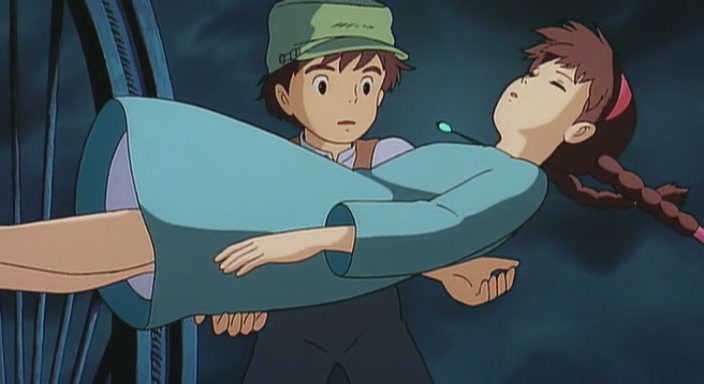
In Princess Mononoke we see a woman who lives with wolves, struggles to identify with humans, while a man seeks refuge in a iron town full of disjointed individuals. But alas together they find a semblance of family. In Nausicaa, the lonely female warrior finds family in all the members of her town she is forced to save as the woods around her burn. In Island in the Sky two lonely kids find love in each other, and family in the pirates that assist them as they go on their journey to find a mysterious floating island. The children of My Neighbor Totoro (pictured above) find peace in the lovely creature who takes care of its family, while they must take care of each other as they struggle to cope with their ailing mother.

In Kiki's Delivery Service we see the importance of platonic family as the young witch sets out on her journey of self independence. The kindness strangers show her, the young boy who seeks to court her, and the relationships she builds, creates a special sort of family seldom found. In Porco Rosso we see the need for others to care about through the eyes of a pilot who has been cursed with the look of a pig. We see his troubles, his self imposed isolation, and yet his desire to belong, and even the way in which the relationships he builds shapes families in those around him. The of course you have Spirited Away which shows the trouble family can sometimes cause, but reminds us of the importance of having them around. The need for a family regardless of the good and bad because they are always there for us when we really need them.

Then of course there is Howl's Moving Castle. I'm not sure if any of Miyazaki's films truly represent the notion of an adopted family quite as well as it is on display here. Sofi's mother figure wonderfully cares for Howl, while at the same time representing a sort of wife figure. In many respects she is his heart and soul when he needs one most, his true caretaker. Then of course there is our latest Miyazaki entry, Ponyo. Even here Miyazaki brings about the notion of family, the troubles and benefits, and how love is not bound by age but rather by the ultimate human condition: the desire to care. Ponyo and Sosuke's love is platonic and yet deeper than most others because they share a connection, they see each other as apart of themselves, and apart of their real family.

So if you're asking yourself why spend all this time. Why write so much about family, anime, and Miyazaki? Well it's simple, family is key. I often find people trying to compare Pixar and Studio Ghibli, weighing the plus and minuses of the releases of each, and trying to find some level of superiority. Claims that somehow they're very different. Look at Pixar films: Nemo, Ratatouille, Wall-E, Toy Story, Monsters Inc, A Bug's Life, Up, Incredibles, Cars... they're the same. Even go with your old school Disney films: Beauty and the Beast, Lion King, Snow White. They have all these motives, these drastically different stories. And yet they all share one commonality: family.

Whether it's a family sought, lost, gained, or needed, animated films are heavily connected on that very notion. It's a simple notion, on paper at least. It's not even that complex. But it's a pure notion. A human notion. Perhaps if you look at close enough you'll begin to see they're not all that different at all. In each one they manage to find some semblance of family and happiness even through the roughest of life's patches. They find hope and mysticism in even the most mundane of life's problems. Now that's the power of a truly great animated film.

Monday, November 23, 2009

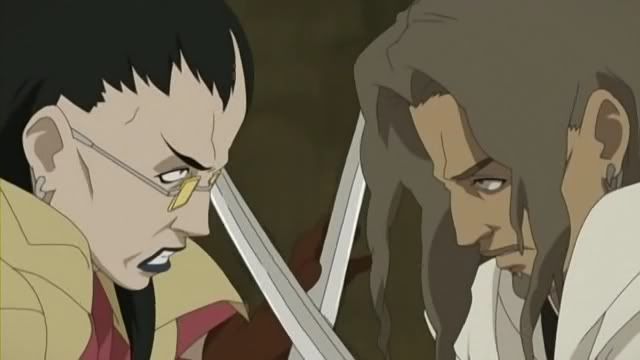
Samurai Champloo (2004-2005)

I'm back with another anime show review, because you all cared so much the first time around :P *cries*

SAMURAI CHAMPLOO
SERIES DIRECTED AND CREATED BY: SHINICHIRO WATANABE
NUMBER OF EPISODES: 26
OVERALL RATING: 7.50/10


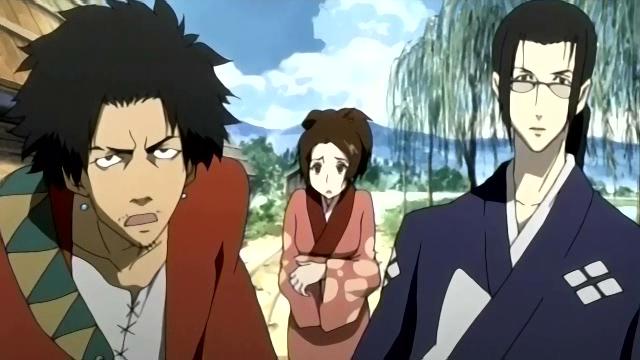
Following the destruction of the tea shop she works in, Fuu saves the lives of two violent samurai, in exchange for their help in finding "The Samurai Who Smells of Sunflowers." On one hand there is Mugen, born on an island of criminals he is not a true samurai, is often sought after by the police, and has a very wild, constantly moving fighting style. On the other hand is Jin, a quiet ronin, born and bread to be the perfect samurai warrior, often giving him the appearance of being cold on the outside.

It's difficult to watch Watanabe's latest anime without bringing up comparisons to his first, and legendarily influential Cowboy Bebop. On some level it is quite obvious Watanabe learned from different mistakes his first outing, doing a better job of time management, and character development. Though at the same time Champloo is a much more cheerful affair than Bebop. That's not to say it's without heavy handed emotion, many of its episodes (especially the arc ones) are, but it doesn't dwell so heavily on the painful pasts of our three main characters. Instead it deals with their journey, the trouble they get into, and the different tasks they must complete along the way.

Though perhaps best of all in comparison to Cowboy Bebop is this time around we really get to spend a lot of time with the main characters. They're there from the first episode, and each episode deals with displaying another aspect of their character. We see how Fuu becomes both a mother and a task to Mugen and Jin, while the two struggle between their sense of freedom, and personal commitment to Fuu. We see them fight, their subtle moments of emotional attachment, and their strange sense of duty despite their volatile attitudes. It's quite amazing how well created the characters are. Each appealing to a different group, all filled with emotional moments, and a sense of care and uncaring towards one another at the same time.

Of course when it comes to Watanabe everyone is always curious about one thing: the style. Here Watanabe combines modern age hip hop with classical Edo attitudes to create a very intriguing style. Often side characters will beat box, talk in modern slang, or even discuss modern events despite them not fitting with the time period. For the most part this works, though at times I found the transitions to be a little distracting. Even then though Watanabe is fully aware of when to, and when not to, use certain aspects of Hip hop. During the show's more emotional moments Watanabe goes for standard dramatic techniques to build a connection with the audience.

As narratives go, Samurai Champloo is rather straightforward. Combining absurd tales for amusement's sake only with deep emotional backstories and tales interwoven. It's a good combination that really allows you to go through the entire range of emotions throughout the series. It never sacrifices plot for action, nor action for plot. Watanabe has a great eye for momentary story telling. By that I mean when the moment comes for the characters to do something that matches their developed character they do it. Even towards the later episodes as they develop certain bonds, they still show signs of disconnection given their harsh pasts.

Unlike Cowboy Bebop though this time around the show's highlight episodes are not found in clumps or story arcs. Instead they're well balanced throughout the series, with each new character arc constantly being brought to the attention of the viewer. While with some shows you can skip entire episodes, Samurai Champloo probably only has maybe 2-3 episodes that bring nothing to the table story wise, but they're probably the most entertaining (including an absurd baseball side story). It's just pure entertainment from beginning to end, great for any anime fan.

At times absurd, and other times deeply moving, Watanabe's followup anime series is a viewer's delight.

Monday, November 9, 2009

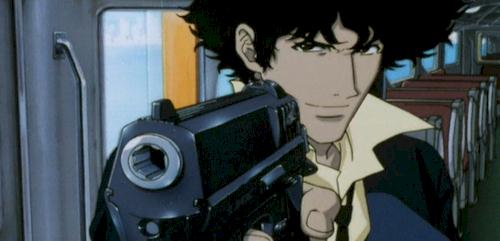
Cowboy Bebop: The Movie (2001)

COWBOY BEBOP: THE MOVIE
DIRECTED BY: SHINICHIRO WATANABE
WRITTEN BY: KEIKO NOBUMOTO
OVERALL SCORE: 7.25/10


While on the hunt for a hacker bounty, Faye Valentine (Megumi Hayashibara) witnesses a terrorist take by an unknown substance. With a bounty of 300million out for the man behind it, the Bebop crew team up to find the elusive man before he strikes again. Though the deeper they dig, the more horrifying the backstory they find. Meanwhile Spike's (Koichi Yamadera) investigation leads him into the heart of government testing, and an odd spiritual connection he can't quite shake.

Several years after the end of Cowboy Bebop Watanabe and Nobumoto teamed up to bring this series to film form, and succeeded quite nicely. Wonderfully combining the old school techniques that made the show a hit with a more in depth storyline, and an increase in technical difficulty, Cowboy Bebop wonderfully adds to the original series. This is very important as there is some debate over when the movie takes place. While many note that with character developments they most fit their attitudes and locations in between episode 22 and 23. Though with the film's alternate name, and some in film conversations, some believe this insert may take place post the credits of episode 26 (that's all I can say without giving away the show's finale).

Either way it's a beautiful portrait backed by a strong storyline, great characters, and some strong emotional attachments. Perhaps the most notable aspect of the movie is that the team really put a lot of effort into the minor details. The subtle character movements, expressions, bring out a certain beauty to the cinematic experience. The characters are more accessible, more lively, and feel far more authentic. In this film they're at their most extreme character aspects, really letting fans of the series in. Of course this comes with a side effect, those not familiar with the series will likely find much of the film not nearly as entertaining. Some of the inside jokes, recurring characters/themes, won't be picked up on, and alas I fear leave out the more general audience.

Even with that hurdle, there's lots to be said for the story this time around. Government testing generic lay in the backstory, but it's in the conversations and development that Cowboy Bebop's movie encarnation takes on a life of its own. The developments between the characters, their conversations, understanding bleakness of those around them, there's a sort of emotional power that it's hard to recreate. Not to mention the detail to shots. Watanabe's direction here is as its absolute peak, wonderfully creating shots that awe inspire, and captivate with beautiful scenery, and deep emotional regret. As well Cowboy Bebop The Movie isn't nearly as bleak as the subtext of the series would lead you to believe. It deals with a sort of heavy handed life, much like its main characters, but at the same time it seeks out hope and belief in a better future. All of these colminate in a finale well worthy of Cowboy Bebop, the sort of film I'm hoping it's eventual live-action counterpart can live up to (but with Keanu Reeves rumored to be the leading man who knows).

A beautiful and fitting installment into the Cowboy Bebop series, The Movie offers just about anything and everything a series fan could desire.

Sunday, November 8, 2009

Cowboy Bebop: The Complete Series (1998)

Note: This marks a first for me as a reviewer. Not only does this mark the first time I'll be reviewing an entire show but it also marks the first time I'll be doing something anime on this blog (on my previous journal I often did posts on Miyazaki films) so I do ask please give as much feedback as possible.

COWBOY BEBOP
SERIES DIRECTED BY: SHINICHIRO WATANABE
WRITTEN BY: KEIKO NOBUMOTO
NUMBER OF EPISODES: 26
OVERALL RATING: 9.50/10


The year is 2071, a gate incident has all but destroyed earth, and people now reside on a variety of planets across the solar system. A group of misfit bounty hunters (known as cowboys) aboard the spaceship Bebop deal with difficult bounties, somber pasts, and unknown futures.

If you were to tell someone in the US that a show ran for only one season that was it they'd probably call it a failure. In reality Cowboy Bebop is an immensely successful series that run from fall of 1998 to 1999 in Japan. It subsequently had a run in the US via Cartoon Network's Adult Swim during 2001 and 2002 (briefly halted due to 9/11). The 26 episodes of Cowboy Bebop are definitely among the most intriguing television show viewing experience I've had, and has re-inspired that childhood love of Anime that was once overrun by Dragonball Z. The show was recommended to me by a friend who noted my love of Serenity/Firefly and the outlying similarities.

Cowboy Bebop has 4 central characters. First, the show's central character, Spike Spiegel, an ex crime syndicate member whose dark past is the subject of many of the show's storyline. Then there's Jet Black, the captain of Bebop, a big, tough, ex-cop who left the force after a combination of relationship and career issues, including the loss of his arm. A third of the way into the series they are joined by Faye Valentine, a tough, gambling addicted woman whose past is a mystery even to herself. Faye was stuck in cryogenic slumber for nearly 54 years until she was awaken, only to find her time has accumulated massive debt. Lastly there's Ed, a genius but absurdly weird teenage hacker who forces her way onto the Bebop, ranging from helpful to an odd distraction.

These characters, each with their own characters quirks, create a great sort of chemistry that really carries the show, bringing out much the shows emotion through the later half which delves much more in their past. Watanabe and Nobumoto wonderfully allow the viewer to see both the tough and tender sides of these characters. Some episodes will move you to tears while others will hit your action bone with non-stop intensity. All the while though the creators carefully keep a little bit of a playful side to the show, really keeping a smile on your face. Alas though Cowboy Bebop is never afraid to show deep emotional conflict, all villains aren't quite so easy, and all heroes aren't so pure. Spike's dark past brings about an emotional finale that will touch even the most hard hearted of viewers.

Meanwhile Faye provides an intriguing counter to Spike, while being the show's sort of sex appeal (if that's your thing). Faye sees Spike in a way nobody else on the crew does, leading to a powerful central show chemistry that can really bring the viewer in. Jet's fatherly figure provides a sense of moral center to the show as it is often pushed into very morally ambiguous situations where money or life are forced into play. Meanwhile Ed is sort of the comedic break in the show, pushing out these absurd situations, often getting the way, and struggling with personal communication. Her time with the crew's pet dog really helps provide a cheerful counter to much of the show's heavy material.

One of the most intriguing aspects of Cowboy Bebop though is the visual style. Combining old school westerns and 40's noir style with jazz and rock music is an undeniably captivating combination. Melancholy and yet upbeat, Watanabe wonderfully brings out style that supports the substance instead of overbearing it. A combination of sexy and action, Bebop pulls out some visually breathtaking episodes, each of which always feels about 5-10 minutes too short.

Though if I had to pick something out I'd say that the show's final 3 episodes are the real highlights. While the lead up episodes are great (especially the Jupiter Jazz two episode arc) the final three are filled with emotion, unveiling, and really hit a home run in terms of style and storytelling. I can't say I loved the ending, while appropriate, it's definitely a tear getter, and I can't help but feel certain character relationships could have been better ended. Though I don't intend to be overly nitpicky. As series go, this ones a definite powerhouse, it has something to say and it's going to say it, in every way possibly. It's not one-minded often displaying a wide variety of opinions on different life issues through a variety of storylines.

It is safe to say there's something for everyone here, and I thoroughly enjoyed and constantly looked forward to seeing the show's next episode. A must see for anime fans, and a good introductory show for those not sure if anime is quite their cup of tee.

Tuesday, October 27, 2009

Up (2009)

UP
WRITTEN AND DIRECTED BY: PETE DOCTER & BOB PETERSON
OVERALL SCORE: 8.50/10


Carl Fredricksen (Ed Asner) decides to fulfill his lifelong dream of heading to Paradise Falls in South America, following in the footsteps of childhood hero, explorer Charles Muntz (Christopher Plummer).

As an animated film it's hard to classify Up as a family film, giving some mature subject matter, but at the same time it still retains a certain charm and silliness directed towards more family audiences. Up surprisingly enough deals with a man's attempt to regain a long lost dream, something so important to the film they spend the first 20 minutes developing. As a family film kids will probably be detached from the opening portion as it deals with financial struggles, first love, children troubles, and loss... in the meantime their parents will probably be fighting back a river of tears. The rest of the film is far more family oriented, heavy on action and adventure, compounded with silly characters and extreme situations.

In this up finds a nice little niche for the film to work on. With the introduction of a few plot points Up manages to be silly, action packed, and maintain that subtle message it tries to bring home. Though the message is a bit clouded towards the end, it becomes apparent that Up wishes to inspire a desire to find adventure in all aspects of life, even the mundane and formulaic. As such Up walks the fine line between adventure and character piece. Carl's accidental partner in this adventure, the well meaning Wilderness Explorer (a play on boy scouts I guess) Russell (voiced well by first time Jordan Nagai), forces Carl to make tough decisions and to begin to recognize the many layers of his deep personality.

As far as entertainment goes, Up just about has it all. Talking dogs, with silly voices and actions to get the kids laughing, over the top action scenes that could only work in the animated realm, and a bunch of fun situations to get everyone into the film. That's probably why Up will be a shoe in for the best animated picture (unless it gets nulled out by a best picture nomination). Up can appeal to just about anyone, and is deep enough it provides its younger audience with intellectual challenges that exceed oh look pretty explosion. The characters provide solid morality tales that have the potential for sustaining value, giving the audience an opportunity to connect, debate, and internalize the film. In return Up becomes a more personal film for the viewer, giving it that much desired staying power, and a film that can be easily revisited with little worry of loss in entertainment.
Going beyond typical family film conformity, Up finds a beautiful medium between mature subject matter and family friendly entertainment that can appease all viewers... I hate to say it, but Pixar does it again.
Related Posts with Thumbnails