SEE DOMINIC WEST AND SIENNA MILLER LEAD LEGAL BATTLE IN THE TRAILER FOR SKY
AND HBO ELITE LONDON WORLD DIVORCE CASE TV DRAMA WAR
-
THE WAR SERIES TRAILER
WITH DOMINIC WEST AND SIENNA MILLER
*British Sky *has shared a trailer for their new six part thriller TV
series *WAR *with *Domini...
Showing posts with label Epic. Show all posts
Thursday, January 19, 2012
War Horse (2011)
A quick perusal of my top 100 films can tell you any number of things about me. For starters, that I have an unabashed love for all things Kurosawa. Then again, spending five minutes talking with me about movies could easily tell you that one. However, if you were to dig a little deeper. To seek out the connections and overlaps between many of the relating films, one constant should become entirely evident. I love me some good ol' fashion epics.
Throw a group of characters together, stretch their journey through life and war over two and half plus hours and low and behold, I'll be waiting at the end hands ready in applause position. So imagine my excitement when I found out that Spielberg was set to deliver such an experience. Let alone one covering one of the most oft ignored and yet still powerful wars in history, World War I.
From the sweeping landscapes of old English farm land to the mud enriched, rat infested, world of trench warfare, War Horse takes us on the kind of journey one might imagine would be found in the likes of a Disney film grown up. Joey, our titular horse, whose journey through a war with which he had nothing to do is sentimental to the highest degree, and yet at the same time strikes subtle and yet resonating chords on the true nature of war.
War Horse boasts what I might argue is some of Spielberg's finest directing moments in over half a decade. Not least of which is found in Spielberg's craft at creating a violent war film without much of the violence. In a way that would make Pulp Fiction era Tarantino proud, Spielberg creates graphic violence through carefully place camera movements. The substitution of imagery for actual bloodshed is a particularly nice decision - as evident in the riderless horses in one early battle sequence. This decision presents something I've been asking Hollywood to deliver for years - intensity without blatancy.
Of course for a generation like myself which has been born and raised on that graphical conclusion to events, these might leave some wanting. But I would like to hope that deep down one can admire the craft in coordinating and filming such scenes.
Still, where War Horse succeeds in visual poetry, it falters in a revolving cast of characters. Like many epics, War Horse deals with a wide array of characters coming and going, and as such the time for whole and complete character building is often left to the cutting room floor. Take for example Captain Nicholls and Major Stewart, played by the equally brilliant Tom Hiddleston and Benedict Cumberbatch respectively, who give off so much charisma in their short screen time that they still leave you longing for their return. Not to mention the sadly underused Eddie Marsan in the generally thankless role of Sgt. Fry towards the film's climax.
So in substitute for the revolving characters we are effectively given human bookends to Joey's journey. In this we find ourselves with Albert (Jeremy Irvine). The young, poor farm hand son of a perpetually drunken father (Peter Mullan) and fiery mother (Emily Watson). Albert provides much of the necessary scenes which help Joey build the skill set he needs to survive so many of the sequences he deals with in war. At the same time, Albert is also given a journey of his own to survive. Including a thrilling battle sequence - by far the film's most violent - as he seeks out his long embattled friend, Joey.
The rest of the cast is a wide assortment of "hey, it's um that guy" talent who deliver time and time again. But no matter what is thrown at us, there is never a doubt that this film is entirely Joey's film. For he is the heart of the matter. He is the life blood through which each character is given a reason for being. The film thrives and falls on the strength of his shoulders. Luckily for us all, he is made of stuff stronger than steel.
OVERALL SCORE: 8.00 / 10
Film Credits:
Directed By Steven Spielberg
Screenplay By Lee Hall and Richard Curtis
Novel By Michael Morpurgo
Sunday, August 21, 2011
Japan's Longest Day (1967)
The emotional and spiritual antithesis cousin to America's 1962 War Epic on the invasion of D-Day, The Longest Day, Japan's Longest Day recounts the events leading up to the eventual total surrender of Japan during the middle of August in 1945. Specifically concentrating two-fold; 1st being the actual orchestrating of the surrender by the parliamentary council and representatives of the various Departments of government following the dropping of atomic bomb at Hiroshima and Nagasaki; 2nd what has come to be known as the Kyujo Incident, an attempted coup orchestrated by high ranking military officers to prevent Japan's surrender.
At the heart of Japan's Longest Day is the notion of the 'war mentality.' How to go about convincing people whom you have hammered in the notion that victory or death are the only two options, that surrender is not only viable but in the best interest of the country. It's a mentality deeply embedded in the mindset of much of the military command and the people themselves. For after a seemingly never ending collection of victories, Japan must now face a different question entirely: Surrender or enter what will surely end in the entire annihilation of its people.
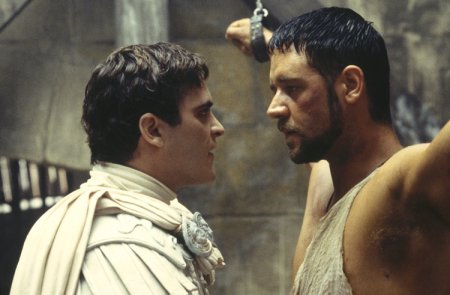
That question and how the film tackles it is without a doubt the most captivating component of this film's 2 hour and 40 minute runtime, which feels stretched in even its most generous moments. And in no place is that better embodied than in the staunch coup supporter "Wide Eyes" (as I think he ought to be called) Major Kenji Hatanaka and the solemn transformation of Lt. Colonel Masutaka Ida. While Hatanaka, as a character, suffers from being overacted on the part of Toshio Kurosawa, Masutaka benefits from the careful and sublime handling by Etsushi Takahashi. And in a film with as many cast members coming and going as this one has, it's nice to have such strong constants to log in memory and keep track of.
Of course it doesn't hurt if that ensemble cast contains some of the best working actors in Japan circa 1967. Including, but not limited to, Kurosawa favorites Toshiro Mifune, Takashi Shimura, Seiji Miyaguchi, the seemingly eternal Chishu Ryo, and So Yamamura. Don't worry if the names don't strike a cord, their performances certainly do. Each contributing exactly what is needed in the film's intentionally tedious opening hour to setup the powerful and emotionally tearing finale. Though Mifune, as one might expect, is the film's true leading figurehead as Minister of War General Anami, who finds himself torn between the love of his troops and the acknowledgment of the need for an end to the conflict. A truly captivating man - whom I recommend reading up on if you haven't heard of him - and Mifune handles with great care his inner turmoil.
Though the wide spreading cast does hinder the film in key moments, especially when you consider the film seeks to introduce each and every one of them by name and rank. In the end there's just way too many, especially among those who just disappear for long periods of time or only play a key part in one scene and are then never seen again. Simply put, not every character needed a name, and while I adore the film for its dedication to include everyone involved in the real life events, it weighs down the prevailing narrative and holds up the flow of the film on more occassions than anything ought to.
So by the time we actually get to the much eluded rebellion, there is a built in disenchantment with the prevailing tale. Especially for those who have come to expect a certain speed and flow for a film to take. So it is perhaps best that the second half of the film begins the way it does - with a pile of blood. In a Sanjuro style bloodbath battle, the rebellion kicks off and thus begins a race against politics and time to secure the Emperor - who receives some very generous treatment by the filmmakers (some of which I attest to him still being alive and in charge at the time the film was made) - and destroy all evidence of Japan's notion to surrender. This is where director Okamoto earns his keep several times over.
Carrying the weight of the first half, Okamoto builds up each character and molds them into the final form that would come to define them in history books for decades to come. Those who would rise to the occasion, stand against oppression, or simply resign themselves to a particular fate. The inner conflict between dedication to the country or to the emperor become torn along the way mean delude themselves into believing the sovereign nature of their own cause.
Despite some sluggish moments, and struggle between exasperating overactors and seasoned veterans maintaining a staunch status quo, Japan's Longest Day is an effective War Epic Drama with plenty of history for fans of way and an even greater collection of important figureheads whose words resound even today.
Thursday, August 11, 2011
The Good, The Bad and the Ugly (1966)
Top 100 Films: #2
Overall Rating: 10/10
To try and summarize the importance of The Good, The Bad and the Ugly on the evolution of my perspective of film as more than purely an American based art form would be in vain even at my most articulate. Simply put, this film put the notion of greatness into my own zeitgeist and sent me down a path from which there was no turning back. It introduced me to foreign cinema, stylistic direction, the epic, classic movies, westerns, and was one close up draw jump from here to Kurosawa.
But no need to go there now, this post is about the mesmerizing style of Leone, catapulted by the charismatic crook Eli Wallach, ignited by the dynamic villainy of Lee Van Cleef, and launched into the stratosphere of legendary by the smooth, timeless Clint Eastwood. The Good, The Bad and the Ugly (GBU) is a film unphased by aging or the growing trends of high octane entertainment. It survives the decades because it shaped the films of each of them. As influential as a film would ever dare be, and the kind of movie you can watch over and over again and constantly get something more out of.
It is perhaps best said that GBU is a film of nonstop minor escalation and deescalation wrapped around a larger, ever escalating primary plot. With each passing turn, each down time, each move, the viewer is privy to new insights to the characters, new ways of viewing the western as Leone viewed it, and somber morality tales to interspersed throughout the lot. The backdrop of the Civil War reminds us that violence is more than the never ending bloodbath of nightmares, it is the revelation of a man's inner being. It strips away at the heart of them, and delivers unto us their true form.
Are they a sultan of greed? A swindler of life? Or perhaps a compassionate loner with eyes full of gold? Maybe they're just a lowly captain tired of the endless nothingness at costs we dare not dream to imagine. Such is the world of The Good, The Bad and the Ugly. And with that you mind find it hard to imagine, this is one hell of a fun ride.
GBU starts of slow. Three scenes, three introductions, three foundations for the entire film, with each character defined for us in their most basic sense. After all, once we know what we're dealing with, all that is left to us is the journey, right? That's where Leone gets his pay off. That's where he truly makes his mark. For Leone takes these characters to their brink of their archetypes, and in each shows us something more raw. Of course, there's no denying Tuco is Leone's caricature masterpiece. He's the full realization of the byproduct of such a world as the one Leone examines through this film's near three hour runtime. The world of the west, put so eloquently by Tuco himself creates two kinds of people - priests or thieves, and those who opt for the inbetween pay the price.
So it is perhaps most noteworthy that while Tuco himself succumbs to the primal nature for greed, his compatriot in fate, The Man with No Name/Blondie, is a more subtle, and intriguingly complicated man. For without much thought you could easily label him as little more than another Tuco himself. He lies, steals, but above it all shows an awareness for the world in which he resides. As if he is playing his own game with those around him, the prize of which often comes out to be their life. In many respects he is a gatekeeper, a judge who acts in favor of the better man, but only when that man chooses to act so. That doesn't mean he won't drop you off at the next desert if he feels you've served your purpose. It just means that when push comes to shove, he'll always plan for the upper hand.
As a villain, Angel Eyes' iconic status rests entirely on the cold, sly snarl of Lee Van Cleef. Every bit the soldier he pretends to be, Angel Eyes is not a man of great wit or charisma, but instead relies on pure, unadulterated dedication to the task at hand. Once his direction has been set, one would need an army to deter him from his inevitable course. And for that reason, his sinister nature comes out in full. He'll torture a man as soon as friend him, and if you're not careful he'll leave you behind to save his own skin in a heartbeat.
So take those three, those lovable, cartoonish characters and wrap them into the world of Leone's one of a kind style. Just watch this movie for the way Leone uses the camera. Sure, we all know the closeups, but pay attention to what he gets out of them - especially the eyes. The amount of emotion he gets out of his main characters. The subtle facial twitches and quirks that give them a relatable life, where another director would stick for the warmth but distant medium shot. Look at the compositions of the shots, the blend of Ennio Morricone's magnanimous score, the prolific nature each camera movement takes. Each shot is setup to be a portrait of the film at large.
So developed that once you see a photo of it, the entire film begins to flash through your mind once again. You remember that music, the lines, the looks on each character's face as they match wits and guns against one another. The steadfast calm at which Blondie drew his gun. The shifty look of annoyance as Tuco tried to make heads or tails of a given situation. The way Angel Eyes laugh brought flames into those sharp, dagger eyes. It's all there, all memorable, and only gets better with time. The Good, The Bad and the Ugly may not be a movie you have to watch dozens of times to understand, but it is one that pays off no matter how many times you do.
Film Credits:
Directed By: Sergio Leone
Screenplay By: Sergio Leone, Furio Scarpelli, Agenore Incrocci, & Luciano Vincenzoni
Story By: Sergio Leone and Luciano Vincenzoni
English Version By: Mickey Knox
Labels:
1960's,
Action,
Adventure,
Drama,
Epic,
The Good The Bad and the Ugly,
Top 100 Films,
Western
Wednesday, February 2, 2011
The Way Back (2011)
OVERALL SCORE: 7.50/10
There are certain rules to the epic that have trickled along through most any film of worth. First, you save characterization until the end of a character. Whether it be through death or narrative completion, you allow the audience to guess on why characters act the way they do, with minor hints thrown in, and deliver only when it's time for them to step aside. The second is that while you can revisit, you never repeat. Even if the film is about monotony, you must find new ways of tackling the same subject. Put them on a shelf and only go back when you're in dire need of a plot point to move along.... or if your film is building up to something mentioned early on.
It is by those rules alone that The Way Back flounders about, struggling to elevate beyond 'just good.' From Truman Show to Master and Command to Gallipoli, Peter Weir is a proven pictorial master of the camera. He can craft prolific shots, wrap them around mesmerizing scores (as long as they're not techno), and integrate even the most rascally of scripts. So I find myself a bit troubled by his latest outing in The Way Back.
The film tells the tale of a group of political prisoners, during the Soviet Union's occupation of Poland, escaping their imprisonment in Siberia, trekking all the way South through USSR territory, and into China before eventually escaping Communist land upon reaching India. Wide in scope, wondrous in imagery, and captivating in premise, The Way Back drinks up all that can be had of the long standing tales of men versus nature. And it is in that aspect that the film seems unsure of what to do.
Water is the constant driving force of the men. From the backwoods of Russia to the deserts of China, much of The Way Back is centered around the consistent lack of water. Remember the rule on repetition I mentioned earlier? This is where The Way Back struggles. Finding water then losing water and then finding it again and losing it, this point is hammered home beyond description throughout the narrative. To keep this sentiment from feeling too draggy, Weir finds solace in the characters.
Some coming, some going, Weir keeps a consistent stream of new faces and new tales to tell. Mark Strong takes the force for the opening setup. Collin Farrell becomes the colorful criminal through the early to late middle. Saoirse Ronan then steps up to nail in the final few character arcs before the main crew are finally established enough to take it the rest of the way. This setup works sublimely because it helps keep you constantly guessing about the backgrounds of our characters, only offering tiny nibbles as they brave harsh landscapes.
That's where Jim Sturgess, Ed Harris, and lesser known actors Dragos Bucur and Gustaf Skarsgård become crucial to the film. Sturgess is more than capable of handling the film, but as the movie goes on the requests for his acting chops to be at a premium seem to reside. Harris is more than charismatic enough to carry the role, but his performance feels hollow in the best of times. Bucur and Skarsgård have the talent, but spend much of the first half of the film being just faces among the crowd.
In essence that very fact becomes the crucial misstep in Weir's The Way Back. For all the imagery, beauty, and intense moments of human struggle, the setup just isn't there. The movie rushes everything. "Oh these are my friends. Look snow. Look mineshaft. Now we're running in the forest. Now we have no water in the forest. Have water, oh hi girl. Damn you mosquitoes. Look desert, wait where did the water go? Oh look water, wait... why are you dying? We ran out of water? When? Wahoo India!"
Now I apologize for that horrid generalization of the film, but that's a bit of how the movie plays out. If it weren't for the talented cast and situational intensity, the movie would be a total misstep. Luckily enough for the viewer those things are there, and the high intensity pace keeps drama constantly flowing. Weir just does enough to create an emotional connection with the characters at just the right time, but it's a few shots short of greatness.
Film Credits:
Directed By: Peter Weir
Written By: Peter Weir & Keith R. Clarke
Novel By: Slavomir Rawicz
Saturday, July 3, 2010
Gallipoli (1981)
DIRECTED BY: PETER WEIR
WRITTEN BY: DAVID WILLIAMSON
NOVEL BY: ERNEST RAYMOND
REVIEWED FOR: 1001 MOVIE CLUB
OVERALL SCORE: 8.50/10
WRITTEN BY: DAVID WILLIAMSON
NOVEL BY: ERNEST RAYMOND
REVIEWED FOR: 1001 MOVIE CLUB
OVERALL SCORE: 8.50/10
Drifter (Mel Gibson) and sprinter (Mark Lee) become rivals, friends, and soldiers in the events leading up to World War I, and the Gallipoli massacre.
My selection for the 1001 movie club is a film I have admired, and enjoyed, for quite some time, Gallipoli. Not your typical war film, Gallipoli is more about the people, and their lives leading up to the event, rather than the event itself. The main advantage of this: attachment.
As the movie progresses, and we see the ups and downs our main characters, we grow an emotional attachment to them. We see their strengths and weaknesses, and care for what happens to them. All the while, looming in the back of our mind, is the historical significance of what they are about to encounter. Giving the film's infamous final shot a nearly infinite range of power.
Add to that Weir's talent for capturing scenery, and the beauty of the places these soldiers encounter, and you've got yourself a fine piece of cinema. Each shot feels breathtaking, and perfectly composed. Adding more and more to the viewing experience with each go around.
Leading us in to what I feel is the film's one real fault: techno. During the film there are two climatic running sequences, both of which are played to an odd techno beat. During the first, a more lighthearted moment, it seems perfectly find, but later, during the most important run in the film, it takes a lot of wind out of the moment. And if it were not for the great sequence that follows it, Weird may have lost the audience entirely.
Still, for all its faults Weir and company are able to bring the film back into form. Never swaying from the original purpose, and always presenting the viewer with something new. It's a fine war film, more about the people than the war.
Not without its flaws, Gallipoli is a captivating tale of humanity in the time of war. The tale of the men who went to fight, not so much how they fought. And the ultimate legacy, and tragedy, they came to pass.
My selection for the 1001 movie club is a film I have admired, and enjoyed, for quite some time, Gallipoli. Not your typical war film, Gallipoli is more about the people, and their lives leading up to the event, rather than the event itself. The main advantage of this: attachment.
As the movie progresses, and we see the ups and downs our main characters, we grow an emotional attachment to them. We see their strengths and weaknesses, and care for what happens to them. All the while, looming in the back of our mind, is the historical significance of what they are about to encounter. Giving the film's infamous final shot a nearly infinite range of power.
Add to that Weir's talent for capturing scenery, and the beauty of the places these soldiers encounter, and you've got yourself a fine piece of cinema. Each shot feels breathtaking, and perfectly composed. Adding more and more to the viewing experience with each go around.
Leading us in to what I feel is the film's one real fault: techno. During the film there are two climatic running sequences, both of which are played to an odd techno beat. During the first, a more lighthearted moment, it seems perfectly find, but later, during the most important run in the film, it takes a lot of wind out of the moment. And if it were not for the great sequence that follows it, Weird may have lost the audience entirely.
Still, for all its faults Weir and company are able to bring the film back into form. Never swaying from the original purpose, and always presenting the viewer with something new. It's a fine war film, more about the people than the war.
Not without its flaws, Gallipoli is a captivating tale of humanity in the time of war. The tale of the men who went to fight, not so much how they fought. And the ultimate legacy, and tragedy, they came to pass.Thursday, June 24, 2010
The Great Dictator (1940)
WRITTEN AND DIRECTED BY: CHARLES CHAPLIN
TOP 100 FILMS: #4
OVERALL SCORE: 10/10
TOP 100 FILMS: #4
OVERALL SCORE: 10/10
Jewish Barber must wrestle with the rise of dictator Hynkel (Charles Chaplin in both roles) whom he not only looks exactly like, but who is also persecuting him, and those around him. Meanwhile Hynkel attempts to befriend fellow dictator in an effort to expand his empire, and prepare for global war.
Commander Shutz: "Strange, I thought you were an Aryan."
Barber: "No, I'm a vegetarian."
Quick, make fun of one of the greatest mass murderers in the history of man. Not too hard right? Now try and do it while, not only is that person alive (and perfectly capable of taking offense/action), but in the most accessible of all mediums, film. Not quite as easy is it? Well, there in lies the absolute brilliance that is Chaplin's feature talkie debut, The Great Dictator.
These days Chaplin may not be seen as hip, or cool, as modern comedies attempt to be. Instead, Chaplin had a charm unlike any other. His subtle mockings at pre-wartime Germany, the rise of Hitler, and the impacts on society, laced in political satire, moves at the speed of light beyond cinematic norms. The ability to find silliness in such tragedy. The ability to find humor out of such human despair. It's a power, wit, and charisma you just don't find anymore.
Chaplin could do it all, and The Great Dictator is the stage. He's not just a goofy tramp, but an accomplished, and talented actor, who can blend verbal jabs flawlessly with quiet zaniness. Let's be honest, who else could tackle Hitler's desire for world domination by combining dance and a floating globe? It's that visual eye for character, and humor, that allows The Great Dictator to breath such life.
Sentiments of humanity, grazed throughout a land of humor in dark context. Laughter blended with sadness. Hope blended with despair. A comedy that reaches beyond the confines of its own genre to be something more.... but only when necessary. You see, Chaplin knows comedy, perhaps better than anyone in the history of cinema. He knows when you just have to be funny. Be goofy. Take a chance. Have two dictators fighting over chair height to prove themselves.
Then of course you have, the speech. If you've yet to see the film, and therefore have missed the film's final speech you've missed one for the books. Not only socially important, but hope filled. Riddled with triumph. A calling for those to dream again. Powerful, beautiful, all in one. Impossible to be beaten. The sort of speech writers can only dream of penning. Perfectly exuding everything Chaplin sought out to say with this film, and so much more. It's simply icing on one of the world's greatest cakes.
I recall once saying to a friend: "Chaplin isn't for everyone... I've just never met someone worth knowing who didn't enjoy Chaplin." Sure, that's a bit of a hyperbole, but there's also some honesty. Chaplin had a way of seeing the humor in things most others couldn't. He could bring it to life, creating this amazing world. While still reminding us the world created is not so different from our own. It is apart of each of us, our lives, and affects us greatly. And, for my money, The Great Dictator is the ultimate highlight of that motif.
These days Chaplin may not be seen as hip, or cool, as modern comedies attempt to be. Instead, Chaplin had a charm unlike any other. His subtle mockings at pre-wartime Germany, the rise of Hitler, and the impacts on society, laced in political satire, moves at the speed of light beyond cinematic norms. The ability to find silliness in such tragedy. The ability to find humor out of such human despair. It's a power, wit, and charisma you just don't find anymore.
Chaplin could do it all, and The Great Dictator is the stage. He's not just a goofy tramp, but an accomplished, and talented actor, who can blend verbal jabs flawlessly with quiet zaniness. Let's be honest, who else could tackle Hitler's desire for world domination by combining dance and a floating globe? It's that visual eye for character, and humor, that allows The Great Dictator to breath such life.
Sentiments of humanity, grazed throughout a land of humor in dark context. Laughter blended with sadness. Hope blended with despair. A comedy that reaches beyond the confines of its own genre to be something more.... but only when necessary. You see, Chaplin knows comedy, perhaps better than anyone in the history of cinema. He knows when you just have to be funny. Be goofy. Take a chance. Have two dictators fighting over chair height to prove themselves.
Then of course you have, the speech. If you've yet to see the film, and therefore have missed the film's final speech you've missed one for the books. Not only socially important, but hope filled. Riddled with triumph. A calling for those to dream again. Powerful, beautiful, all in one. Impossible to be beaten. The sort of speech writers can only dream of penning. Perfectly exuding everything Chaplin sought out to say with this film, and so much more. It's simply icing on one of the world's greatest cakes.
I recall once saying to a friend: "Chaplin isn't for everyone... I've just never met someone worth knowing who didn't enjoy Chaplin." Sure, that's a bit of a hyperbole, but there's also some honesty. Chaplin had a way of seeing the humor in things most others couldn't. He could bring it to life, creating this amazing world. While still reminding us the world created is not so different from our own. It is apart of each of us, our lives, and affects us greatly. And, for my money, The Great Dictator is the ultimate highlight of that motif.
Labels:
Classics,
Comedy,
Drama,
Epic,
Top 100 Films
Thursday, June 3, 2010
Robin Hood (2010)
DIRECTED BY: RIDLEY SCOTT
WRITTEN BY: BRIAN HELGELAND
OVERALL SCORE: 6.50/10
WRITTEN BY: BRIAN HELGELAND
OVERALL SCORE: 6.50/10
After the death of King Richard, and the rise of his brother John (Oscar Isaac), high minded archer Robin Longstride (Russell Crowe) assumes the identity of fallen knight Robert Loxley (Douglas Hodge) in order to aid struggling wife Marrion (Cate Blanchett) and blind father Walter (Max von Sydow).
"Rise, and rise again. Until lambs become lions."
There are really two types of great films. Those that begin great, and never falter. And then there are those which are good, but find a moment to rise up, and achieve greatness. Scott's 2010 Robin Hood venture is a good film, desperately in search of its great moment.
For perhaps the most spectacular thing about Robin Hood is how unspectacular it really is. A collection of good ideas, and well thought out scenes that never reach out. Riding by on entertainment value, but never pulling the emotional chords. Never griping the viewer, asking them to want for more. It's a movie that gets by on the talent involved, but feels so disconnected from itself it never attains anything memorable.
A prequel to the popular Robin Hood mythos, it's nice to see a bit of a forming of what would become the merry men. How Robin became an outlaw (in this film's version), and how the relationship between him and Marrion began. It all adds up to an awesome setup. Just setup alone cannot sustain film without heart. Robin Hood wants to still be that epic. It wants Godfrey to be a worthy villain. But he's just not. He's not the evil tyrant. Just a bad guy who almost does something worse.
The same could be said for much of the film. In 2 hours and 20 minutes the filmmakers have a lot that they want to touch on. A few subtle hints, but by the end, I still felt like they left some stuff out. The kids in the forest - one look from one of them at the town, next thing they're full on warriors? King John suddenly learning how to do politics? Friar Tuck (Mark Addy)... yeah?
Crowe, and company, all deliver admirably (especially considering Strong and Addy are the only leads who are actually British). Heck, I really enjoyed Crowe's more down to earth, man of the people, for the people, take on Robin. It just never felt like the raw emotion was there for me to care. I wanted to see where the story went. But only in so far as I wanted to know the full vision of how Crowe and Scott wanted to setup the tale.
And the movie was fun. Plenty of good laughs from Kevin Durand as Little John, as well as the rest of Robin's motley crew. The kind of group you could imagine evolving into something memorable upon future installments. But as a stand-a-lone piece, Robin Hood fails to inspire, only managing to just entertain.
Despite the best of intentions, and admiration, Robin Hood is simply a flat line film. Never managing to inspire, it only garners the most basic of entertainment value. Stretching its plot far too thin, failing to use its captivating characters to bulk it back up. It's not a movie that should be avoided, just not rushed out to be seen.Saturday, May 29, 2010
Gone with the Wind (1939)
DIRECTED BY: VICTORY FLEMING
WRITTEN BY: SIDNEY HOWARD
NOVEL BY: MARGARET MITCHELL
REVIEWED FOR: 1001 MOVIE CLUB
TOP 100 FILMS: #17
OVERALL SCORE: 10/10
WRITTEN BY: SIDNEY HOWARD
NOVEL BY: MARGARET MITCHELL
REVIEWED FOR: 1001 MOVIE CLUB
TOP 100 FILMS: #17
OVERALL SCORE: 10/10
Southern beauty Scarlett O'Hara (Vivien Leigh) must deal with Civil War, passing family, weakening estate, and a turbulent romance with the ever smooth Rhett Butler (Clark Gable).
"If I have to lie, steal, cheat or kill. As God is my witness, I'll never be hungry again."
An interesting thing happened during the dawn of feature length cinema. Despite loosing the war, the South managed to gain a great deal of cinematic prestige. From the 1915 Birth of a Nation to 1927's The General, Gone with the Win is the ultimate culmination of the Civil War from the perspective of the south. Epic, and yet simple. Tragic, and yet sublime. Gone With the Wind is a tale that escapes all bounds, by simply being a work of cinematic art.
A work that can be far too easily lambasted for being racist, and for its idealistic portrayal of Confederate superiority. All the while overlooking the fact that it is a tale from the perspective of slave owning, Confederate supporting, white female character. So while I do not agree with how it portrays these factions in a positive light, I do not criticize it for doing so given our limited point of view.
What is perhaps most striking about the film is how it portrays its two central characters. Scarlett is manipulative, conceited, and selfish. While Butler is in many respects a war profiteer, selfish, and manipulative himself. The two well compliment each other, and their romance (if one dares really call it that) gives Gone With the Wind a certain sentiment of tragic nostalgia. Never able to truly be in sync with one another, they find themselves often seeking what the other had.
You see, for all its negative traits Gone With the Wind is about facing change. Throughout the film Scarlett must match her will to live with the ever changing world around her. Her struggles with loneliness, and the ultimate consequences of her vibrant lifestyle. The final scene, a testament to all that these characters have had to endure.
As well, one can not appropriately mention this film without discussing Hatti McDaniel as Mammy. Despite her character being the ever typecasted "happy slave," McDaniel brings a great deal of presence, and character to the stage. The moral, and emotional, center to Scarlett's wavering ways. A subtly progressive character, whose importance in cinema can never be understated (in many respects both positively and negatively).
Importance in cinema. It's hard to describe Gone with the Wind any other way. For all its negatives, it's a movie that helped make cinema what it is today. And when you can be both important, and captivating, you have a visual treat for all to share.
One of the most epic films in history holds the test of time with striking visuals, memorable lines, and dynamic characters. Serving now as an example to what cinema can truly be with such prevailing talent behind it.
Labels:
1001 Movies Club,
1930's,
Drama,
Epic,
Period Drama,
Romance
Monday, April 12, 2010
Glory (1989)
DIRECTED BY: EDWARD ZWICK
WRITTEN BY: KEVIN JARRE
BASED ON THE LETTERS BY: ROBERT GOULD SHAW
WATCHED FOR: LIFE OF A CINEPHILE WAR MOVIE BLOG-A-THON
TOP 100 FILMS: #7
OVERALL SCORE: 10/10
WRITTEN BY: KEVIN JARRE
BASED ON THE LETTERS BY: ROBERT GOULD SHAW
WATCHED FOR: LIFE OF A CINEPHILE WAR MOVIE BLOG-A-THON
TOP 100 FILMS: #7
OVERALL SCORE: 10/10
New appointed Colonel Robert Gould Shaw (Matthew Broderick) takes charge of the first ever all-black volunteer company.
"We fight for men and women whose poetry is not yet written but which will presently be as enviable and as renowned as any."
Before Seven Samurai made its way into my heart, Glory was my uncontested, and inarguable, number 1 film. A movie so rich in personal association, I dared not remove it from that spot for fear of the emotional consequences. In fact to move it as I traversed, and fell in love with, more movies was of great personal sadness to me. It's the first movie I can remember truly crying over. The first film to hit the top of any list I ever made. The first movie I ever reviewed nearly 7 years ago!
A rich history with a film rich in history itself. I kind of like that. To me Glory is as much the best war movie made, as it is perhaps one of the best movies made in all of its subjects. There's a reason it echoes throughout schoolrooms over 20 years later. It has all the grandeur of emotion, character, and dedication, needed to make it so memorable.
Beautifully directed with steadfast dedication to the material, Zwick's natural talent for grasping the importance of scenes is on full display here. From the foggy, eloquent, opening to the smoke filled, and powerful, finale, Glory is truly a sight to see.
And it gets that way because it honestly cares about its material. It presents racism, acceptance, and everything in between. It'll bring you to love some, force you to hate others, and in the end ask that you, at the very least, understand them. Even the best of the men are flawed in their efforts. And that's what makes them approachable to the viewer. With each actor giving their all to breath life into them.
Matthew Broderick's Shaw is as capable as any performer. Unsure, but steadfast, inexperienced, but determined. It's a perfect fit, and critics who cite Broderick's youth need to recheck their history (Shaw was in his early 20's at the time). Broderick benefits by being wonderfully counterbalanced by the likes of Cary Elwes, Andrew Braugher, Morgan Freeman, and Jihmi Kennedy (such a great performance, the fact that he got no work afterward is a crime!).Then, of course, there's Denzel Washington in his Oscar winning best supporting actor role. This was the first film I ever saw of Washington, and, wow, what an impression. Strong, but emotionally available. Haunted by a past, but certain to create a new future. His character's transformation is at the heart of the film. The ups and downs, shared in unison with Shaw create a relationship unlike any other. And the final shot of Glory captures that very essence so powerful, it has never once left my mind.
I do have to say it doesn't hurt when you have a score from James Horner that may very well be one of the most powerful, beautiful, and emotionally charged scores I've ever heard. Whenever I hear it, I replay the entire film in my mind. In a matter of a single musical cord I'm thrust back into this sweeping world. I can think of only a few musical scores with such a lasting impact.
You put it all together, and you get one of the most memorable movie going experiences you'll dare ever have. A pinnacle of the war film genre. Beautiful, epic, emotional, and wrenched in raw heroism. I've loved Glory since I first saw it. And I dare believe I'll always love it. Because, no matter how many times I see it, I always feel that same emotional connection. I feel the same way about it now as I did when I first saw it nearly 10 years ago. Now, that's classic.
When it comes to war films, everyone has their favorite. As for me. Glory is my pride and joy. It's the epitome of everything I seek out in the genre. A staple of heroism, and race. To express how much I love it in mere words, would be doing it a disservice.
Saturday, March 27, 2010
Mutiny on the Bounty (1935)
DIRECTED BY: FRANK LlOYD
WRITTEN BY: TALBOT JENNINGS, JULES FURTHMAN, & CAREY WILSON
BOOK BY: CHARLES NORDHOFF & CAREY WILSON
REVIEWED FOR: 1001 MOVIES CLUB
OVERALL SCORE: 7.75/10
WRITTEN BY: TALBOT JENNINGS, JULES FURTHMAN, & CAREY WILSON
BOOK BY: CHARLES NORDHOFF & CAREY WILSON
REVIEWED FOR: 1001 MOVIES CLUB
OVERALL SCORE: 7.75/10
During a hectic and high disciplinary two year voyage to, and from, Tahiti, several crewmen on the ship The Bounty, lead by Fletcher Christian (Clark Gable) mutiny again strict captain Bligh (Charles Laughton).
Caught between era romanticism and a epic stature tale, Mutiny on the Bounty is a captivating adventure film that spends a bit too much time on setup, and not enough time on execution. I understand why they do it this way. It's to create Bligh as the super villain, and our crew as the lovable sailors thrown into a situation they don't want to be in.
A strong premise, all be it over-glorified and villainous, but it's the kind of tale developed to get you one sighted, and emotionally invested. Though I was surprised at its ability to humanize certain characters towards the latter fourth, something you don't see all too often in old school movies. Still, to ignore the historical facts, and review the film on its own merits, I found it a capable, albeit at times misguided, affair. With strong men, who long for a peaceful life, seeking out to fight seeming injustice. Basically it's Robin Hood minus the romance, and giving.
And Clark Gable is the ever strong leading man, holding the film together in its slow moments. He's got the natural it factor for delivering a line, even if its a cheesy as they come. While Charles Laughton's steadfast attitude provides a strong villain character, grounded by extreme discipline. Franchot Tone holds his own quite well as the supporting entry level man meant to bridge the cast with the terminology, but his character is a bit too comical and over the top at times for my liking. While the rest of the supporting actors are caught up in stereotypes and some of the acting idiocies of the time.
As for the central mutiny itself, I found its appearance rather abrupt. There's a lot of buildup, and we all know its going to come, but once the final turn over event occurs, and the mutiny begins, I was shocked how quick it was thrust at us. Not necessarily a bad thing, but rather underwhelming and far too quick. Yet after this point the movie really picks up, and gives us a lot to grab a hold of. High tension, and thrilling moments, and of course a little revenge subplot thrown in for entertainment's sake.
A strong and captivating tale, caught in some genre cliches of the time, that does manage to save itself from being boring towards its finale by humanizing various characters, and creating great thrills.
Caught between era romanticism and a epic stature tale, Mutiny on the Bounty is a captivating adventure film that spends a bit too much time on setup, and not enough time on execution. I understand why they do it this way. It's to create Bligh as the super villain, and our crew as the lovable sailors thrown into a situation they don't want to be in.
A strong premise, all be it over-glorified and villainous, but it's the kind of tale developed to get you one sighted, and emotionally invested. Though I was surprised at its ability to humanize certain characters towards the latter fourth, something you don't see all too often in old school movies. Still, to ignore the historical facts, and review the film on its own merits, I found it a capable, albeit at times misguided, affair. With strong men, who long for a peaceful life, seeking out to fight seeming injustice. Basically it's Robin Hood minus the romance, and giving.
And Clark Gable is the ever strong leading man, holding the film together in its slow moments. He's got the natural it factor for delivering a line, even if its a cheesy as they come. While Charles Laughton's steadfast attitude provides a strong villain character, grounded by extreme discipline. Franchot Tone holds his own quite well as the supporting entry level man meant to bridge the cast with the terminology, but his character is a bit too comical and over the top at times for my liking. While the rest of the supporting actors are caught up in stereotypes and some of the acting idiocies of the time.
As for the central mutiny itself, I found its appearance rather abrupt. There's a lot of buildup, and we all know its going to come, but once the final turn over event occurs, and the mutiny begins, I was shocked how quick it was thrust at us. Not necessarily a bad thing, but rather underwhelming and far too quick. Yet after this point the movie really picks up, and gives us a lot to grab a hold of. High tension, and thrilling moments, and of course a little revenge subplot thrown in for entertainment's sake.
A strong and captivating tale, caught in some genre cliches of the time, that does manage to save itself from being boring towards its finale by humanizing various characters, and creating great thrills.
Labels:
1001 Movies Club,
Action,
Classics,
Drama,
Epic
Tuesday, March 23, 2010
Seven Samurai (1954)
DIRECTED BY: AKIRA KUROSAWA
WRITTEN BY: AKIRA KUROSAWA, SHINOBU HASHIMOTO, & HIDEO OGUNI
TOP 100 FILMS: #1
OVERALL SCORE: 11/10 (oh yes, I went there)
WRITTEN BY: AKIRA KUROSAWA, SHINOBU HASHIMOTO, & HIDEO OGUNI
TOP 100 FILMS: #1
OVERALL SCORE: 11/10 (oh yes, I went there)
After years of having their crops stolen, women abused, and lives thrown into misery, a group of peasant farmers, with nothing but rice to offer, hire 7 samurai to protect their village.
"So. Again we are defeated."
If I've said it here once, I've said it a thousand times, if a movie is in my top 10 it's there for a very important reason. One that can't be simply brushed aside for just any film. And out of all of them, Seven Samurai is the king. Epic in its dealing with action, characters, and morality, Seven Samurai is the very essence of everything I love about cinema. It's well built, structurally adept, and presents its audience with a wide range of emotions for them to feast upon. Each character, each moment, echoes throughout my mind like those beautiful lullabies you still remember from as a kid. Simply put, no film excites me more to see, or hear about than Seven Samurai.
And, much like, Ikiru I'll give you up front it's not "perfect." But I fully believe everything in it has a purpose, or if not I've got one for it. There's a certain beauty to the films we love. Seven Samurai grasps that very essence for me, in a way no other film does. No matter how hard I try, I can shake my sheer love for watching it. The opening shots, the notions of true suffering, and what is the point of a peasants miserable and poor experience. To the final still of a waving flag, highlighting the relationships gained, and lost, throughout the journey.
It's an epic of truly massive proportion. We see Kambei (Takashi Shimura) stand strong as the leader of this mis-match group of soldiers. We see Kikuchiyo (Toshiro Mifune) grow as a person, shedding his false wild exterior, and realizing what truly matters to him, accepting his past. Katsushiro's (Isao Kimura) growth from a boy to a man, and his realization of the true cost of war. And alongside them are many of the Kurosawa staples. The powerful Kyozo (Seiji Miyaguchi). The fun loving woodcutter, Heihachi (Minoru Chiaki). Shichiroji (Daisuke Kato), Kambei's seasoned friend and old ally. Gorobei (Yoshino Inaba), the second in command and loyal soldier.
Together they create a team so memorable I secretly wish I had the opportunity to meet them.
Yet, for all the fun, humor, and emotion, of the first hour and half buildup, Kurosawa's Seven Samurai throws in a stark reminder: war is not something to love. People die in war. Samurai, villagers, bandits. And it is here that I think Kurosawa executes a powerful sequence. The shift in tone as the first Samurai falls is felt from the strongest of the samurai to the viewer in the audience. It's quick, so quick you can't even believe it happened. Just a moment ago he was right there. And it's a notion echoed throughout the rest of the film.
Once the epic final confrontation occurs, Kurosawa reminds the audience in war, there's no time to sit down and mourn all those who lost. Perhaps that's why those of the Samurai that do die, always do so quickly. And just as they are the entire village is thrown immediately into another battle. Only those who survive must live with the loss. Which gives rise to the film's final lines. The stark question in the form of a never ending realization: who really wins a war? Is it the ones who fought, or the ones who benefit?
That's where Seven Samurai lays. Between the action, the humor, and the characters, is the moral principles it designs. The use of slow motion, romance, and epic fight sequences are merely a ploy. They're there to give you a great, and beautiful, while simple story. It's the morality that's meant to move you. Even in Kurosawa's most "Hollywood" films he never ignored those aching moral questions laying throughout humanity, and Seven Samurai is no different. It's gripping, thrilling tale, is so powerful, because it has the strength to back it up with something real underneath. It brings it to life, and allows it to stand on its own. And that's why, no matter how often I watch it, I always love every single moment of it.
To me, no matter what naysayers may go with, Seven Samurai is the perfect film.
While it may have a few nitpick flaws here and there, Kurosawa's epic tale of good men, war, and a village in need of help, is the greatest film I've ever scene, time and time again.
-------------------------------------------------
Alternate Perspectives:
"There is no denying the importance of this work, but the question remains: is it good because of all the good movies it inspired, or is it good strictly in its own right?" - The Flick Chick
"Kurosawa's genius is in giving you a little bit of everything at just the right moments" - This Time it Will be Different
"Seven Samurai offers us flawed protagonists, some of whom are not skilled fighters, and one of whom is often drunk, belligerent, and decidedly non-heroic in his approach." - Japan Cinema
"In some says it's a parallel underdog story and band of misfits story. For me, that is always a great start. There are so many wonderful characters and special moments with them." - Movie Moxie
"I definitely knew watching this film that it was going to be epic and it was. I however, was disappointed, as I find you can only be when finally watching a film as over-hyped as this." - GmanReviews
"Sure, the movie's over three hours long, but it goes by like that due to the strong story-telling by Kurosawa. The action is gripping and the movie is beautifully shot." - Life of a Cinephile and Bibliophile
"Kurosawa manages to make a film that at no time does the audience feel like they are sitting through a three and a half hour movie. He manages this by his use of great editing, beautiful cinematography, an engaging story, and intriguing characters." - Stop the Planet of the Apes... I want to get off
And, much like, Ikiru I'll give you up front it's not "perfect." But I fully believe everything in it has a purpose, or if not I've got one for it. There's a certain beauty to the films we love. Seven Samurai grasps that very essence for me, in a way no other film does. No matter how hard I try, I can shake my sheer love for watching it. The opening shots, the notions of true suffering, and what is the point of a peasants miserable and poor experience. To the final still of a waving flag, highlighting the relationships gained, and lost, throughout the journey.
It's an epic of truly massive proportion. We see Kambei (Takashi Shimura) stand strong as the leader of this mis-match group of soldiers. We see Kikuchiyo (Toshiro Mifune) grow as a person, shedding his false wild exterior, and realizing what truly matters to him, accepting his past. Katsushiro's (Isao Kimura) growth from a boy to a man, and his realization of the true cost of war. And alongside them are many of the Kurosawa staples. The powerful Kyozo (Seiji Miyaguchi). The fun loving woodcutter, Heihachi (Minoru Chiaki). Shichiroji (Daisuke Kato), Kambei's seasoned friend and old ally. Gorobei (Yoshino Inaba), the second in command and loyal soldier.
Together they create a team so memorable I secretly wish I had the opportunity to meet them.
Yet, for all the fun, humor, and emotion, of the first hour and half buildup, Kurosawa's Seven Samurai throws in a stark reminder: war is not something to love. People die in war. Samurai, villagers, bandits. And it is here that I think Kurosawa executes a powerful sequence. The shift in tone as the first Samurai falls is felt from the strongest of the samurai to the viewer in the audience. It's quick, so quick you can't even believe it happened. Just a moment ago he was right there. And it's a notion echoed throughout the rest of the film.Once the epic final confrontation occurs, Kurosawa reminds the audience in war, there's no time to sit down and mourn all those who lost. Perhaps that's why those of the Samurai that do die, always do so quickly. And just as they are the entire village is thrown immediately into another battle. Only those who survive must live with the loss. Which gives rise to the film's final lines. The stark question in the form of a never ending realization: who really wins a war? Is it the ones who fought, or the ones who benefit?
That's where Seven Samurai lays. Between the action, the humor, and the characters, is the moral principles it designs. The use of slow motion, romance, and epic fight sequences are merely a ploy. They're there to give you a great, and beautiful, while simple story. It's the morality that's meant to move you. Even in Kurosawa's most "Hollywood" films he never ignored those aching moral questions laying throughout humanity, and Seven Samurai is no different. It's gripping, thrilling tale, is so powerful, because it has the strength to back it up with something real underneath. It brings it to life, and allows it to stand on its own. And that's why, no matter how often I watch it, I always love every single moment of it.
To me, no matter what naysayers may go with, Seven Samurai is the perfect film.
-------------------------------------------------
Alternate Perspectives:
"There is no denying the importance of this work, but the question remains: is it good because of all the good movies it inspired, or is it good strictly in its own right?" - The Flick Chick
"Kurosawa's genius is in giving you a little bit of everything at just the right moments" - This Time it Will be Different
"Seven Samurai offers us flawed protagonists, some of whom are not skilled fighters, and one of whom is often drunk, belligerent, and decidedly non-heroic in his approach." - Japan Cinema
"In some says it's a parallel underdog story and band of misfits story. For me, that is always a great start. There are so many wonderful characters and special moments with them." - Movie Moxie
"I definitely knew watching this film that it was going to be epic and it was. I however, was disappointed, as I find you can only be when finally watching a film as over-hyped as this." - GmanReviews
"Sure, the movie's over three hours long, but it goes by like that due to the strong story-telling by Kurosawa. The action is gripping and the movie is beautifully shot." - Life of a Cinephile and Bibliophile
"Kurosawa manages to make a film that at no time does the audience feel like they are sitting through a three and a half hour movie. He manages this by his use of great editing, beautiful cinematography, an engaging story, and intriguing characters." - Stop the Planet of the Apes... I want to get off
Labels:
1950's,
23 Days of Kurosawa,
Action,
Akira Kurosawa,
Classics,
Drama,
Epic
Wednesday, March 10, 2010
Red Beard (1965)
DIRECTED BY: AKIRA KUROSAWA
WRITTEN BY: AKIRA KUROSAWA, HIDEO OGUNI, RYUZO KIKUSHIMA, & MASATO IDE
NOVEL BY: SHUGORO YAMAMOTO
TOP 100 FILMS: #52
OVERALL SCORE: 10/10
WRITTEN BY: AKIRA KUROSAWA, HIDEO OGUNI, RYUZO KIKUSHIMA, & MASATO IDE
NOVEL BY: SHUGORO YAMAMOTO
TOP 100 FILMS: #52
OVERALL SCORE: 10/10
Recently graduated Dr. Yasumoto (Yuzo Kayame) is disgruntled when his post-grad assignment is an internship at a small government clinic. Serving under the care of the seemingly cold Dr. Niide (Toshiro Mifune), affectionately known as Red Beard, Yasumoto encounters a variety of patients, and the heartache that comes with poverty.
"The pain and loneliness of death frighten me. But Dr. Niide looks at it differently. He looks into their hearts as well as their bodies." - Dr. Mori
There's a funny thing about Kurosawa's heavy thematic films. They carry a heavy load. Rashomon brought him into the world of the west. In many respects Akahige took him out. Not literally, and much of his great work was still to come, but Akahige marked a staunch falling point in his career. Nearly bankrupting himself, star Toshiro Mifune, and the studio backing him, from here on Kurosawa would struggle to get money for future projects, nor would he and Mifune ever work together again. That being said, I'm glad him and Mifune ended on such an amazing work, regardless of what was the pressing opinion of the time.
The the heart of Kurosawa's Akahige is a simple notion: you can cure their pain, but can you ever cure their heart? Throughout the film Yasumoto encounters such painful stories of famine, struggle, and weakness from people who know it better than anyone else. And while it is often noted to be a story of a romance between two doctors, Akahige has very little to do with them. They're the observers. The remaining conscious of old and new age Japanese philosophy. Before they can cure anyone, they have to understand them. Something Dr. Niide knows better than anyone. And it's in that, that Yasumoto finds his place among the healthcare system.
Still at over 3 hours, Akahige is not an easy viewing. I'm not just talking about the time, I'm talking about the stories. Akahige will take you to the very edge of your morals, and reach into the fabric of your being and grip your emotional cords. At times I had to pause and walk away due to the sheer emotional ride it takes you on. And I have to say Kurosawa's directing here, it deserves a standing ovation. The silhouette death of the lost love, the tragic scream into the well, Kurosawa pulls out every directorial stop he has, and it'll move you in ways you may never know. The plight of the poor, that's what Akahige is really all about. And it's that true emotional sentiment and value that ranks it among my top 100 films.
A truly powerful, and emotional tale, Kurosawa's hospital epic pre-dates the modern snarky, tough guy, doctor, while adding a strong sentiment of heart, analyzing the true cost the poor must pay.
Labels:
23 Days of Kurosawa,
Akira Kurosawa,
Drama,
Epic
Saturday, February 13, 2010
Once Upon a Time in the West (1968)
DIRECTED BY: SERGIO LEONE
WRITTEN BY: SERGIO LEONE AND SERGIO DONATI
REVIEWED FOR: 1001 MOVIES CLUB
OVERALL SCORE: 9.50/10
WRITTEN BY: SERGIO LEONE AND SERGIO DONATI
REVIEWED FOR: 1001 MOVIES CLUB
OVERALL SCORE: 9.50/10
A strange gunman recognizable only by the harmonica he carries (Charles Bronson) teams up with a ruthless outlaw, Cheyenne (Jason Robards) to help Jill (Claudia Cardinale), a city girl prostitute who opts for a new life only to find her recent husband and his family dead at the hands of a well known killer, Frank (Henry Fonda).
If I were to go with a second director whose work I truly love after Kurosawa, Leone would likely hit right there at number 2. It's not that I think he's the greatest director of all time, it's rather that I've never seen a movie of his I would consider bad. And while Once Upon a Time in the West sits right on the outskirts of my top 100 films, have no fear it's about as close to a honorable mention as they come. I remember mostly the first time I watched it. Right off two things stood out to me: 1) It's about 15minutes longer than it needed to be and 2) I absolutely loved it. From Fonda as the evil murderer, to the social commentary on the transition of times, end of the west, and rise of the railroads. Once Upon a Time in the West is a narrative on revenge, new life, and the cost of a violent one.
Carried perfectly by 4 charismatic performances, it's safe to say I found little to complain about in the acting department. Fonda is a vision as the scruffy and violent Frank, a performance I'm sure few would expect from the seasoned veteran, and good guy character actor. While Robards is a hilarious echo of Tuco, with a bit more of a human flair, and Bronson is the perfect, Blondie-esque, quiet killer with his own motives... though not quite as much flair. Of course it would be a crime to not note that this is also the movie that introduced me to the vision that is Claudia Cardinale. She lights up every scene as the ex-prostitute seeking a new life only to be forced back into similar circumstances to save her life.
Though, like all his films, Leone's characters have more layers than you would imagine. Frank may be a mass murderer, but he dreams of being a business man, and a respectable man... within his own limits. Frank's boss, dreams of seeing the pacific ocean before he dies. Jill dreams of having a nice, pleasant, family oriented life. While our two heroes (or anti-heroes - depending on point of view) seem to want very little. Harmonica wants to kill Frank, for reasons we are not privy to, until the very end. While Cheyenne seems to just not like people taking advantage of others, or himself. There's a lot of layers to it all, and Leone handles it with that beautiful character love you'd come to expect from him. Sure there's some questionable points on morality, and men and women in the west, but it's really not about that. From his unique character introductory melody to the somber tales, and aspiring hopes, Once Upon a Time in the West is a film about the cost of following your dreams... and still having to pay for your past.
It may not be absolutely perfect, and it's a bit of a far stretch from The Good, The Bad, and the Ugly, but Leone's tale of the final days of the west is a beautiful, intriguing, and episodic look at the intersecting lives of gunmen.
If I were to go with a second director whose work I truly love after Kurosawa, Leone would likely hit right there at number 2. It's not that I think he's the greatest director of all time, it's rather that I've never seen a movie of his I would consider bad. And while Once Upon a Time in the West sits right on the outskirts of my top 100 films, have no fear it's about as close to a honorable mention as they come. I remember mostly the first time I watched it. Right off two things stood out to me: 1) It's about 15minutes longer than it needed to be and 2) I absolutely loved it. From Fonda as the evil murderer, to the social commentary on the transition of times, end of the west, and rise of the railroads. Once Upon a Time in the West is a narrative on revenge, new life, and the cost of a violent one.
Carried perfectly by 4 charismatic performances, it's safe to say I found little to complain about in the acting department. Fonda is a vision as the scruffy and violent Frank, a performance I'm sure few would expect from the seasoned veteran, and good guy character actor. While Robards is a hilarious echo of Tuco, with a bit more of a human flair, and Bronson is the perfect, Blondie-esque, quiet killer with his own motives... though not quite as much flair. Of course it would be a crime to not note that this is also the movie that introduced me to the vision that is Claudia Cardinale. She lights up every scene as the ex-prostitute seeking a new life only to be forced back into similar circumstances to save her life.
Though, like all his films, Leone's characters have more layers than you would imagine. Frank may be a mass murderer, but he dreams of being a business man, and a respectable man... within his own limits. Frank's boss, dreams of seeing the pacific ocean before he dies. Jill dreams of having a nice, pleasant, family oriented life. While our two heroes (or anti-heroes - depending on point of view) seem to want very little. Harmonica wants to kill Frank, for reasons we are not privy to, until the very end. While Cheyenne seems to just not like people taking advantage of others, or himself. There's a lot of layers to it all, and Leone handles it with that beautiful character love you'd come to expect from him. Sure there's some questionable points on morality, and men and women in the west, but it's really not about that. From his unique character introductory melody to the somber tales, and aspiring hopes, Once Upon a Time in the West is a film about the cost of following your dreams... and still having to pay for your past.
It may not be absolutely perfect, and it's a bit of a far stretch from The Good, The Bad, and the Ugly, but Leone's tale of the final days of the west is a beautiful, intriguing, and episodic look at the intersecting lives of gunmen.Wednesday, February 3, 2010
Code Geass (2006 - 2008)
DIRECTED BY: GORO TANIGUCHI
WRITTEN BY: ICHIRO OKOUCHI
NUMBER OF EPISODES: 50
OVERALL SCORE: 8.50/10
WRITTEN BY: ICHIRO OKOUCHI
NUMBER OF EPISODES: 50
OVERALL SCORE: 8.50/10
Seventeen year old Lelouch Lamperouge has lived in hiding for the last 7 years with his crippled younger sister after the assassination of their mother and exilement from their father, the King of Britannia, the world's reigning empire. One day a chance encounter with an immortal, known only as C.C., grants him the power to control the mind of others, a power known only as Geass. Already a genius chess master, Lelouch creates the persona Zero, and uses this power to enact his plan for revenge... and in turn free the world from dictatorship.
Epic is the best way I can describe this anime series. Starting from a small squad of Japenese resistance fighters to a massive army, this latest Mecha anime series contains everything. Emotionally powerful, intelligent, and at the same time heartfelt, Code Geass is as much an action/adventure as a combination of tragedy, cautionary, and uplifting tale. It's creativity is quite astounding, and each episode brings something new to the table, each providing keen insight, and building the various characters that serve as the foundation of the tale.
To say this series has a few characters would be to call the Atlantic ocean, damp. Each character wonderfully adds a new dynamic to the show, each elevating our understanding of the main three characters: Lelouch, C.C., and Suzaku (Lelouch's childhood friend turned enemy). To watch this series is to be absorbed in its world, to be captivated by its tale. With each cliffhanger I quickly ran to the next episode as fast as humanly possible. Feeling as if I was caught up in a world not all that dissimilar from Lost. A world where anything is possible, mystery reigns supreme, and each passing moment is as important as the next.
Of course it doesn't hurt when your series is backed by amazing action sequences. Lelouch's tactics will get anyone's blood pumping, and the use of Mecha are animated to perfection (not as common as you might think these days). At the same time Code Geass deals with the notion of love in war. Kallen, Lelouch's right hand, and Shirley, Lelouch's high school friend, in many respects embodies the various struggles. While we see Lelouch's inability to cope with the massive violence he has to cause for this dream of his to be fulfilled, they provide emotional counters to him as C.C., an immortal, struggles to connect with the importance of human life. The dynamic built between them creates a unmatched collection of laughs, and tears, paved throughout the story.
Yet the series does suffer three obvious setbacks. The first setback is that it's quite obviously geared towards males. What do I mean by that? Well each female character possesses a great deal of strength, and a killer set of curves, a fact the show constantly reminds the viewer of. I know certain people, and sects of society, enjoy that sort of thing... but animated characters do little for me. The second is product placement, notably Pizza Hut which is featured throughout (as C.C. is an immortal with a pizza addiction - yeah, I know). And the third is what I would call the insane laugh. You know the wide eye, evil, way over the top, laugh. At times in the series it works in context, but I'm not a big fan of it, and I think there are better ways to show emotional breaks.
Still there's much to love and admire about Code Geass. The show is riddled with emotion, and that's because it takes the time to care about its characters. Throughout the show it recognizes the need to be smart, amusing, and action packed. It balances these through character building events, and side episodes meant to bring the viewer down after heavy emotional episodes. Notably an episode in which Lelouch chasing a cat through school that has stolen his Zero mask, which would give away his identity.
This combination and balance counter the stories more out there elements. Told in an alternate reality, Code Geass takes full advantage of its world, and takes that the nth degree. At times the show can get ahead of itself, and it may be too far out there for those who don't buy into anime. Though if you're willing to buy into the premise. If you're willing to be absorbed by it, Code Geass is a truly rewarding adventure. All encompassing, and epic, it possesses a strong moral look at the role of leadership in the world. And when dealing with the salvation of the world, does the path you choose to take matter? Should you be violent, or should you be pure? Two paths. That's at the heart of this series. A question it presses upon the viewer. Because make no mistake about it Lelouch is as much an anti-hero as he is a hero. It's up for the viewer to decide.
While it has its fair share of flaws, Code Geass is a powerful, and emotional, ride from start to finish. It'll get your blood pumping, tears going, and mind rolling, and that's why it accomplishes what it seeks to be so well.
Epic is the best way I can describe this anime series. Starting from a small squad of Japenese resistance fighters to a massive army, this latest Mecha anime series contains everything. Emotionally powerful, intelligent, and at the same time heartfelt, Code Geass is as much an action/adventure as a combination of tragedy, cautionary, and uplifting tale. It's creativity is quite astounding, and each episode brings something new to the table, each providing keen insight, and building the various characters that serve as the foundation of the tale.
To say this series has a few characters would be to call the Atlantic ocean, damp. Each character wonderfully adds a new dynamic to the show, each elevating our understanding of the main three characters: Lelouch, C.C., and Suzaku (Lelouch's childhood friend turned enemy). To watch this series is to be absorbed in its world, to be captivated by its tale. With each cliffhanger I quickly ran to the next episode as fast as humanly possible. Feeling as if I was caught up in a world not all that dissimilar from Lost. A world where anything is possible, mystery reigns supreme, and each passing moment is as important as the next.
Of course it doesn't hurt when your series is backed by amazing action sequences. Lelouch's tactics will get anyone's blood pumping, and the use of Mecha are animated to perfection (not as common as you might think these days). At the same time Code Geass deals with the notion of love in war. Kallen, Lelouch's right hand, and Shirley, Lelouch's high school friend, in many respects embodies the various struggles. While we see Lelouch's inability to cope with the massive violence he has to cause for this dream of his to be fulfilled, they provide emotional counters to him as C.C., an immortal, struggles to connect with the importance of human life. The dynamic built between them creates a unmatched collection of laughs, and tears, paved throughout the story.
Yet the series does suffer three obvious setbacks. The first setback is that it's quite obviously geared towards males. What do I mean by that? Well each female character possesses a great deal of strength, and a killer set of curves, a fact the show constantly reminds the viewer of. I know certain people, and sects of society, enjoy that sort of thing... but animated characters do little for me. The second is product placement, notably Pizza Hut which is featured throughout (as C.C. is an immortal with a pizza addiction - yeah, I know). And the third is what I would call the insane laugh. You know the wide eye, evil, way over the top, laugh. At times in the series it works in context, but I'm not a big fan of it, and I think there are better ways to show emotional breaks.Still there's much to love and admire about Code Geass. The show is riddled with emotion, and that's because it takes the time to care about its characters. Throughout the show it recognizes the need to be smart, amusing, and action packed. It balances these through character building events, and side episodes meant to bring the viewer down after heavy emotional episodes. Notably an episode in which Lelouch chasing a cat through school that has stolen his Zero mask, which would give away his identity.
This combination and balance counter the stories more out there elements. Told in an alternate reality, Code Geass takes full advantage of its world, and takes that the nth degree. At times the show can get ahead of itself, and it may be too far out there for those who don't buy into anime. Though if you're willing to buy into the premise. If you're willing to be absorbed by it, Code Geass is a truly rewarding adventure. All encompassing, and epic, it possesses a strong moral look at the role of leadership in the world. And when dealing with the salvation of the world, does the path you choose to take matter? Should you be violent, or should you be pure? Two paths. That's at the heart of this series. A question it presses upon the viewer. Because make no mistake about it Lelouch is as much an anti-hero as he is a hero. It's up for the viewer to decide.
While it has its fair share of flaws, Code Geass is a powerful, and emotional, ride from start to finish. It'll get your blood pumping, tears going, and mind rolling, and that's why it accomplishes what it seeks to be so well.Thursday, January 7, 2010
The Hunt For Red October (1990)

THE HUNT FOR RED OCTOBER
DIRECTED BY: JOHN McTIERNAN
WRITTEN BY: LARRY FERGUSON & DONALD STEWART
OVERALL SCORE: 10/10
TOP 100 FILMS: #54
DIRECTED BY: JOHN McTIERNAN
WRITTEN BY: LARRY FERGUSON & DONALD STEWART
OVERALL SCORE: 10/10
TOP 100 FILMS: #54
Up and coming CIA Analyst Jack Ryan (Alec Baldwin) is in a race against time when Russian submarine captain Marko Ramius (Sean Connery) takes a state of the art nuclear submarine, and directs it right at the USA. While Ryan believes this may be an act of defection, is the US willing to take that risk?
When I unveiled this list well over a year ago, no movie (with the exception of Wrath of Khan) earned as many head-scratches over its position as this one, and after many viewings, I still stand by this one. You see, in all my years of watching movies I've yet to find many that are as constant upon repeat viewings as McTiernan's Hunt for Red October. Every time I watch this my blood gets pumping, my head gets examining, and I get in the mood for a submarine thrill ride. Much of that I notch up to a killer musical accompaniment, backed by just flat out fun scripting from beginning to end.
Hunt for Red October works because it perfectly balances intelligence, entertainment, and charismatic leads to present one of the most entertaining films I've ever witnessed. Not only that but it has a cast to die for: Connery, Baldwin, James Earl Jones, Sam Neill, Scott Glenn, Tim Curry, Stellan Skarsgard, Jeffrey Jones, Fred Dalton Thompson, and Courtney B. Vance. All of which perfectly capture that combination of fun and popcorn entertainment so many of us seek out in movies. Granted even I'll admit Hunt for Red October is not perfect, but isn't the measure of a quality film one that holds strong throughout viewings?
The greatest asset Hunt for Red October has is that it doesn't have to try and be anything more than entertainment, because at the core of its story it already is more. It's anti-war, pro-action, and all around fun. It manages to to contain lots without forcing any of it. And at the same time it gives birth to one of the most entertaining characters in novel, Jack Ryan (whom I'm a big fan of). He's not the most thrilling character, but he's smart, a jack of all trades, and Alec Baldwin captures him to a tee. There's so much enjoyment I get out of this upon each viewing I'd be remiss if it wasn't on my list, and if there's one thing I believe about film review: be who you are. And I'm proud to say Hunt for Red October is one of my all time favorite movies.
Captivating from start to finish, John Mctiernan's action-adventure classic that is The Hunt for Red October is one of those movies that never ages, even upon multiple repeat viewings.
When I unveiled this list well over a year ago, no movie (with the exception of Wrath of Khan) earned as many head-scratches over its position as this one, and after many viewings, I still stand by this one. You see, in all my years of watching movies I've yet to find many that are as constant upon repeat viewings as McTiernan's Hunt for Red October. Every time I watch this my blood gets pumping, my head gets examining, and I get in the mood for a submarine thrill ride. Much of that I notch up to a killer musical accompaniment, backed by just flat out fun scripting from beginning to end.
Hunt for Red October works because it perfectly balances intelligence, entertainment, and charismatic leads to present one of the most entertaining films I've ever witnessed. Not only that but it has a cast to die for: Connery, Baldwin, James Earl Jones, Sam Neill, Scott Glenn, Tim Curry, Stellan Skarsgard, Jeffrey Jones, Fred Dalton Thompson, and Courtney B. Vance. All of which perfectly capture that combination of fun and popcorn entertainment so many of us seek out in movies. Granted even I'll admit Hunt for Red October is not perfect, but isn't the measure of a quality film one that holds strong throughout viewings?
The greatest asset Hunt for Red October has is that it doesn't have to try and be anything more than entertainment, because at the core of its story it already is more. It's anti-war, pro-action, and all around fun. It manages to to contain lots without forcing any of it. And at the same time it gives birth to one of the most entertaining characters in novel, Jack Ryan (whom I'm a big fan of). He's not the most thrilling character, but he's smart, a jack of all trades, and Alec Baldwin captures him to a tee. There's so much enjoyment I get out of this upon each viewing I'd be remiss if it wasn't on my list, and if there's one thing I believe about film review: be who you are. And I'm proud to say Hunt for Red October is one of my all time favorite movies.
Captivating from start to finish, John Mctiernan's action-adventure classic that is The Hunt for Red October is one of those movies that never ages, even upon multiple repeat viewings.
Labels:
1990's,
Action,
Adventure,
Epic,
Top 100 Films
Sunday, January 3, 2010
Duck, You Sucker (1971)
DIRECTED BY: SERGIO LEONE
WRITTEN BY: SERGIO LEONE, LUCIANO VINCENZONI, & SERGIO DONATI
ORIGINALLY REVIEWED: APRIL 18, 2009
OVERALL SCORE: 7.50/10
WRITTEN BY: SERGIO LEONE, LUCIANO VINCENZONI, & SERGIO DONATI
ORIGINALLY REVIEWED: APRIL 18, 2009
OVERALL SCORE: 7.50/10
Juan Miranda (Rod Steiger) is a low life scum who spends his days robbing stagecoaches, killing its rich inhabitants, and raping women with his many illegitimate children. After a successful robbery one day he comes across an Irish dynamite expert, John Malloy (James Coburn). The two get off to a very rocky start, but are quickly thrust into the middle of the Mexican Revolution, one by choice, the other by accident. Seeking out very different things in life, John and Juan become an unlikely but capable team in aiding the Revolution.
From the opening Mao Tse-Tung quote on the troubles of revolution, to the first shot of Juan urinating on group of beetles, it's clear right off the bat this western is not your typical Sergio Leone. Juan is a despicable character, using his family only for his own profit, and having raped a women no more than 15 minutes into the film. John on the other hand, keeps to himself, and only through extended flashbacks do we learn more about his dark past (ala Once Upon a Time in the West Style/Few Dollars More style).
Even for all Juan's faults, he maintains a quasi-Tuco style to life which makes him entertaining, and as the film moves, his character grows into the sympathetic character we find in the films finale. John on the other hand takes a very intriguing, Blondie-esque, trait as the always two steps ahead of the game intellectual character. With neither character we get a solid background, even John's backstory is quite complex, and ambiguous. Yet for all the films characters, it takes a long time to get where it's going. Much of the opening half of the film is spent developing the relationship between John and Juan. How they seek to use each other for personal gain, while Leone spends his time developing a series of gags and situations for them to fall victim too.
Sergio Leone delivers some great directing moments, combining a sort of comical flair for the first hour, while a darker, more painful use of camera work towards the later half. At the backdrop, Ennio Morricone's score is much more quirky than his previous Leone collaborations, but by the end of the film I was completely sold on it. The great weakness of Duck, You Sucker is that its opening hour is just spread far too thin. It's unable to sustain the greatest of interest, but once the PoW scene kicks in, Leone goes into overdrive and delivers a final 1 and a half as good as any I've ever witnessed. It's painful, epic, moving, allowing us to develop a strange connection to these oddball characters, while they themselves grow closer as a pair. A poignant tale on the tragedy of revolution.
The all too often overlooked, Duck, You Sucker, is a powerful and epic tale (despite its title) of two complete opposite characters, and a harsh look at Leone's personal perspective on revolutions.
From the opening Mao Tse-Tung quote on the troubles of revolution, to the first shot of Juan urinating on group of beetles, it's clear right off the bat this western is not your typical Sergio Leone. Juan is a despicable character, using his family only for his own profit, and having raped a women no more than 15 minutes into the film. John on the other hand, keeps to himself, and only through extended flashbacks do we learn more about his dark past (ala Once Upon a Time in the West Style/Few Dollars More style).
Even for all Juan's faults, he maintains a quasi-Tuco style to life which makes him entertaining, and as the film moves, his character grows into the sympathetic character we find in the films finale. John on the other hand takes a very intriguing, Blondie-esque, trait as the always two steps ahead of the game intellectual character. With neither character we get a solid background, even John's backstory is quite complex, and ambiguous. Yet for all the films characters, it takes a long time to get where it's going. Much of the opening half of the film is spent developing the relationship between John and Juan. How they seek to use each other for personal gain, while Leone spends his time developing a series of gags and situations for them to fall victim too.
Sergio Leone delivers some great directing moments, combining a sort of comical flair for the first hour, while a darker, more painful use of camera work towards the later half. At the backdrop, Ennio Morricone's score is much more quirky than his previous Leone collaborations, but by the end of the film I was completely sold on it. The great weakness of Duck, You Sucker is that its opening hour is just spread far too thin. It's unable to sustain the greatest of interest, but once the PoW scene kicks in, Leone goes into overdrive and delivers a final 1 and a half as good as any I've ever witnessed. It's painful, epic, moving, allowing us to develop a strange connection to these oddball characters, while they themselves grow closer as a pair. A poignant tale on the tragedy of revolution.
The all too often overlooked, Duck, You Sucker, is a powerful and epic tale (despite its title) of two complete opposite characters, and a harsh look at Leone's personal perspective on revolutions.Monday, December 7, 2009
All Quiet on the Western Front (1930)
DIRECTED BY: LEWIS MILESTONE
WRITTEN BY: MAXWELL ANDERSON, GEORGE ABBOT, DEL ANDREWS, C. GARDNER SULLIVAN
BASED ON THE NOVEL BY: ENRICH MARIA REMARQUE
OVERALL SCORE: 8.00/10
WRITTEN BY: MAXWELL ANDERSON, GEORGE ABBOT, DEL ANDREWS, C. GARDNER SULLIVAN
BASED ON THE NOVEL BY: ENRICH MARIA REMARQUE
OVERALL SCORE: 8.00/10
Paul (Lew Ayres) and his classmates join the German war effort during the beginning of World War I. Filled with thoughts of heroism and valor, the men soon find war is not all that they had built it up to be as death, isolation, and hunger take its toll.
If you were to ask me how many books I've read in my life I could quite honestly probably count it on both hands. If you asked me how many I truly enjoyed I could do that on one. All Quiet on the Western Front is one of those novels I absolutely love to death. So as you can imagine going into this film I did my absolute best to remove all novel comparison from my head, in the effort of giving it as good a shot as possible. What I found was a griping and powerful, yet glaringly flawed, war epic, filled with depth in moment, recognition of meaning, but lacking the time to truly delve in.
Lew Ayres was a mixed bag for me, I often found him looking the part, but his performance often felt all too staged, and really lacked the subtlety in emotion I expect from such a character. Meanwhile the classmates go up and down in terms of acting as well. Ben Alexander as Franz was a particular standout for me, with the task of playing such an emotionally torn character, while Louis Wolheim as Katczinsky is everything I could have ever wanted out of that character, and more on several occassions. Though the glue that holds this film together, through all the writers, and attempts is Milestone's strict direction.
Never allowing the story to hop around, maintaining strength in narrative transitions, and pushing onward into the harsh character moments, regardless of whether or not his actors can keep up, Milestone brings to life Remarque's amazing novel in full form. Milestone breaths a sort of life into the scenes, maintaining a sense of realism, while never sacrificing harsh story elements in favor of a more cheerful film. It's that sort of dedication to the meaning of the story that makes novel transitions to film possible, and in that respect I greatly admire Milestone's efforts.
A powerful film adaptation of Remarque's novel restricted only by the flailing quality in acting, but saved constantly by Milestone's direction.
If you were to ask me how many books I've read in my life I could quite honestly probably count it on both hands. If you asked me how many I truly enjoyed I could do that on one. All Quiet on the Western Front is one of those novels I absolutely love to death. So as you can imagine going into this film I did my absolute best to remove all novel comparison from my head, in the effort of giving it as good a shot as possible. What I found was a griping and powerful, yet glaringly flawed, war epic, filled with depth in moment, recognition of meaning, but lacking the time to truly delve in.
Lew Ayres was a mixed bag for me, I often found him looking the part, but his performance often felt all too staged, and really lacked the subtlety in emotion I expect from such a character. Meanwhile the classmates go up and down in terms of acting as well. Ben Alexander as Franz was a particular standout for me, with the task of playing such an emotionally torn character, while Louis Wolheim as Katczinsky is everything I could have ever wanted out of that character, and more on several occassions. Though the glue that holds this film together, through all the writers, and attempts is Milestone's strict direction.
Never allowing the story to hop around, maintaining strength in narrative transitions, and pushing onward into the harsh character moments, regardless of whether or not his actors can keep up, Milestone brings to life Remarque's amazing novel in full form. Milestone breaths a sort of life into the scenes, maintaining a sense of realism, while never sacrificing harsh story elements in favor of a more cheerful film. It's that sort of dedication to the meaning of the story that makes novel transitions to film possible, and in that respect I greatly admire Milestone's efforts.
A powerful film adaptation of Remarque's novel restricted only by the flailing quality in acting, but saved constantly by Milestone's direction.Thursday, November 12, 2009
Gandhi (1982)
DIRECTED BY: RICHARD ATTENBOROUGH
WRITTEN BY: JOHN BRILEY
OVERALL SCORE: 10/10
TOP 100 FILMS: #59
WRITTEN BY: JOHN BRILEY
OVERALL SCORE: 10/10
TOP 100 FILMS: #59
Mohandas Gandhi (Ben Kingsley) leads a nonviolent resistance movement against British colonial rule of India at the turn of the 20th century.
As true to form biopics go you'd be hard pressed to find one as captivating, detailed, historically accurate, and important as Gandhi. The dream project of Attenborough, Gandhi is a full scale film invasion, covering decades in the life of one of the most important historical figures. Attenborough's admiration for the man comes through in every fluid moment, character arc, and scene. Painstakingly detailed, Attenborough and Briley bring to life Gandhi's political and personal struggles, giving the viewer an all encompassing experience that elevates way beyond your typical biopic.
What ties it all together though is Sir Ben Kingsley. Detailed, methodical, and absorbing, Ben Kingsley becomes Gandhi. So much so that the film manages an almost documentary feel, as if you're not watching a man play Gandhi, but watching the man himself. The supporting cast, including the likes of Candice Bergen and Martin Sheen, are asked the impossible task of standing scene for scene with Kinsley, and manage to do so while playing their characters to perfection. Never feeling forced or overbearing, the characters feel authentic, and are allowed to really flow with the film instead of trying to define it.
All aspects of the film ultimately come together in a manner most filmmakers would only dream of. Of course with a run time over 3 hours you can imagine that having everything would have to perfect or this would be one boring film. Instead it's a captivating character film with moral implications far exceeding that of most films in the same category. Yet it's really in the effort that I find most of the film's real quality comes out. With a budget of only $22million, Attenborough and Briley managed to build a true to form epic film about a man whose life went well beyond what many of us could even dream of achieving.
As biopics go Gandhi may well be the measure by which most are judged. All encompassing, beautifully written and directed, with performances for a lifetime.
As true to form biopics go you'd be hard pressed to find one as captivating, detailed, historically accurate, and important as Gandhi. The dream project of Attenborough, Gandhi is a full scale film invasion, covering decades in the life of one of the most important historical figures. Attenborough's admiration for the man comes through in every fluid moment, character arc, and scene. Painstakingly detailed, Attenborough and Briley bring to life Gandhi's political and personal struggles, giving the viewer an all encompassing experience that elevates way beyond your typical biopic.
What ties it all together though is Sir Ben Kingsley. Detailed, methodical, and absorbing, Ben Kingsley becomes Gandhi. So much so that the film manages an almost documentary feel, as if you're not watching a man play Gandhi, but watching the man himself. The supporting cast, including the likes of Candice Bergen and Martin Sheen, are asked the impossible task of standing scene for scene with Kinsley, and manage to do so while playing their characters to perfection. Never feeling forced or overbearing, the characters feel authentic, and are allowed to really flow with the film instead of trying to define it.
All aspects of the film ultimately come together in a manner most filmmakers would only dream of. Of course with a run time over 3 hours you can imagine that having everything would have to perfect or this would be one boring film. Instead it's a captivating character film with moral implications far exceeding that of most films in the same category. Yet it's really in the effort that I find most of the film's real quality comes out. With a budget of only $22million, Attenborough and Briley managed to build a true to form epic film about a man whose life went well beyond what many of us could even dream of achieving.
As biopics go Gandhi may well be the measure by which most are judged. All encompassing, beautifully written and directed, with performances for a lifetime.Sunday, October 4, 2009
Gladiator (2000)
GLADIATOR
DIRECTED BY: RIDLEY SCOTT
WRITTEN BY: DAVID FRANZONI, JOHN LOGAN, & WILLIAM NICHOLSON
OVERALL SCORE: 10/10
TOP 100 FILMS: #68
DIRECTED BY: RIDLEY SCOTT
WRITTEN BY: DAVID FRANZONI, JOHN LOGAN, & WILLIAM NICHOLSON
OVERALL SCORE: 10/10
TOP 100 FILMS: #68
After the death of his wife and son, Maximus (Russell Crowe) is taken in as a slave, and sold off to become a gladiator. As his fame rises, he finally gets his chance at revenge on the new Roman emperor (Joaquin Phoenix) who took all he had from him.
Let's face it, some films just ooze greatness. You may not like it, but Gladiator is one of the movies that has just stuck with me through the years. The great characters, the amazing directing, and the breath taking visuals make Gladiator one of the all time great guy films. Yet, it's more than that. Gladiator comes with a great story, strong dialogue, and character arcs that bring to life a whole new dynamic, and proved films like Braveheart, historic epics that is, are not flukes.
Ridley Scott, love him or hate him, has a talent for making high entertainment films out of very deep films, by using solid blend of style and characters to bring this film to life. Of course no director gets anywhere without great writing to back them up. Scott is very lucky in this regard as the 3-member writing team really grasp at the opportunities to blend action and drama. As such we're allowed this brief action sequences to entice, but these are not the core of the film. The story is the real arc, the characters and our desire to see them succeed brings it to life, and we're allowed to go on a journey with them, as opposed to the opposite found in most modern blockbusters.
This journey makes Gladiator one of the most memorable films I've seen in my life. The dialogue, the morality, the story, it all works, and when it kicks into gear you never want to let go. It takes a true collective of talent in order to make this work, and even then you're playing with lightening in a bottle. So when it does work, and does attract the mind and joy of so many, it ought to earn the respect of all those who watch it, even if it doesn't attach to your personal taste. Gladiator is just one of those films everyone has to watch, and everyone is proud to say they have.
Few historical epics reach the greatness of Gladiator, and even fewer can make a legend out everyone involved.
Let's face it, some films just ooze greatness. You may not like it, but Gladiator is one of the movies that has just stuck with me through the years. The great characters, the amazing directing, and the breath taking visuals make Gladiator one of the all time great guy films. Yet, it's more than that. Gladiator comes with a great story, strong dialogue, and character arcs that bring to life a whole new dynamic, and proved films like Braveheart, historic epics that is, are not flukes.
Ridley Scott, love him or hate him, has a talent for making high entertainment films out of very deep films, by using solid blend of style and characters to bring this film to life. Of course no director gets anywhere without great writing to back them up. Scott is very lucky in this regard as the 3-member writing team really grasp at the opportunities to blend action and drama. As such we're allowed this brief action sequences to entice, but these are not the core of the film. The story is the real arc, the characters and our desire to see them succeed brings it to life, and we're allowed to go on a journey with them, as opposed to the opposite found in most modern blockbusters.
This journey makes Gladiator one of the most memorable films I've seen in my life. The dialogue, the morality, the story, it all works, and when it kicks into gear you never want to let go. It takes a true collective of talent in order to make this work, and even then you're playing with lightening in a bottle. So when it does work, and does attract the mind and joy of so many, it ought to earn the respect of all those who watch it, even if it doesn't attach to your personal taste. Gladiator is just one of those films everyone has to watch, and everyone is proud to say they have.
Few historical epics reach the greatness of Gladiator, and even fewer can make a legend out everyone involved.Wednesday, September 30, 2009
The Great Escape (1963)

THE GREAT ESCAPE
DIRECTED BY: JOHN STURGES
WRITTEN BY: JAMES CLAVELL & W.R. BURNETT
OVERALL SCORE: 10/10
TOP 100 FILMS: #70
DIRECTED BY: JOHN STURGES
WRITTEN BY: JAMES CLAVELL & W.R. BURNETT
OVERALL SCORE: 10/10
TOP 100 FILMS: #70
Allied PoWs (Richard Attenborough, James Garner, Steve McQueen, Charles Bronson, James Coburn, Donald Pleasence) hatch a complex escape in the hope of freeing several hundred men from a German camp during the height of World War 2.
As I have mentioned before I love epics, and The Great Escape is one of the gems of the genre. A war epic, not about the war itself, but about the wide array of characters that encompass it, and their duty as soldiers. The colorful characters really highlight The Great Escape, which manages to be heavy on fun, light hearted, and at the same time sneak in some subtle horror of war stories in between. What's most amazing about The Great Escape is that while it's end is not all glory and cheer, it manages to offer hope in such painful situations.
From the music, to the setup, to the execution, The Great Escape is filled with memorable scenes, wonderful lines, and events that inspire you to cheer for these lovable oddballs as they try to escape from their dire circumstances. Even with limited background, we're able to get subtle insights into the strengths and weaknesses of each character, especially the troubles they have due to long time imprisonment.
The story is so much fun, so heavily layered, you can't help but get caught up in it, and at the same time become absorbed in their story. Inspired by real events, it's not hard to see why the film adapts the storytelling method it does, concentrating heavily on all the intricacies involved, and the aspects of each character that brings them to life. Ultimately though The Great Escape manages to be a light-hearted and yet insightful film with a memorable scene at every turn, and characters throughout, it's one of those movies everyone should watch at some point.

One of the greatest war epics/escape films ever made, The Great Escape broke the mold upon its 1963 release.
As I have mentioned before I love epics, and The Great Escape is one of the gems of the genre. A war epic, not about the war itself, but about the wide array of characters that encompass it, and their duty as soldiers. The colorful characters really highlight The Great Escape, which manages to be heavy on fun, light hearted, and at the same time sneak in some subtle horror of war stories in between. What's most amazing about The Great Escape is that while it's end is not all glory and cheer, it manages to offer hope in such painful situations.
From the music, to the setup, to the execution, The Great Escape is filled with memorable scenes, wonderful lines, and events that inspire you to cheer for these lovable oddballs as they try to escape from their dire circumstances. Even with limited background, we're able to get subtle insights into the strengths and weaknesses of each character, especially the troubles they have due to long time imprisonment.
The story is so much fun, so heavily layered, you can't help but get caught up in it, and at the same time become absorbed in their story. Inspired by real events, it's not hard to see why the film adapts the storytelling method it does, concentrating heavily on all the intricacies involved, and the aspects of each character that brings them to life. Ultimately though The Great Escape manages to be a light-hearted and yet insightful film with a memorable scene at every turn, and characters throughout, it's one of those movies everyone should watch at some point.

One of the greatest war epics/escape films ever made, The Great Escape broke the mold upon its 1963 release.