Showing posts with label 1940's. Show all posts

Saturday, June 5, 2010

Double Indemnity (1944)

DOUBLE INDEMNITY
DIRECTED BY: BILLY WILDER
WRITTEN BY: BILLY WILDER & RAYMOND CHANDLER
REPOSTED FOR: 1001 MOVIE CLUB
OVERALL SCORE: 8.50/10

Enamored with the beautiful Phyllis Dietrichson (Barbara Stanwyck) career insurance salesman, Walter Neff (Fred MacMurray) agrees to take out an accident insurance claim on her husband, and help kill him in order to collect the money.

Smooth, cool, and riddled with noir style, Wilder's 1944 dark thriller is a true form of cinematic art. Breathing classic from every scene, Wilder, in typical fashion, never shies away from the cold hearted truth. It's Wilder's commitment to his story that brings home this narrative heavy tale. Wilder doesn't force romance, sexiness, or action, instead he allows each to come out in their own time. Concentrating on the mindset of his characters, especially our narrator Neff, really helps bring about the film's subtle evil nature.

Of course when you got Stanwyck and MacMurray headlining you're never far away from acting perfection. The two develop a strong chemistry immediately with wonderful wordplay and innuendo, that really sets the scene for the rest of the film. Forced to match wits with the claims approval overseer Barton Keyes (Edward G. Robinson), it's a collective of acting chops, and emotion. The trio face off with each scene, each vying for attention, oozing coolness, and grace, it's a writer's dream cast, one that deserves more nominations than it got.

Granted with Wilder behind the camera you know everything's going to be fluid. Never settling for anything less than what he wants, Wilder packs one heck of a punch in each scene. Using great camera angles, classic narrative devices, and a simple story of love, deceit, and con he pulls out a film event. It's surprising given its era that this movie ever made it through to see daylight. Yet it does so quite strongly with no over the top sacrifices in order for some ending different than what was necessary. As such it's a perfect combination of dark and cool that elevates each scene right until its grand finale, one well worth the thrill and wait.

Smart, stylish, and filled with thrills, Wilder's 1944 dark thriller, Double Indemnity is an amazing piece of cinema classic.

Sunday, March 21, 2010

Sanshiro Sugata (1943)

SANSHIRO SUGATA
DIRECTED BY: AKIRA KUROSAWA
WRITTEN BY: AKIRA KUROSAWA
NOVEL BY: TSUNEO TOMITA
OVERALL SCORE: 7.00/10


Hard-headed aspiring judo fighter, Sugata (Susumu Fujita), slowly grows as a fighter and a man throughout his training.

Ah, here it is, the very first Akira Kurosawa film. And I have to admit, the only thing more difficult than reviewing it, may be finding it (except now with the Criterion release). Still, Sugata is like a great opening. It's perfectly fine as a stand-alone film, but it's more of a prelude to things to come. It features standard Kurosawa directing techniques: medium shots, pans, fades, long still shots. It's great for those who want to see the beginning of Kurosawa, while at the same time being a strong enough visual film to hold its own.

Though don't let that fool you, there's quite a lot to the plot. It's got romance, action, and a rather old school Hollywood style flare, mixed in with some well designed silent film style structure. This is great in that it gives the film a beautiful and unique look, but I have to admit it took me a while to grasp all the plot elements. Some not quite as well defined as I would like. As well the characters feel a bit stagnant, and far too quickly shifted in development. I get it's standard practice for the "do one thing, changes everything" personality approach often adapted, but even still I've never been a big fan of it.

Overall though, Sugata is still solid entertainment, with great directing highlights. It won't sweep you off your feet, but those looking for a visually strong directorial debut, will definitely find much to acclaim here. The performances are spot on, and it's nice to see not only the spawning of Kurosawa, but also his working relationship with Takashi Shimura and Susumu Fujita.

Not a masterpiece of cinema by any means, or stretch, but Sanshiro Sugata is a great prelude of things to come from the legendary Japanese director.

----------------------------------------------------------
Alternate Perspectives:

"Though the film masquerades as a superficial genre picture, it delves deeper into human spirituality and identity, evoking the frailty of narcissism and lust for power and their brutal consequences." - Korova Theatre Presents: The Final Cut

Thursday, March 11, 2010

The Quiet Duel (1949)

THE QUIET DUEL
DIRECTED BY: AKIRA KUROSAWA
WRITTEN BY: AKIRA KUROSAWA & SENKICHI TANIGUCHI
PLAY BY: KAZUO KIKUTA
OVERALL SCORE: 5.25/10


When Dr. Fujisaki (Toshiro Mifune) accidentally cuts his finger during a routine surgery in World War 2 he is shocked to find out he has contracted syphilis. Returning to his father's practice, he leaves behind his fiancee, and self-medicates, distancing himself from those he loves the most.

Not one of Kurosawa's better known films, The Quiet Duel is perhaps one of Kurosawa's most flawed, and at the same time most polarizing film. Despite a 95minute runtime The Quiet Duel is a slow, character analyzing film that takes its time in understanding the deep inner struggle of Fujisaki. Kurosawa captures this in lonely walks, non-descript conversations, and personal exile. It's a painstaking view, which is unfortunately not aided by its incredibly slow pacing. Very repetitive, very careful, Quiet Duel really fails to be as gripping as it aught to be, and I hate to say it's the first Kurosawa film I ever saw that I couldn't wholeheartedly recommend.

Even still, the performances are top notch. Mifune simply lights up the screen, and once again Shimura is there to carry the father figure torch. Even the supporting cast of Miki Sanjo, Kenijiro Uemura, & Chieko Nakakito deliver such grand and powerful performances. It's quite obvious throughout this is Kurosawa's humanistic attempt. It's just a shame they have so little to work on until the film's latter half. It's in that final 30 minutes that the plot begins to move, characters begin to unveil themselves, and the real message of the film is revealed. The waiting is just what will kill you.

Though if you're a Kurosawa fanatic like me there's still much to love about Quiet Duel. Its shot composition, especially several of longer sequences, are absolutely brilliant. As well that impact of that finale may just be enough to bring you into its side of the ring. Still only those who enjoy their films slow and careful-like will really be able to make it through the first hour. The constant pausing, pacing, and waiting, felt like I was watching something else entirely. I kept waiting for something to happened, and when it finally did I felt as if I was saved. It's got lots of great moments they just don't pull together well enough. Torn between the good and bad, it's not a Kurosawa film I can blindly recommend, regardless of my love.

Despite some great shots, and an emotionally gripping finale, Kurosawa's The Quiet Duel is a general misstep, far too slow for its own good, or anyone else's for that matter.


Saturday, November 7, 2009

The Third Man (1949)

THE THIRD MAN
DIRECTED BY: CAROL REED
WRITTEN BY: GRAHAM GREENE
OVERALL SCORE: 8.50/10


Note: Due to the nature of the film this review may contain spoilers

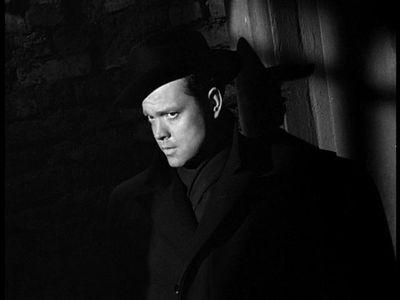
When broke American cowboy novelist Holly Martins (Joseph Cotten) arrives in post World War 2 Austria to work for his childhood friend Harry Lime (Orson Welles) he finds Lime has died in an accident just a few days earlier. Not trusting cops Martins launches his own investigation, and when he finds out some things just don't add up he begins to wonder was it an accident at all.

Lots of times when I go back to watch thrillers everyone tells me are essential I find them dull, dragging, and boring. The Third Man is one of those films that's none of the above, and delivers a very captivating story that's likely to really hit you in the gut. Filled with hard headed characters and moral ambiguity The Third Man possesses no real central focus, and collective of anti-heroes of which grow on you but are never really likable. Even Martins' self righteous, anti-cop nature forces us to follow him in curiosity but never really care for him. His backstory is left a bit cold, and I have to say that's probably because in the realm of the story Martins isn't that important.

While played brilliantly by Cotten the film's real character is that of Lime. Ironic considering Lime takes up all of maybe 15 minutes of the film in terms of actual screen time, but his actions and life are the product of hundreds of conversations. By the time we actually first see Lime and the events of his death unfold we know more about him than any character we've spent the last hour with. As such Orson Welles is ironically asked to deliver the powerful blows that really tie everything together. Lime's long time girlfriend Anna (Alida Valli) also provides a unique balance to the character, and helps to show us the true nature of Lime, whether he was a good or evil man. In this respect each character introduced provides a new look at the life of Lime, how he treats those around him, and who he really cares about.

The film's infamous Ferris Wheel scene surely lives up to the hype with a brilliant conversational moment that really grabs at your moral center. "Look down there. Tell me. Would you really feel any pity if one of those dots stopped moving forever? If I offered you twenty thousand pounds for every dot that stopped, would you really, old man, tell me to keep my money, or would you calculate how many dots you could afford to spare?" Such a dark and insightful moment, it's definitely going down as one of the all time great speech moments. In my opinion up with the contender scene from On the Waterfront as it is delivered so fantastically. It seems apparent to me as well that Reed knew this was a highlight scene, spending much of the time building up to it.

Once the scene occurs, everything comes into light and The Third Man enters its final act. A captivating chase scene threw the sewers of Viennes. Greene and Reed work together to make this work, even substituting some action in favor of character finale, with an ending that really just works on so many levels. It's not hard to see why this film is so well beloved by fans of cinema, it's by all accounts got everything. The murder, intrigue, moral decisions, all are allowed to resonate with the viewer, making it easily memorable and full of excitement and thrills.

A captivating, memorable, and morally powerful thriller, The Third Man has something for everyone, and that's always the staple of a classic.

Saturday, October 31, 2009

Gaslight (1944)

GASLIGHT
DIRECTED BY: GEORGE CUKOR
WRITTEN BY: JOHN VAN DRUTEN, WALTER REISCH, & JOHN L. BALDERSTON
OVERALL SCORE: 8.00/10


After the death of her famous aunt, Paula (Ingrid Bergman) meets and falls in love with an older pianist, Gregory Anton (Charles Boyer). Years later the happy couple return to the aunt's London estate to take up residence. Paula's return is marked by bad memories and fears arise as she begins to wonder if she's going crazy, or if someone is trying to make her think she is.

Visiting my parents for the Halloween weekend we decided to see what was on TCM, and low and behold a good classic psychological thriller was on. Gaslight is a rather cool film, well paced, and played out, featuring a star cast that really bring it home. There's a lot of thrills and excitement to the film, though it's rather upfront with what it intends to do, and as such the thrills lie not in the mystery but in their execution. It was fun for me and my mom to try and figure out why Gregory was the way he was, and if Paula is ever going to figure out what's happening, or will she become lost in this nightmare of a life.

Ingrid Bergman delivers one heck of a performance, and there's no questioning why she won her first oscar that year, but as a performance piece Gaslight has a lot more to offer. The movie also features Angela Lansbury in her first film role as Nancy, the floozy housemaid who is annoyed by Paula's constant troubles. As well you have Joseph Cotton as Brian, a huge fan of Paula's aunt who finds her and her husband's actions all too mysterious to reconcile. Of course Charles Boyer is pitch perfect in the role as the mysterious Anton, such a jerk at times you really begin to hate this character. Though it's really the Bergman + Boyer battles of emotion and playing off weaknesses that really hit you in the gut, taking you straight through the two hour runtime in solid fashion.

The playing off of the audience is perhaps the greatest accomplishment of Cukor and the writing crew. Each move is well planned out, and executed exactly the way it is written, bringing to life the play of the same name. Now not every move is perfect, the movie drags in a couple of scenes, and at times I think it fails to capitalize on harsh buildup, but there's no denying it's a great work of film. So if you're looking for a good psychological thriller for your viewing pleasure, Gaslight is a solid pickup.

A great thriller of a film with some dark scenes and amazing acting to really carry the film right until it's climax.
Related Posts with Thumbnails